Intel's Nova Lake demands fresh motherboards: what the Z990, Z970, and B960 chipsets will bring
Arriving in early 2027, Intel's next-generation Nova Lake processors will require new LGA 1954 socket motherboards featuring expanded PCIe 5.0 connectivity, Thunderbolt 5, and potentially active chipset cooling.
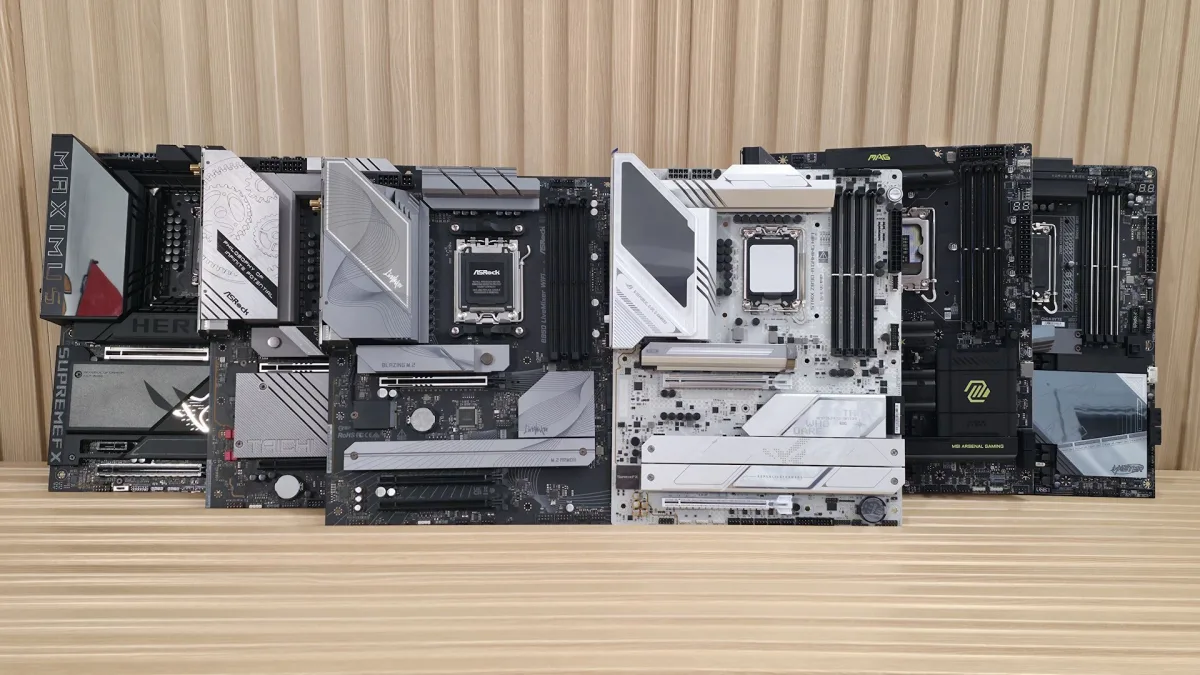
The upcoming Nova Point chipset family is expected to deliver a significant jump in I/O capabilities, including additional PCIe 5.0 lanes, Thunderbolt 5 integration, elevated memory bandwidth, and the possibility of active thermal management on the chipset itself.
Intel's Nova Lake-S lineup is anticipated to enter mass production during the fourth quarter of 2026, with commercial availability slated for the first quarter of 2027. The product stack will diverge from Intel's recent strategy by introducing mid-range variants, including an unlocked 28-core configuration launching in Q1 2027, followed by high-end models later that year featuring dual compute tiles and up to 52 cores. CEO Lip-Bu Tan stated earlier this year that Nova Lake is "coming at the end of 2026." While specifics remain subject to industry speculation, the arrival of these processors appears imminent, bringing with it a completely redesigned socket and chipset ecosystem.
Upgrading to Nova Lake will necessitate purchasing new motherboards, as the current LGA 1851 socket reaches obsolescence with the rollout of Core Ultra Series 2 processors such as the Core Ultra 7 270K Plus, which shipped earlier in 2026. The new LGA 1954 socket becomes mandatory due to Nova Lake's substantially elevated I/O and power requirements. This transition also marks Intel's debut of bLLC (big last-level cache) technology, positioning the company to compete directly with AMD's X3D offerings.