Finger-Worn Gaming Mouse Smashes Kickstarter Target, but Design Concerns Loom
A wearable gaming mouse that mounts on the finger has raised $43,000—eight times its $5,000 goal—yet skeptics question whether the device can deliver on its promise to the competitive aiming community.
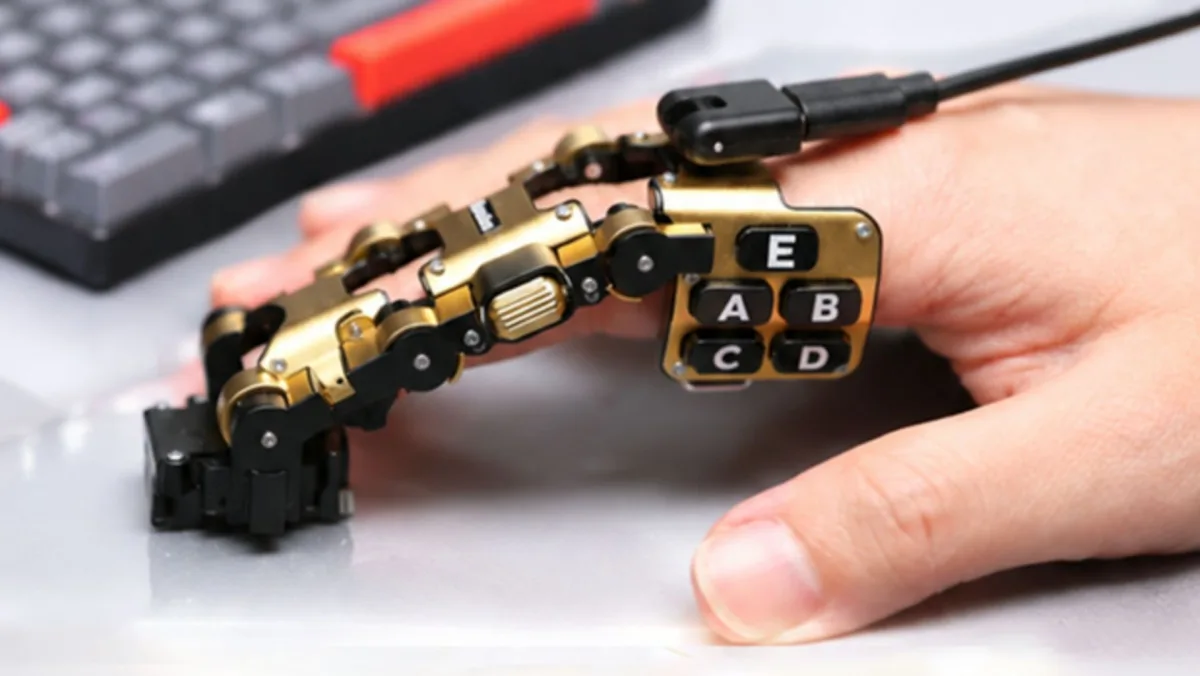
The Borslon finger-worn gaming mouse has attracted significant crowdfunding attention, accumulating over $43,000 from more than 430 backers on Kickstarter. The campaign obliterated its initial $5,000 target, but questions persist about whether the device represents genuine innovation or merely capitalizes on novelty appeal.
Borslon's offering reimagines the gaming mouse by positioning the finger itself as the aiming mechanism. The device incorporates specifications typical of high-performance gaming peripherals: a PAW3395 sensor, 8,000 Hz polling rate, 0.125 ms response time, programmable buttons, and a 36-gram weight. Yet raw specifications often tell only part of the story; real-world performance may diverge significantly from the numbers on paper.
The product aims squarely at a specialized segment within competitive gaming: the aiming community. This niche focuses exclusively on the mechanical precision required to land shots consistently, with practitioners constantly testing new techniques and equipment. Members of this community have experimented with unconventional devices ranging from ultra-compact fingertip mice to graphics tablets, and several manufacturers have built their marketing strategies around engagement with aiming-focused online forums.
Borslon is not the first to pursue an extreme fingertip design. Indie manufacturers like Precision Gaming Gear released the Titan-Ø and Titan-1, featuring 3D-printed titanium construction and ruby joints, years ago. Those products sold out rapidly due to strong adoption within the aiming community.
Several red flags suggest caution about the Borslon device. Promotional videos demonstrate only modest aiming performance, showing gameplay against Counter-Strike 2 bots with visibly substandard accuracy. By contrast, the creator of the Titan series showcased solid actual gameplay in Quake Champions and maintains active involvement in the aiming community.
A fundamental design concern involves button placement and ergonomics. In competitive titles like Counter-Strike, Apex Legends, and Valorant, players typically use the scroll wheel for jumping and movement techniques, generally operated by the index or middle finger. The Borslon places its scroll wheel and five programmable buttons on the thumb, concentrating multiple simultaneous functions—aiming down sights, firing, and jumping—onto a single digit. The promotional materials suggest the index and middle fingers lack dedicated buttons, placing substantial demand on thumb coordination for actions that normally occur in rapid succession or overlap.
Borslon has announced a February 2027 shipping date, with mass production slated to begin in December. This timeline leaves minimal opportunity for substantial design revisions before manufacturing commences.
A striking absence of discussion surrounds the Borslon mouse within established aiming circles. No mentions appear in the Voltaic Discord, a prominent aiming community boasting over 200,000 members, nor in other top aiming forums and communities.
Investigation reveals that Borslon operates under Shenzhen Komodo Intelligent Technology Co., Ltd. The Borslon website appears entirely in Chinese, and notably, the website and Kickstarter campaign do not link to one another. A machine-translated version of the company timeline on the Borslon website indicates the first product launched in November 2025, while the Kickstarter states concept initiation occurred in March 2026. These chronological inconsistencies, combined with heavy reliance on AI-generated lifestyle imagery, undermine confidence in the venture. Should the project prove legitimate, success would likely depend on the company engaging directly with its target market and implementing meaningful design adjustments.
Crowdfunding carries inherent risks. Backing a project represents an investment in a vision, not a purchase of a finished retail product. There is no guarantee that a funded campaign will result in a delivered product.