IDrive Launches Automated Backup for AI Coding Agents
IDrive has introduced AI Agents Backup, a feature that automatically preserves the local data generated by coding assistants like Claude Code, Cursor, Codex, and Cline—including session histories and configurations that developers often lose.
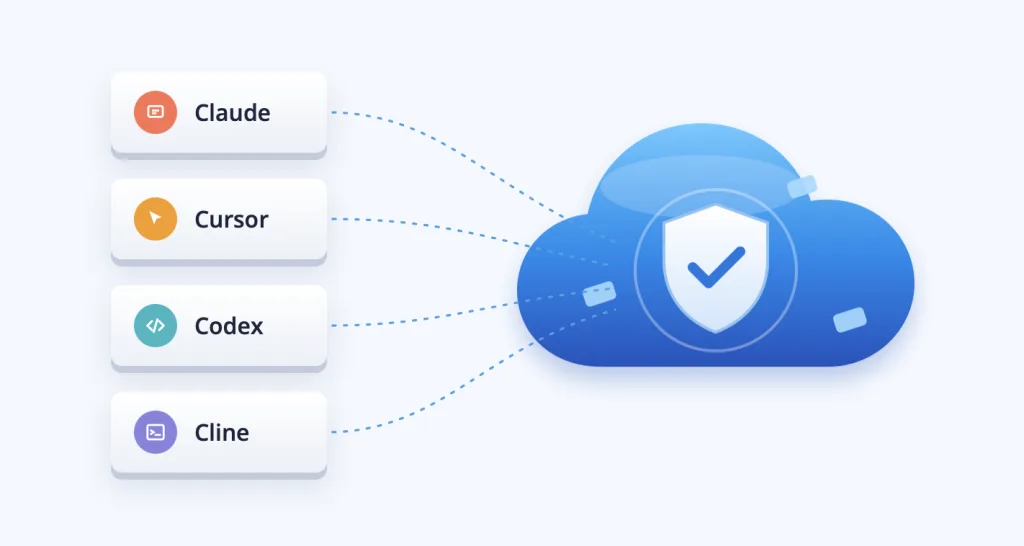
Developers working with AI coding agents face a persistent problem: the state these tools maintain on local machines rarely gets backed up, leaving valuable work product vulnerable to loss. IDrive, a backup and storage provider, is addressing this gap with AI Agents Backup, unveiled Thursday as a feature within its desktop application.
The new capability automatically locates and preserves data that Claude Code, Cursor, Codex, and Cline store locally on a developer's computer, then transfers it to the user's IDrive account. This includes session transcripts, instruction files, and MCP server configurations—information typically hidden in directories that most developers never examine.
Much of this data carries genuine value. Session transcripts document the back-and-forth between developer and agent that led to a solution, and agents like Claude Code and Codex rely on this history to resume work across multiple days. Configuration files for agents and MCP servers represent setup effort that developers would prefer not to repeat if something fails.
According to IDrive CEO Raghu Kulkarni, "Most of that data lives only on the local machine and has been left out of backup plans." He characterizes the accumulated history and configuration as "a real work product."
Session history is easily lost
The risk of losing this data is real and immediate. Claude Code automatically removes session transcripts older than 30 days by default. Developers have filed numerous GitHub issues documenting unexpected history disappearance, and Cursor's community forums contain multiple reports of chat histories vanishing following software updates.
What IDrive backs up
For Claude users, the backup feature preserves Claude Code history from both terminal and desktop interfaces, along with settings, instruction files, and local MCP server configurations. It also captures Cowork scheduled tasks for Team and Enterprise users who maintain them on their own machines.
Cursor backups include chat history, workspace data, keybindings, extensions, and sessions from the Cursor Agent CLI. Codex and Cline receive equivalent coverage.
IDrive deliberately excludes caches and temporary files from backups. Source code and repositories are also omitted, as the company assumes users already protect these through standard file backup. Conversations stored on provider servers fall outside the scope of this feature.
When restoring, IDrive returns files to their original locations. For Claude specifically, IDrive's documentation indicates that restoration overwrites existing data. Cross-platform restoration is not supported—files backed up on Windows cannot be restored to macOS, for instance.
Open source backup alternatives
The concept of backing up agent state is not novel. Developers already have access to various open source tools designed for this purpose. Tools such as bak synchronize agent configurations, while Agent-archive directs session transcripts to S3 or R2 buckets. Backblaze's labs division has released an open source engine for backing up agent state to its B2 storage service, and commercial offerings like Agent Bak also exist.
IDrive's approach integrates into a consumer-grade backup application and automatically identifies the four supported agents without manual configuration. The feature includes a restoration workflow designed to simplify transitions to new computers.
AI Agents Backup is now available in the IDrive desktop app for all users. Gemini CLI, GitHub Copilot, and Windsurf are not currently supported.