LiberNT: A GPL-Licensed Windows 11 Alternative Built With AI Assistance
A new operating system called LiberNT, descended from ReactOS, aims to provide a free alternative to Windows NT across multiple processor architectures. The project claims superior performance in most benchmarks and embraces AI-assisted development with human review.
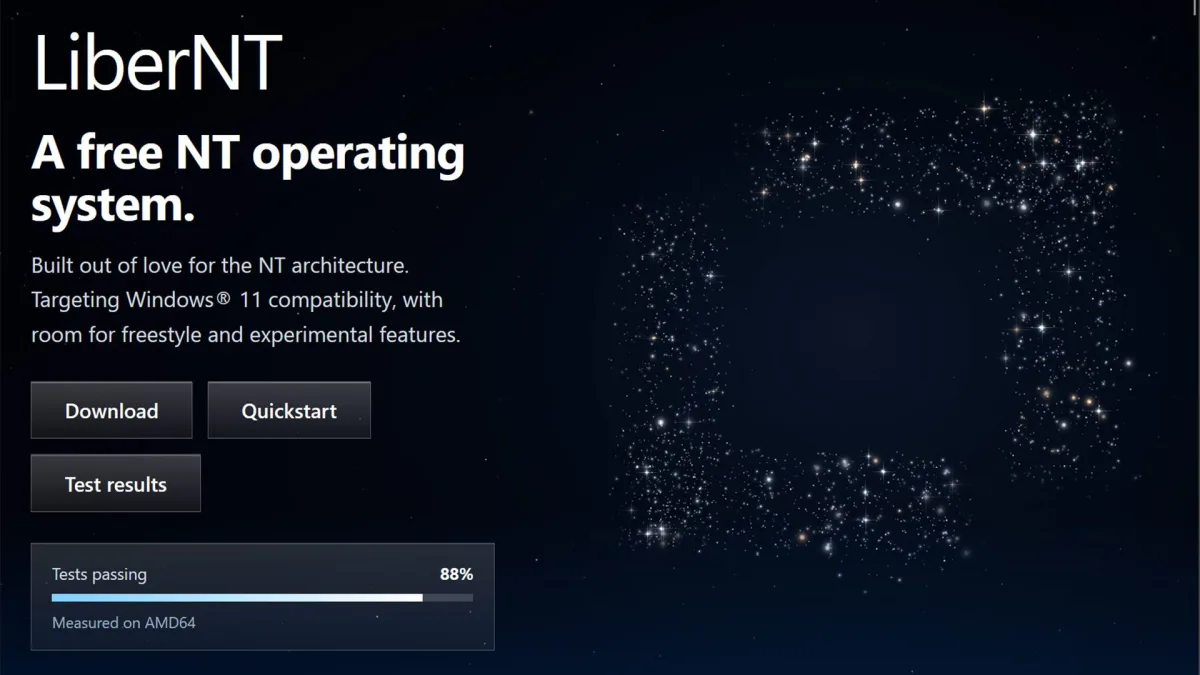
An emerging operating system named LiberNT has entered development with an explicit goal: delivering a free replacement for Microsoft's Windows 11. The name itself signals the project's dual nature—Liber meaning free, and NT referencing Windows NT's New Technology architecture. Released under the GNU GPL3.0 license, LiberNT enables users to run applications designed for Windows on an open-source platform.
Though development has proceeded quietly for some time, LiberNT reached a significant milestone on Wednesday with the introduction of a new kernel. The project originated as a fork of ReactOS but has since diverged substantially, incorporating a custom boot loader, graphics stack, and memory manager. The developers behind LiberNT emphasize that the project "is not affiliated with or endorsed by the ReactOS project or Microsoft."

The operating system targets contemporary computing hardware, with a focus on 64-bit architectures: amd64, arm64, and riscv64. According to the project's stated objectives, LiberNT aims to mature into a free Windows alternative that is "stable, reliable and efficient."
Performance Claims
The LiberNT team has conducted comparative testing against Windows NT, publishing results that show the free operating system outperforming its commercial counterpart in 112 of 132 system tests. The evaluation covered performance across file caching, memory handling, thread and lock management, and FAT32 and NTFS storage operations. Both systems underwent testing on identical hardware: a Mac running an Apple M3 Pro chip.
According to the published benchmarks, LiberNT's worst-case scenario involved a 28 percent performance disadvantage relative to Windows 11 in certain tests. However, the project reports dramatic performance advantages in other areas, with the free operating system claiming speeds exceeding 2000 percent faster than its commercial counterpart in select benchmarks.
AI-Assisted Development Model
The LiberNT project openly acknowledges its use of artificial intelligence in the development process. According to documentation on the project's GitHub repository, "AI is part of how LiberNT is built. It helps us review and write code, and everything it writes is then reviewed by a human." The team stresses that human developers validate all end-to-end testing before code reaches the main branch, stating, "We care about this project too much to let a regression slip through."
The complete source code is available through the project's GitHub repository, along with pre-built bootable disk images for users interested in testing the operating system.