Dynatrace Maps Out AI Observability Strategy at KubeCon
At KubeCon + CloudNativeCon in Salt Lake City, Dynatrace outlined how developers can track AI model rollouts and troubleshoot errors across application code, infrastructure and AI workloads using feature flags and open standards.
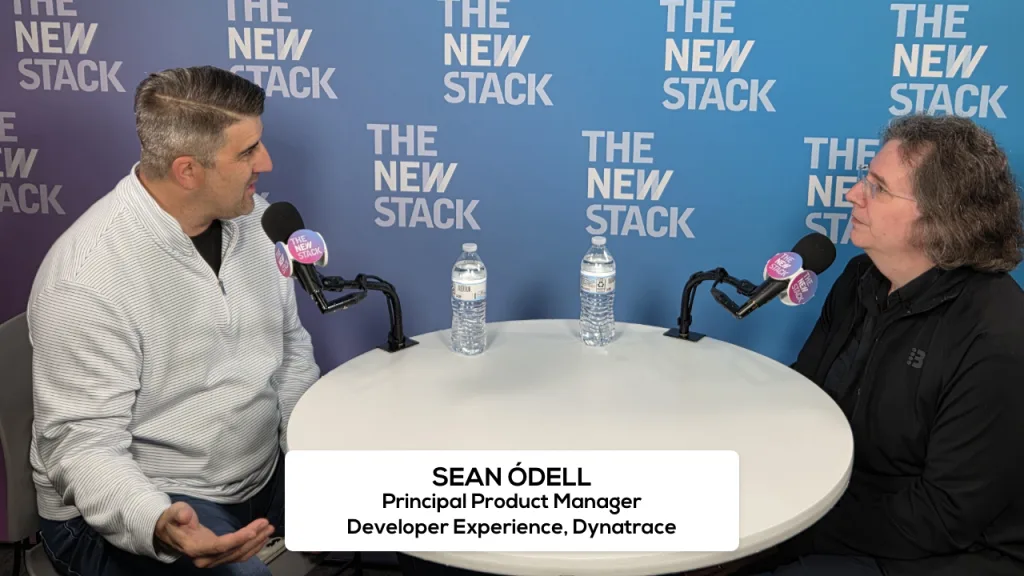
When a fresh AI model reaches a subset of users and errors start appearing, developers face a puzzle: Did the new model cause the problem, or was something else at fault? The deployment itself is identical for all users, making it difficult to pinpoint whether the issue stems from the rollout or from other changes in the system. Sean O'Dell, who oversees developer experiences at Dynatrace, discussed this challenge during a conversation with The New Stack's Frederic Lardinois at KubeCon + CloudNativeCon in Salt Lake City. O'Dell explained Dynatrace's approach to combining signals from application code, infrastructure, and AI systems so developers can understand what occurred and respond appropriately.
Give the rollout its own signal
Feature flags can serve as the foundation for this investigation, according to O'Dell. When a team deploys code and uses a flag to activate a feature or model for only certain users, they can cross-reference that flag with their telemetry data to determine whether errors cluster among the users who received the new capability.
O'Dell described the insight a developer might reach: "It would be something like, 'Hey, I saw some issues, but it wasn't a build; it was actually a feature,'" he said.
This is why Dynatrace is focused on OpenFeature. O'Dell sees feature flagging and observability as complementary during gradual rollouts, when teams must track both who received a change and how the system responded. Should a rollout begin creating problems, the flag provides a quick way to turn off the feature while investigation continues. The code review can proceed later.
Start with OpenTelemetry, then follow the request
When Lardinois asked whether AI agents require their own separate observability framework, O'Dell grounded his response in existing instrumentation. "OpenTelemetry allows me a starting point to build upon," he said.
O'Dell highlighted OpenTelemetry's generative AI conventions and OpenInference, which extends OpenTelemetry to offer AI-specific instrumentation. For developers, the practical challenge involves tracking a request as it moves through an application, queries a database, and calls a model. An unexpected response in the user interface might initially point to the model, yet the real clue could be located elsewhere in the system.
An odd answer in the UI may send a team straight to the model, even when the evidence it needs is elsewhere in the stack.
Sean O'Dell
Dynatrace promotes its Grail data lakehouse and Smartscape as mechanisms to help teams connect these pieces of evidence. A developer investigating a performance decline can examine the connections between services and assess what shifted in the codebase or infrastructure. An agent supporting a site reliability engineer can leverage this same context.
We want agents to make the right decision at the right time
Sean O'Dell
O'Dell emphasized how telemetry informs these decisions. The interview explores the complications involved. A front-end developer investigating user experience may rely on real-user monitoring, whereas a platform engineer tracing a sluggish request needs visibility into backend systems. An agent requires evidence tailored to its specific purpose. This means selecting which signals to present becomes part of the engineering effort, alongside the work of gathering that telemetry in the first place.
The complete conversation between O'Dell and Lardinois is available on The New Stack's YouTube channel, where they explore the boundary between open standards and proprietary observability platforms, discuss how token economics are shaping engineering decisions, and examine which safeguards are necessary as agents assume greater operational responsibilities.