Community Backport Brings DirectX 12 and Vulkan 1.4 to 17-Year-Old Windows 7
Enthusiast developers have created an unofficial project that enables modern graphics cards from Nvidia, AMD, and Intel to work with Windows 7, adding support for contemporary graphics APIs.
Despite being officially retired, Windows 7 continues to attract the attention of developers determined to extend its capabilities. A grassroots initiative has now made it possible for the aging operating system to recognize and utilize current-generation graphics hardware alongside modern graphics standards.
The effort, created by community members EAZY BLACK, kryptik, and VisualEhrmanntraut, accomplishes this by backporting WDDM 2.2 from Windows 10. Windows 7 originally shipped with WDDM 1.1 when it debuted, while Microsoft rolled out WDDM 2.0 alongside Windows 10 in 2015 and subsequently delivered WDDM 2.2 with the Creators Update in 2017. Though Microsoft did introduce a limited DirectX 12 implementation for Windows 7 in 2019, that version was specifically designed for developers looking to adapt certain games to the older platform.
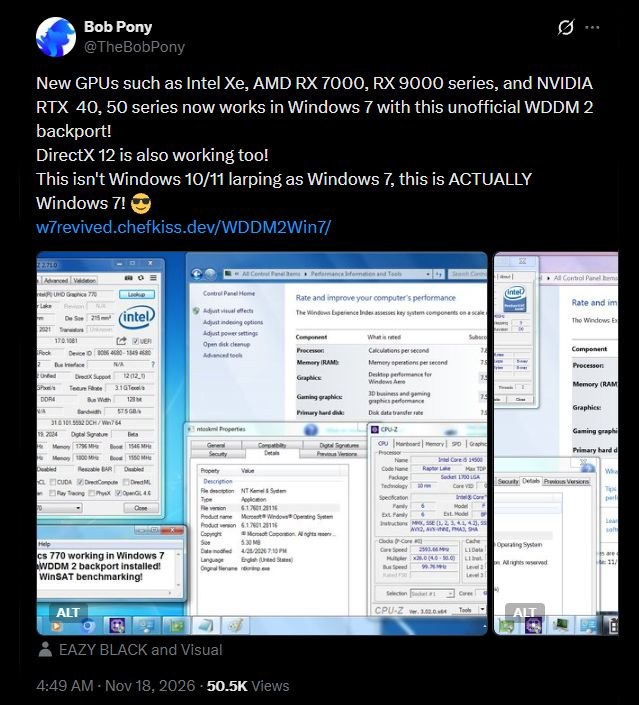
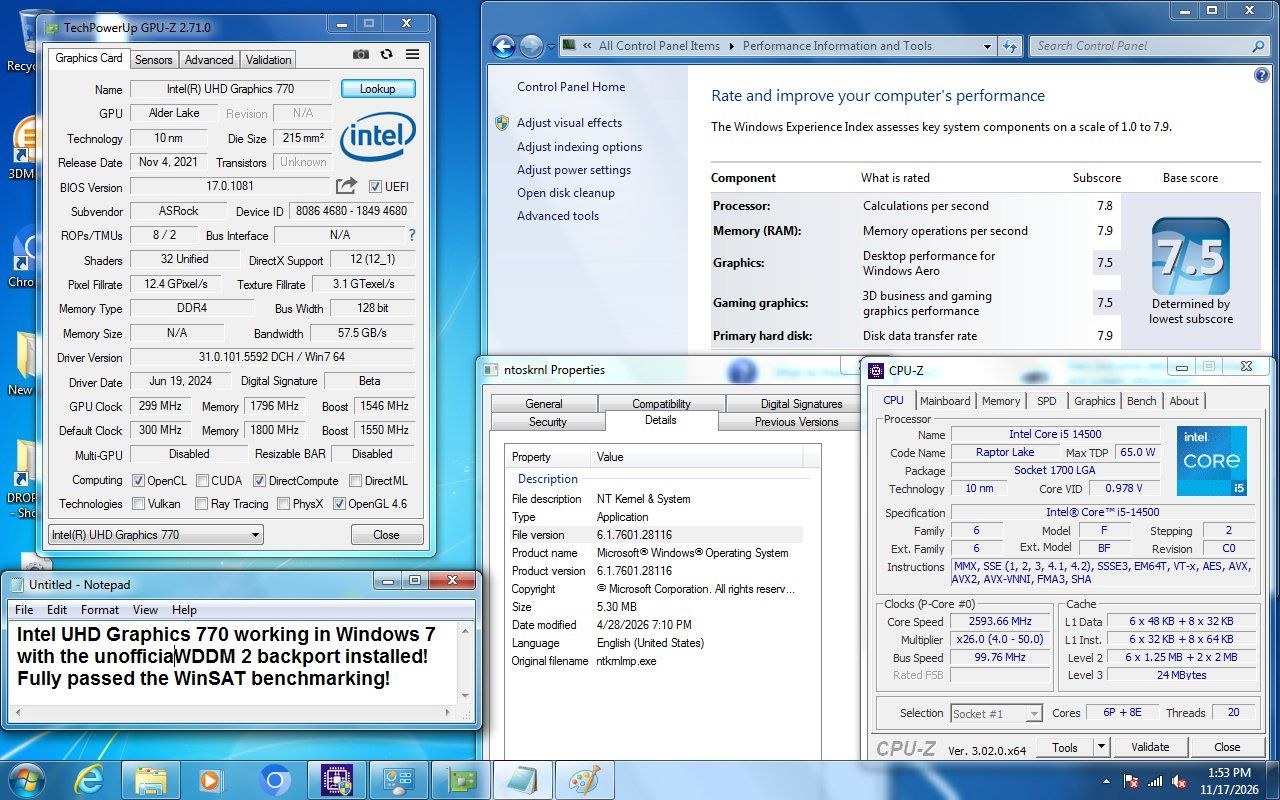
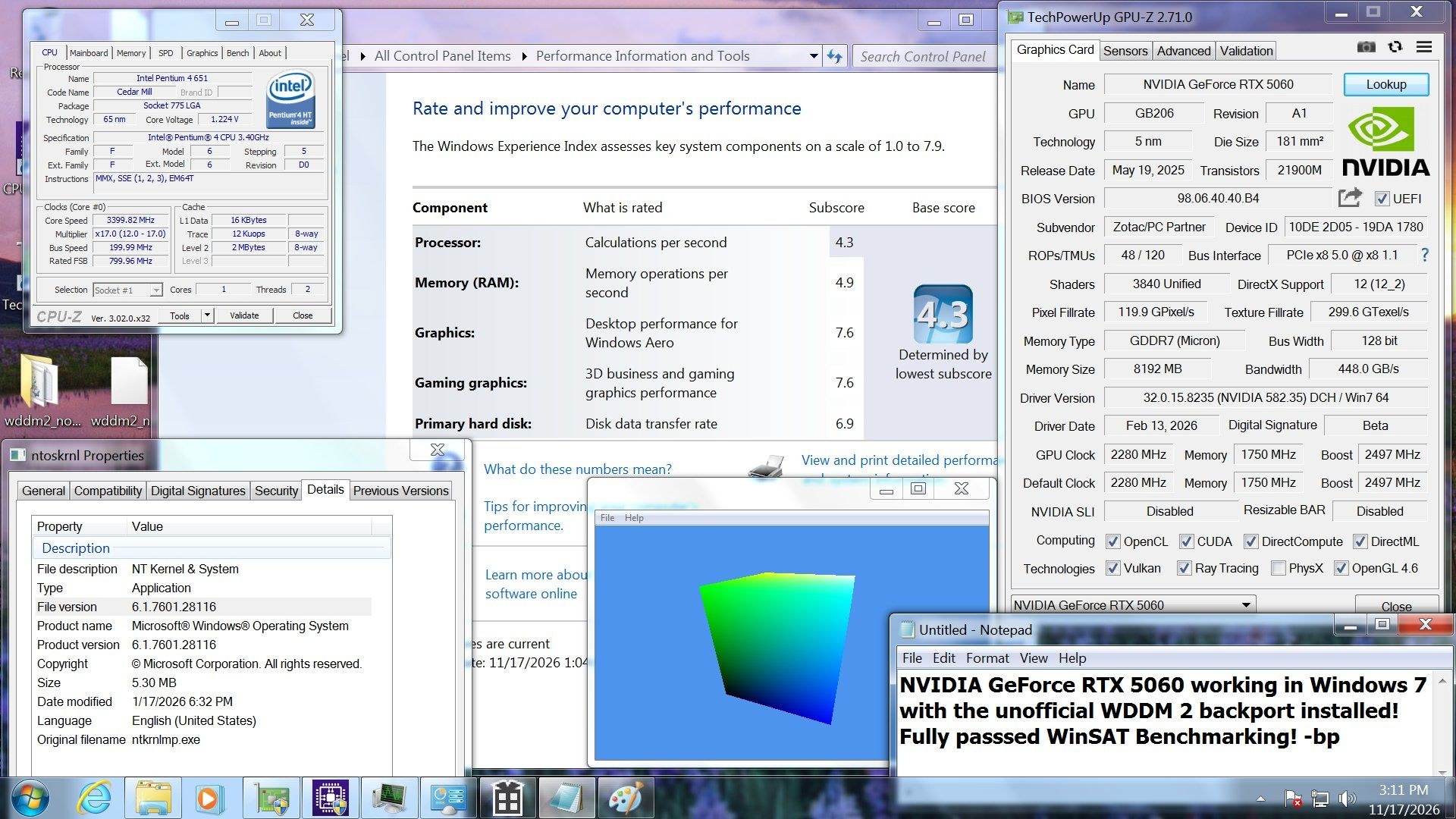
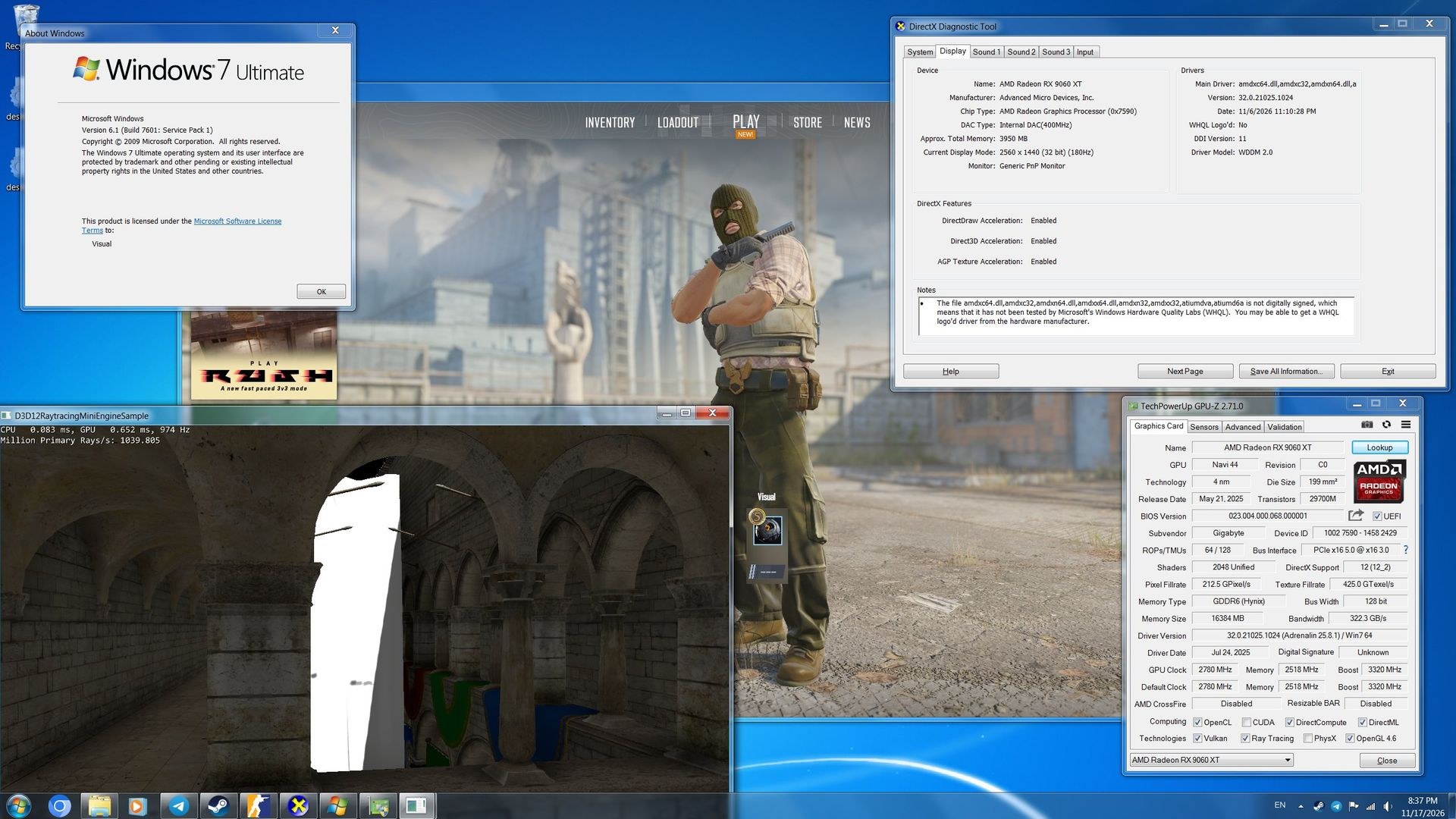
According to information shared by @TheBobPony on X, the backport supports Nvidia's RTX 40 and RTX 50 series, AMD's Radeon RX 7000 and RX 9000 series, and certain Intel Arc graphics cards. Photographic evidence demonstrates that the backport allows Windows 7 to identify graphics processors and work with third-party monitoring tools such as GPU-Z. The project reportedly enables advanced capabilities including ray tracing and DLSS on supported hardware. Earlier-generation cards, such as Nvidia's RTX 30 series and AMD's Radeon RX 6000 series, may also see improvements, though actual performance depends on the specific graphics card, driver support, and the application in question.
For those who continue to rely on Windows 7 or maintain compatibility with legacy applications and peripherals, this initiative offers practical value in prolonging the system's utility. The project can be paired with the VxKex compatibility layer, which facilitates running newer Windows applications on older versions of the operating system. Project files and modified drivers are available through the W7Revived website.
Why Windows 7 Endures
The persistence of Windows 7 among enthusiasts reflects the operating system's historical significance. Launched in 2009 as a replacement for Windows Vista, it delivered an intuitive interface, reliable performance, and a straightforward user experience. The system achieved widespread adoption and maintained a devoted following among both technical users and general consumers well into the Windows 10 era.
The operating system continues to demonstrate competitive performance in certain workloads. A recent evaluation pitted Windows 7 against Windows 11 on contemporary hardware featuring an AMD Ryzen 7 9800X3D processor, Radeon RX 6950 XT graphics, and 64GB of DDR5 memory. Testing encompassed eight DirectX 11 titles and two DirectX 9 games, with Windows 7 showing superior performance in specific scenarios, notably in CPU-intensive games and delivering stronger 1% lows in several titles.