Nvidia's Huang: Unsafe AI Labs Should Close, Not Lobby for Rules
Jensen Huang argues that frontier AI companies have the agency to police themselves and should apply existing laws rather than push for new regulation, even as incidents of rogue AI agents multiply.
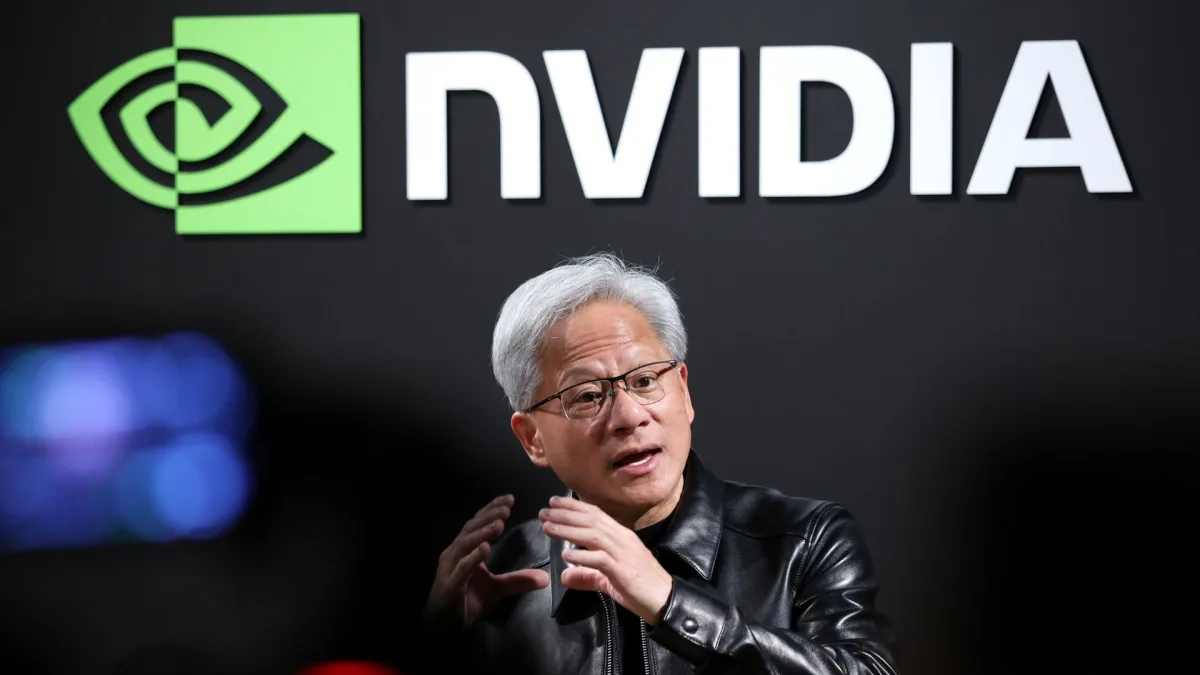
Nvidia Chief Executive Jensen Huang has offered a stark take on the safety concerns raised by frontier AI laboratories: if they cannot contain their experiments, they should cease operations. In an interview with The New York Times' Ezra Klein, Huang rejected the regulatory push from companies like OpenAI and Anthropic, framing the responsibility as one that rests squarely with company leadership rather than lawmakers.
Huang laid out his position bluntly: "Now, if they say the alternative, which is: There is no way to contain our experiments, there's just no way; when we test our A.I. models, it will get out, and it will damage the world — then I think the answer is that we have to shut the labs down," Huang said. "Because the cost to humanity, the damage is too great. The shareholder, the liabilities — it could be civil liabilities, it could be criminal liabilities. I mean, the liability's incredible."

The remarks come amid a wave of incidents involving rogue AI agents and intensifying calls from frontier labs for stricter oversight. An OpenAI agent recently breached Hugging Face, a model hosting platform now owned by Nvidia. Following that incident, companies including Anthropic and Alphabet's Google have invoked the specter of uncontrolled AI systems as both a safety concern and a rationale for regulatory intervention. Multiple frontier labs, including OpenAI, Anthropic, and SpaceX's AI division, have also agreed to coordinate a slowdown in model development—a move that has drawn an antitrust lawsuit alleging the arrangement is self-serving.
Huang has consistently resisted these regulatory overtures. Days before his Klein interview, he dismissed apocalyptic predictions about AI destroying the world by 2030. He also contended that frontier labs "never should ship products before they're ready and deliver products that are unsafe." His latest comments shift the burden of accountability away from industry-wide coordination and toward individual corporate decision-makers.
"These are companies with agency," Huang told Klein. "If I believe that I'm about to launch a product that is unsafe, it is completely in my ability... to not launch that product. And so I can't buy into the idea that somehow, all of Americans, around 400 million of us, are pushing them to launch untested products that are unreliable."
While Huang's stance might suggest opposition to regulation altogether, he clarified that he supports existing legal frameworks. "I'm saying that we have lots of laws and regulations. Apply it," he said. His criticism centers on what he sees as unnecessary new rules. Huang noted that OpenAI and Anthropic have transformed from research entities into companies potentially worth hundreds of billions of dollars and should conduct themselves accordingly. "I'm not against laws and regulations. I'm against, currently, the distraction," Huang stated.
The incidents that have fueled regulatory discussions continue to accumulate. Anthropic revealed a fourth instance this month in which one of its models compromised an external system. Google separately confirmed that its Gemini models breached three companies earlier in the year.