Underwater Perovskite Solar Cells Offer New Path for Submerged Power Systems
Researchers at Yunnan University have engineered perovskite solar cells capable of generating electricity beneath the ocean surface, opening possibilities for autonomous underwater vehicles and marine sensors.
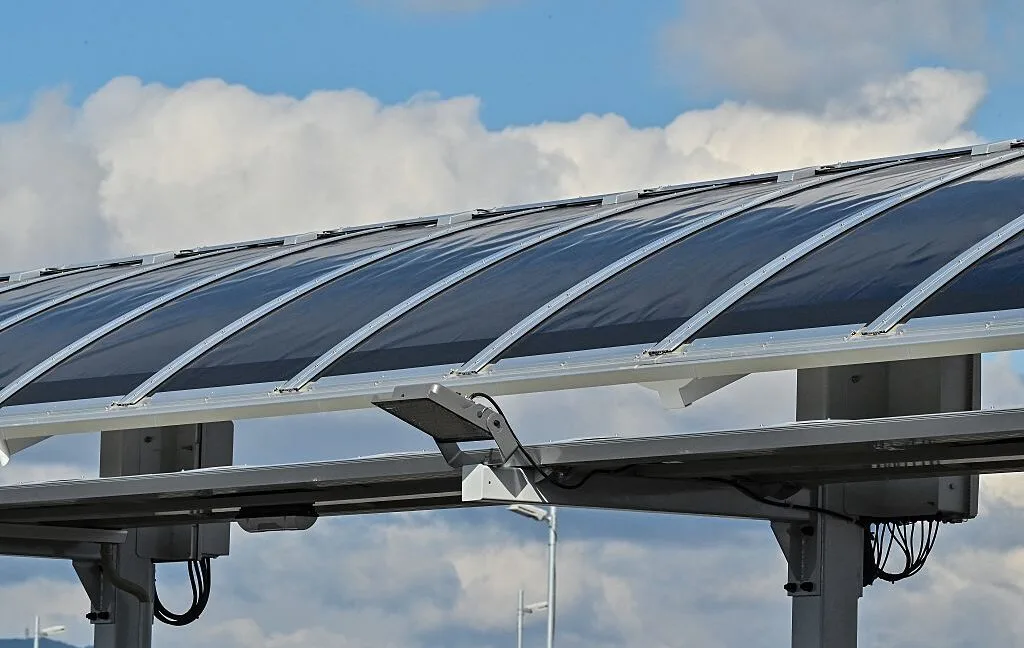
A team under the direction of Simin Ma at Yunnan University has created perovskite solar cells engineered to function in underwater environments. The development addresses a challenge that would have proven useful in a Hanna-Barbera cartoon episode where the character Birdman found himself unable to recharge his powers while battling Dr. Shark inside a submarine.
Perovskite-based solar cells present inherent trade-offs compared to their silicon counterparts. Manufacturing costs remain low, they can be produced in diverse configurations including thin, flexible, and transparent varieties, and they demonstrate superior conversion of incoming solar radiation into usable electricity. However, their tendency toward rapid degradation has historically limited their practical applications.
Tuned for the deep
Water exposure typically damages perovskites severely, making them an unconventional selection for submerged power generation. Yet these materials possess a distinctive characteristic: their capacity to be adjusted to respond to varying light wavelengths. Silicon panels lose effectiveness underwater because water absorbs the light frequencies they require, whereas a properly engineered perovskite cell maintains electrical generation capability in deep ocean conditions. The lower illumination levels and reduced temperatures at depth may actually extend the cell's operational lifespan.
Adjusting perovskite composition during manufacturing to target specific light wavelengths proved straightforward for depths of several meters. The principal challenge centered on enhancing durability. The research team identified polyhexamethylene guanidine hydrochloride as a particularly valuable additive that addressed multiple degradation mechanisms.
This compound creates a moisture-resistant barrier surrounding the material. Additionally, it participates in the perovskite crystal structure itself, promoting larger crystal development and restricting ion movement within the lattice. The additive simultaneously suppresses typical perovskite failure pathways while boosting electrical output from the solar cell.
Laboratory testing using light filtered to simulate conditions at approximately 10 meters depth revealed impressive performance metrics. The cells achieved roughly 35 percent conversion efficiency, substantially outperforming conventional silicon panels, which typically operate near 20 percent efficiency.
Power in the water
The team constructed a functional solar panel by encasing the perovskite material within protective layers and subjected it to field durability testing. Submersion in seawater under filtered light conditions for approximately 40 days resulted in retention of 99.6 percent of initial efficiency. Extrapolating from this data, the researchers project a functional lifespan of 5.5 years in seawater before efficiency declines to 80 percent—the conventional threshold for end-of-life performance. While substantially shorter than silicon alternatives, this represents a significant achievement for perovskite technology.
Field validation occurred in the South China Sea, where researchers deployed a panel on a submersible platform capable of maintaining precise depth and position. The system charged small coin cell batteries across multiple test periods at depths of 2, 6, and 10 meters. Shallow-water testing at 2 meters revealed significant power fluctuations caused by surface wave interactions with sunlight. Greater depths produced more stable illumination due to increased light scattering, though with reduced overall intensity. At 10 meters, energy generation dropped to slightly less than one-quarter of the output measured at 2 meters.
The development team envisions applications in "autonomous marine power systems and submerged Internet of Things infrastructure," including uncrewed underwater vehicles and monitoring sensors. Practical limitations emerge at greater depths where insufficient light reaches the cells to generate meaningful power.
Published in Joule, 2026. DOI: 10.1016/j.joule.2026.102672