ULA's Vulcan rocket fails on inaugural Amazon mission, threatening US space ambitions
United Launch Alliance's Vulcan rocket carrying 40 Amazon Leo satellites crashed back to Earth minutes after Sunday's launch from Florida, marking the company's first total mission failure since 2006 and creating cascading delays across military, commercial and NASA programs.
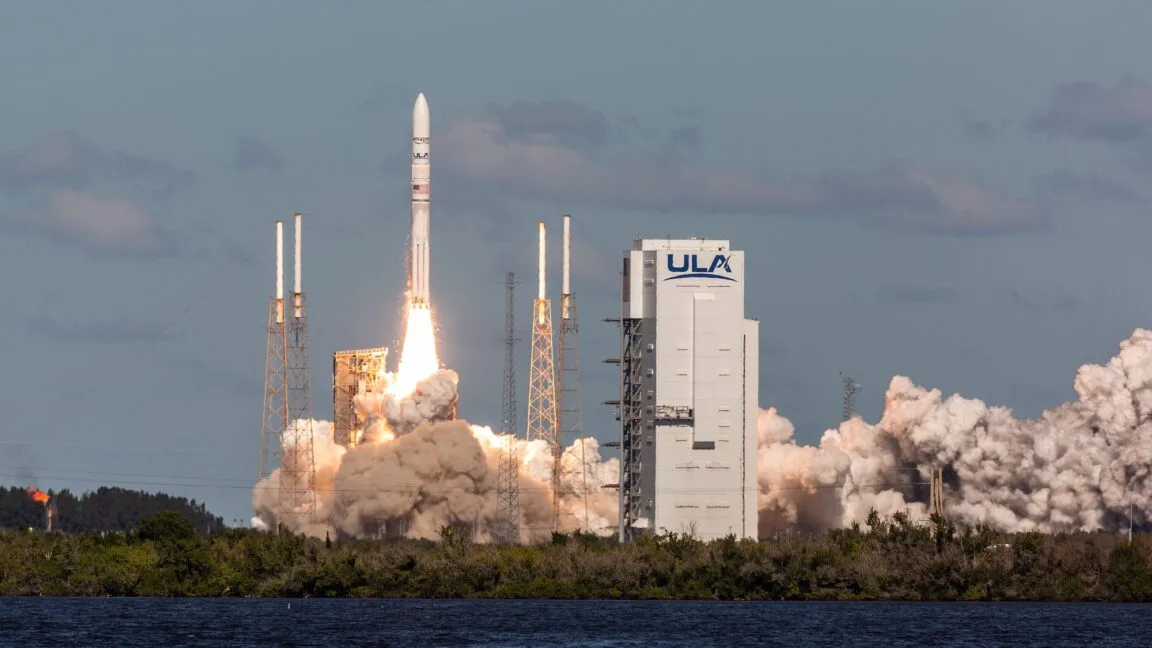
A Vulcan rocket operated by United Launch Alliance fell back to Earth on Sunday after lifting off from Cape Canaveral Space Force Station in Florida at 12:40 pm EDT, destroying 40 Amazon Leo broadband satellites and dealing a significant blow to multiple sectors of the American space industry.
The rocket was contracted to conduct roughly half of the US military's national security space launches over the coming years. Sunday's mission represented the first of 38 Vulcan flights that Amazon had booked to deploy its constellation of broadband internet satellites, designed to compete with SpaceX's Starlink. The failure is expected to keep the rocket grounded indefinitely.
Vulcan had experienced difficulties before, overcoming problems with its solid rocket boosters during two of its four previous flights. In both instances, the rocket compensated and successfully reached orbit, though each incident prompted months of investigation before flights could resume. Sunday's failure stemmed from a different problem entirely.
The six solid rocket boosters performed normally during the first two minutes of flight. However, ULA reported that the rocket "suffered an anomaly 10 minutes into the flight and failed to deliver the Amazon mission to orbit." The company initially stated it lacked "any specific data to understand what occurred."
ULA exists to provide assured access to space for our nation and for the customers who depend on us. That purpose is why we take on some of the hardest missions in spaceflight, and why we hold ourselves to the standard of mission success. Today, we did not meet that standard.
ULA statement
ULA pledged to investigate the failure to "find the cause, determine the appropriate corrective action, and return to flight as quickly as possible." The company committed to "full transparency with our customers, and they will have visibility into the investigation process, which utilizes rigorous methodology and corrective action."
Flight telemetry reveals booster stage problems
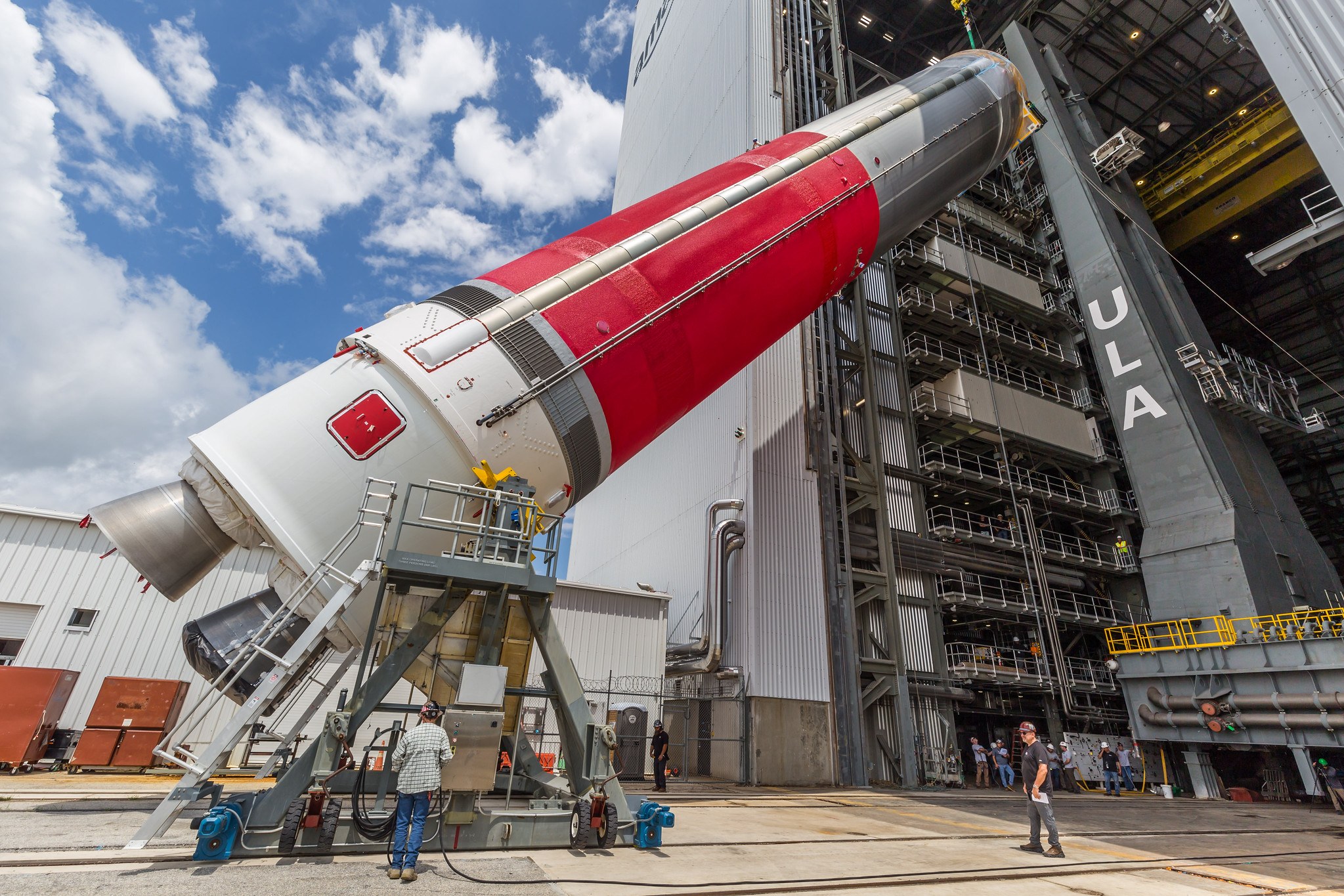
Multiple sources indicated the anomaly occurred in the booster stage rather than the Centaur V upper stage or solid rocket boosters. Whether the problem originated in the two methane-burning BE-4 engines manufactured by Blue Origin, the propellant feed system, or elsewhere could not be immediately determined.
After jettisoning its solid rocket boosters on schedule, Vulcan continued on the thrust of its twin BE-4 main engines, each designed to generate more than half a million pounds of thrust. These engines were supposed to shut down near the five-minute mark but instead continued firing for at least 30 additional seconds, a prolonged burn that could indicate the booster stage was underperforming and compensating by running longer.
Real-time telemetry displayed on ULA's launch broadcast animation showed Vulcan beginning to spin moments after the booster engines shut down. The rotation persisted through separation of the Centaur V upper stage seconds later. ULA's launch commentator confirmed ignition of the Centaur's two RL10 engines, and the animation depicted them adjusting thrust in what appeared to be a corrective maneuver.
ULA halted its live broadcast minutes later without discussing the anomaly, then announced the mission failure on social media. This marked the first total mission failure for United Launch Alliance since the company's formation in 2006 through the merger of Boeing and Lockheed Martin's rocket divisions.
Cascading consequences for Amazon, military and NASA
The failure creates immediate problems for ULA's two primary customers: Amazon and the US Space Force. It also threatens NASA's Artemis program aimed at returning astronauts to the Moon.
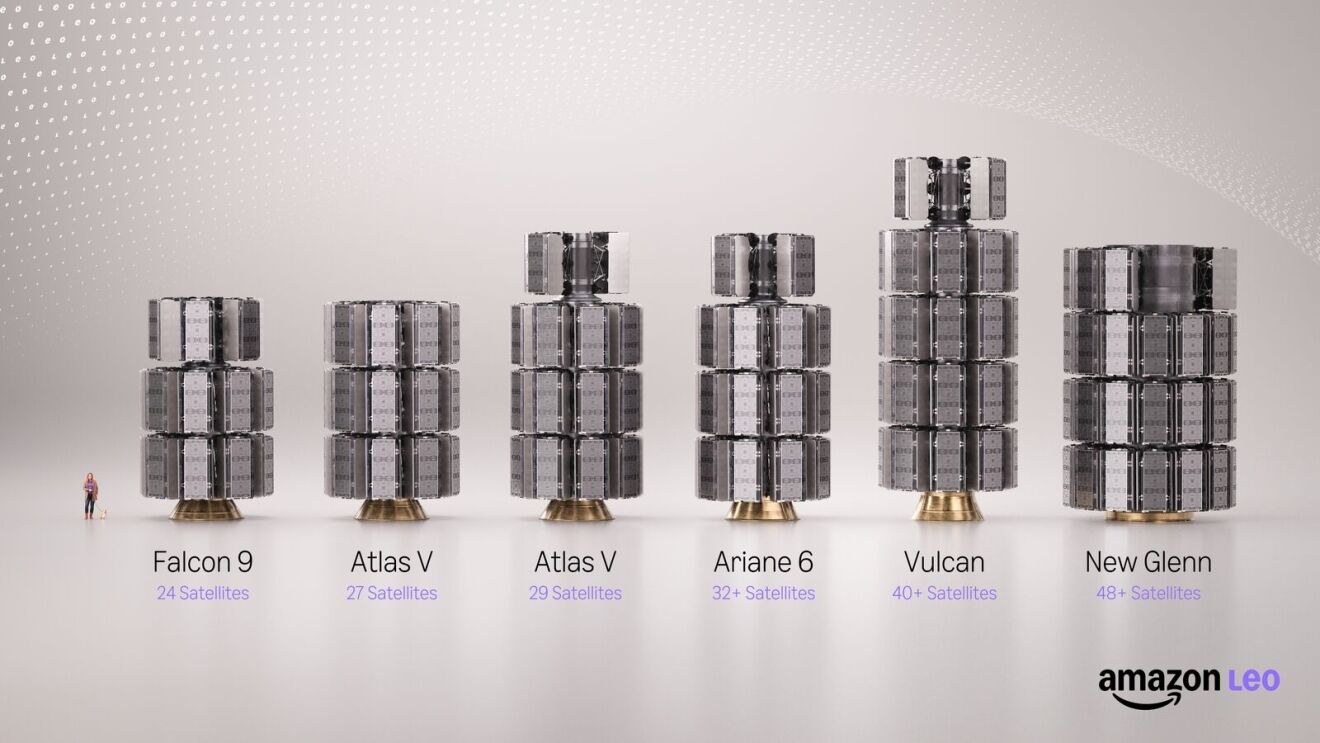
For Amazon, the loss of 40 Leo satellites pales in comparison to the grounding of its primary launch provider. The company holds 37 additional Vulcan launches with ULA, each scheduled to carry 40 or more Amazon Leo satellites. The Amazon Leo constellation currently comprises 396 satellites, a fraction of the planned 3,292 first-generation spacecraft. Amazon officials stated in October that the company possessed sufficient satellites to begin initial commercial service by year's end, though full network capacity requires many more launches.
Amazon positioned Leo as the first direct competitor to Starlink in the consumer satellite broadband market. While OneWeb and other companies provide space-based internet, their business models target traditional telecommunications providers rather than consumers. Previous Vulcan delays had already forced Amazon to store more than half its manufactured satellites, with the company announcing it had built its 1,000th unit. Sunday's launch was meant to accelerate Amazon's deployment cadence.
There is risk with any launch, and that's especially true for inaugural missions like LV-01. ULA has been a trusted partner for Amazon, and we believe they'll learn from this mission and deliver on their long-term plans for Vulcan.
Amazon statement
Amazon had diversified its launch strategy in 2022 when it booked the 38 Vulcan launches, simultaneously contracting with Europe's Arianespace and Blue Origin. The company expanded its Arianespace commitment in September to 24 total launches, with three already completed and a fourth scheduled for later this month on an Ariane 6 rocket from French Guiana.
Blue Origin's New Glenn rocket has encountered its own setbacks. A New Glenn exploded during a ground test in Florida in May, taking Blue Origin's launch pad offline until at least year's end. That rocket was designated to carry Amazon Leo satellites, though the payloads had not been loaded when the explosion occurred. The New Glenn uses a BE-4 engine variant similar to Vulcan's, and investigators traced the May explosion to a faulty valve on one of the booster's BE-4 engines. If a BE-4 caused Sunday's Vulcan failure, it could delay Blue Origin's return to flight into next year.
These compounding delays for two of Amazon's key launch providers forced the company to contract with SpaceX, its primary competitor in both satellite broadband and launch services, to use Falcon 9 rockets to accelerate Leo deployment. Amazon has 10 additional Falcon 9 missions booked and cannot purchase more as SpaceX transitions the rocket toward retirement.
The Space Force faces similar constraints. The military depends on SpaceX and ULA to launch sensitive national security satellites, and in 2025 added Blue Origin's New Glenn as a third option. Previous Vulcan delays prompted Space Force officials to shift six national security launches from ULA to SpaceX, using Falcon 9 and Falcon Heavy to get time-sensitive payloads into orbit faster. The Space Force compensated by awarding a future SpaceX mission to ULA.
More Space Force launch swaps should be expected following Sunday's failure. The Pentagon will likely increase its already substantial dependence on SpaceX to deploy US national security satellites as military leadership seeks to counter China's expanding orbital presence.
SpaceX has signaled that Falcon 9 and Falcon Heavy will not remain available indefinitely. The company is rapidly shifting toward Starship to launch its own Starlink satellites and new orbital artificial intelligence compute platforms. SpaceX has not yet disclosed plans to certify Starship for national security missions, a process requiring several years.
Amazon will likely depend on its 10 reserved Falcon 9 launches and Europe's Ariane 6 to add more Leo satellites in coming months. Blue Origin's New Glenn, when it returns to flight, faces a backlog of NASA Artemis program launches scheduled for next year, including critical test flights of Blue's lunar lander. Those Moon lander tests could slip further if a BE-4 engine caused Sunday's failure.
NASA's lunar ambitions connect to Vulcan in another critical way. The space agency recently selected a version of ULA's Centaur upper stage for future flights of NASA's Space Launch System, the vehicle that will carry astronaut crews to the Moon. The Centaur will replace a more costly and unproven Boeing upper stage. NASA will want to rule out Centaur V problems on Sunday's failed launch as the agency targets 2028 for crewed lunar flights using the SLS with ULA's Centaur.
Appreciate you quickly keeping the public and your partners informed. The team at NASA is available to assist in all matters related to the investigation and remediation effort. Artemis, Moon Base, and the nation need ULA. We are in your corner and here to help.
NASA Administrator