Microsoft Inverts the Office Suite: Copilot Becomes the Workplace Operating System
At its Ignite conference, Microsoft CEO Satya Nadella announced that Word, Excel, and PowerPoint are now available directly within Copilot, positioning the AI agent as the central platform for work rather than a supporting tool.
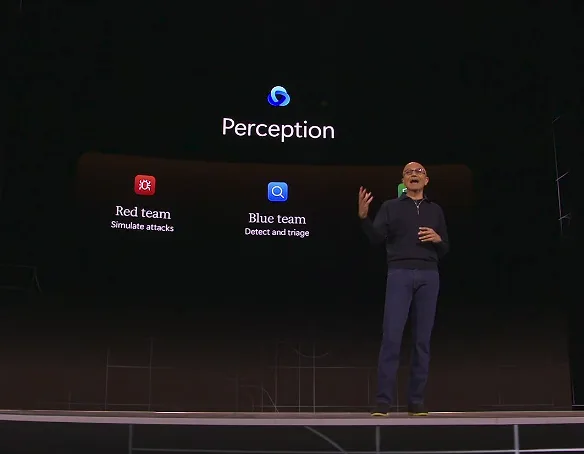
During the keynote address at Ignite, Microsoft's Satya Nadella unveiled the company's strategy for what it calls a new "frontier ecosystem," with a significant shift in how office productivity software operates. As of Tuesday, Word, Excel, and PowerPoint are now accessible within Copilot itself, which Nadella characterized as "the new OS for work."
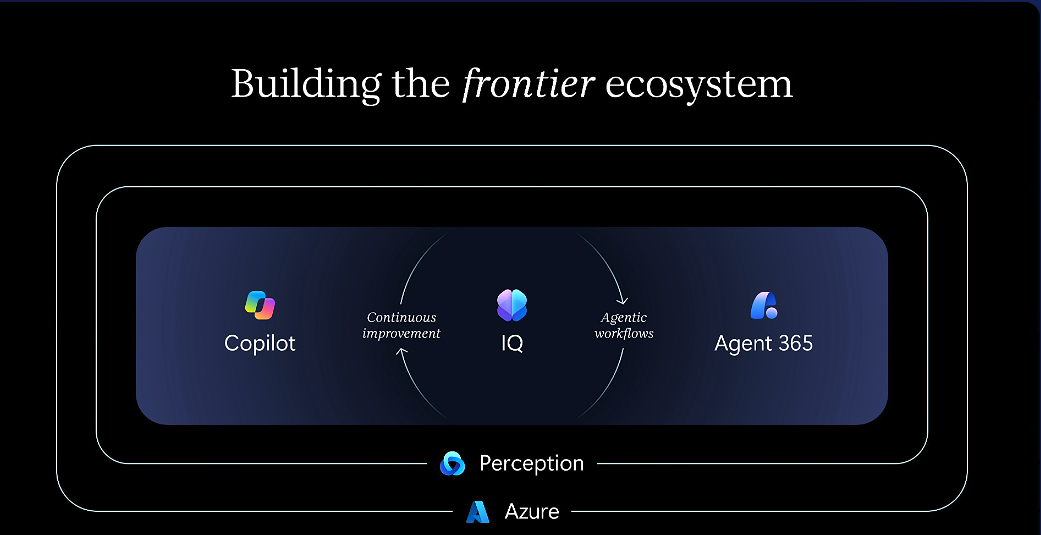
This represents a fundamental reversal of traditional software architecture. Historically, applications like Word served as the primary interface, with assistants like Clippy providing supplementary help. Under Microsoft's new model, AI agents take the lead role, with office applications functioning as supporting components. The system draws organizational context from emails, meetings, calendars, chats, and files to inform agent behavior. Users can now generate documents, spreadsheets, and presentations directly within Copilot, with these files remaining fully editable in their original Office applications once created.
This rollout represents substantial progress toward the Copilot overhaul Microsoft first detailed in September. The company is now making portions of that vision "generally available," including new autonomous agents and governance infrastructure.
The agent layer
Copilot Autopilot—distinct from Windows Autopilot—functions as what Microsoft describes as a "persistent, proactive agent for personal productivity." Rather than executing isolated commands, this cloud-based autonomous system accepts delegated responsibilities and can operate across multiple services including email and calendar systems. Microsoft plans to charge for Autopilot through Copilot Credits on a usage basis, though specific pricing remains unannounced pending general availability.
Alongside Autopilot, Microsoft introduced Microsoft IQ as generally available, an intelligence platform containing Work IQ. This context layer enables agents to comprehend organizational communications, interpersonal relationships, and active projects. Nadella characterized Work IQ as potentially a company's most valuable information repository: "It has a deep understanding of the people, their relationships to other people, your emails, your meetings, chats, projects that make up all the fabric of work." Organizations will need to determine internally whether to permit autonomous agents access to internal documents and communications.
Copilot Workspaces, currently accessible through Microsoft's Frontier early-access program, will soon support the integration of personal Autopilot agents. Nadella emphasized during his presentation that "Until now, AI interactions have mostly been single-player. Workspaces makes it a truly multiplayer experience, where people and agents drive towards a common goal, with shared context."
Governance and the trust problem
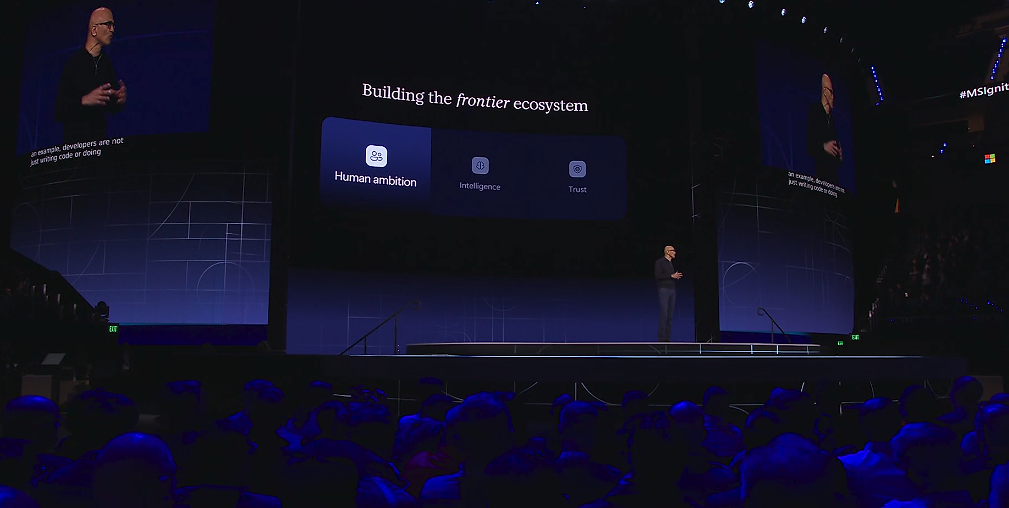
Trust emerged as the third foundational component of Microsoft's frontier ecosystem, though Nadella's framing diverged from typical corporate AI messaging. He stated: "We find ourselves in a place where alignment is elusive. Mechanistic understanding of these models is elusive. The question is: How can you even trust all this powerful technology? The reality is, by definition, you can't."
Rather than promoting the common "AI is magic" narrative, Nadella acknowledged that the internal mechanics of AI decision-making remain opaque and that models cannot be relied upon to govern themselves independently of accuracy concerns. Microsoft's proposed remedy involves what Nadella termed "an architectural imperative to separate the supply of intelligence" from the authority granted to it. Each Autopilot agent receives a unique identifier, allowing administrators to modify permissions or disable agents entirely. All agent actions are recorded for human inspection, and Autopilot can request human authorization before executing certain operations.
While these agent controls and the acknowledgment of AI limitations represent meaningful steps, Microsoft is essentially asking organizations to trust the company's own protective mechanisms rather than the agents themselves. The real-world effectiveness of these safeguards against errors, unauthorized behavior, or information breaches remains to be proven. Microsoft's strategy centers on restricting what agents are permitted to do rather than making agents inherently trustworthy. Organizations must decide how much autonomy to grant to these systems.
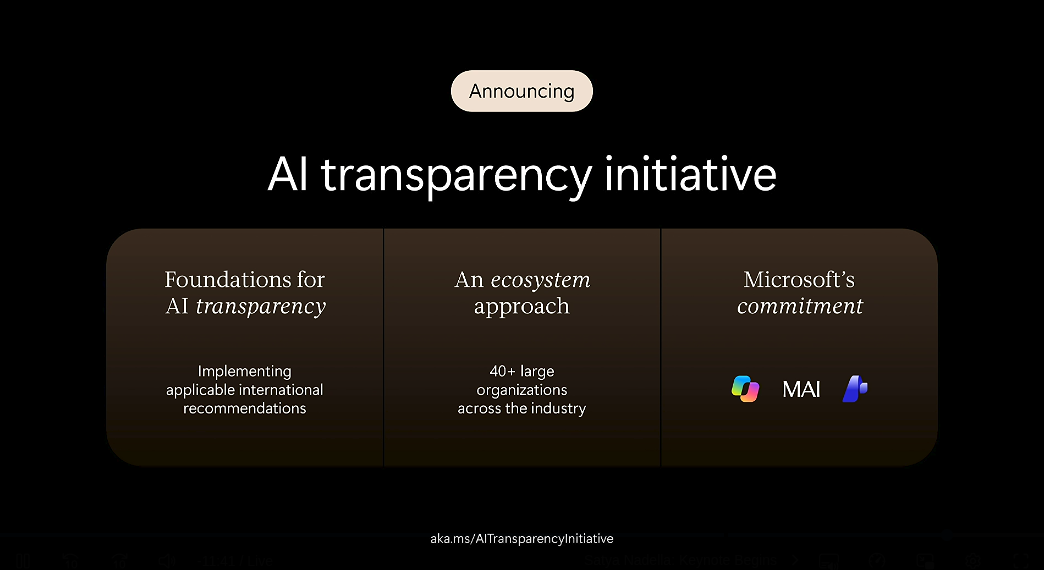
Microsoft also unveiled its "AI Transparency Initiative," which has enlisted over 40 major organizations, including Adobe and Mastercard, to establish open, cross-industry standards for AI governance and security. Nadella described the initiative as enabling the sector to "help establish an open standard that makes AI safer, more transparent, and more accessible."
Tracking AI spending and value
Microsoft announced expanded functionality for Agent 365, its management platform for enterprise AI agents. The updated agent sheriff integrates with existing identity, security, and management infrastructure to cover AI agents. The stated goal is delivering "observability at every layer of the stack." Agent 365 provides oversight of agent operations in what Microsoft characterizes as "autonomous in execution, but bounded and supervised."
Agent 365 Business Analytics accompanies these governance tools. Nadella described it as functioning like "an ERP system of AI usage. You can see exactly what's driving the spend and connect the spend to the outcomes that drive business value." Organizations can track concrete expenses tied to AI token consumption and measure these against the value generated by completed work. Microsoft disclosed that its estimates of assisted work hours derive from modeling rather than direct measurement of actual time savings—a significant admission for businesses evaluating AI implementation returns. However, according to Judson Althoff, CEO of Microsoft Commercial Business, "anything you can do with Claude or ChatGPT, you can do better with Copilot, for less."
The infrastructure question
Nadella offered minimal commentary on the previous week's outage that interrupted access to Exchange Online and Teams globally. He stated: "Last week was a reminder of how critical digital infrastructure is as the dial tone for the world. We know the trust you place in our services and take that responsibility extremely seriously, and in that context I know we have work to do."
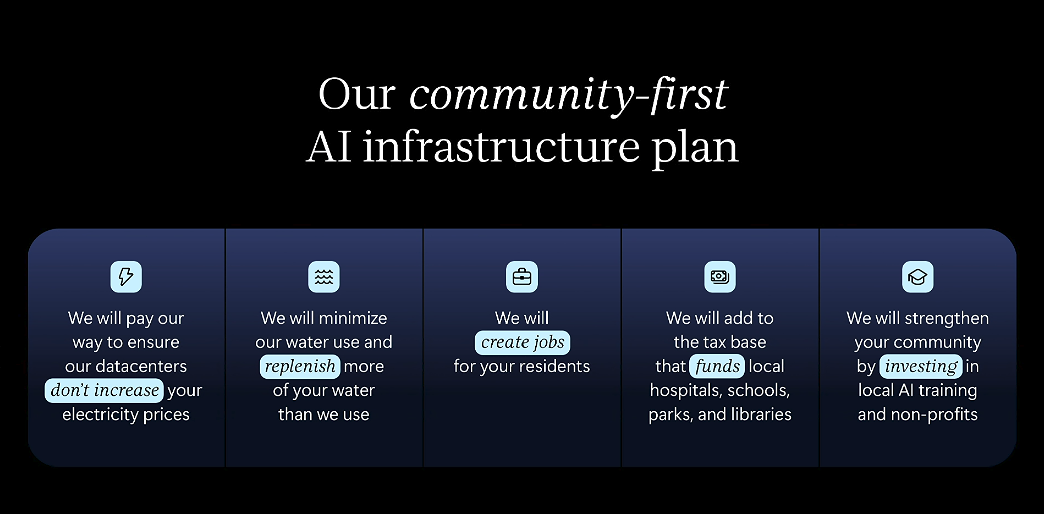
The brief acknowledgment left the larger concern largely unaddressed, though Microsoft did emphasize its previously announced "community-first AI infrastructure plan." The timing of this emphasis is notable given that the presentation asks organizations to grant greater autonomy to software agents at a moment when Microsoft's infrastructure capabilities face heightened public examination.