Two-Decade-Old AMD Radeon GPUs Finally Get Linux Video Playback Fix
A kernel patch accepted for Linux 7.5 resolves video corruption that has plagued users of AMD's R600-based graphics cards since their 2007 launch.
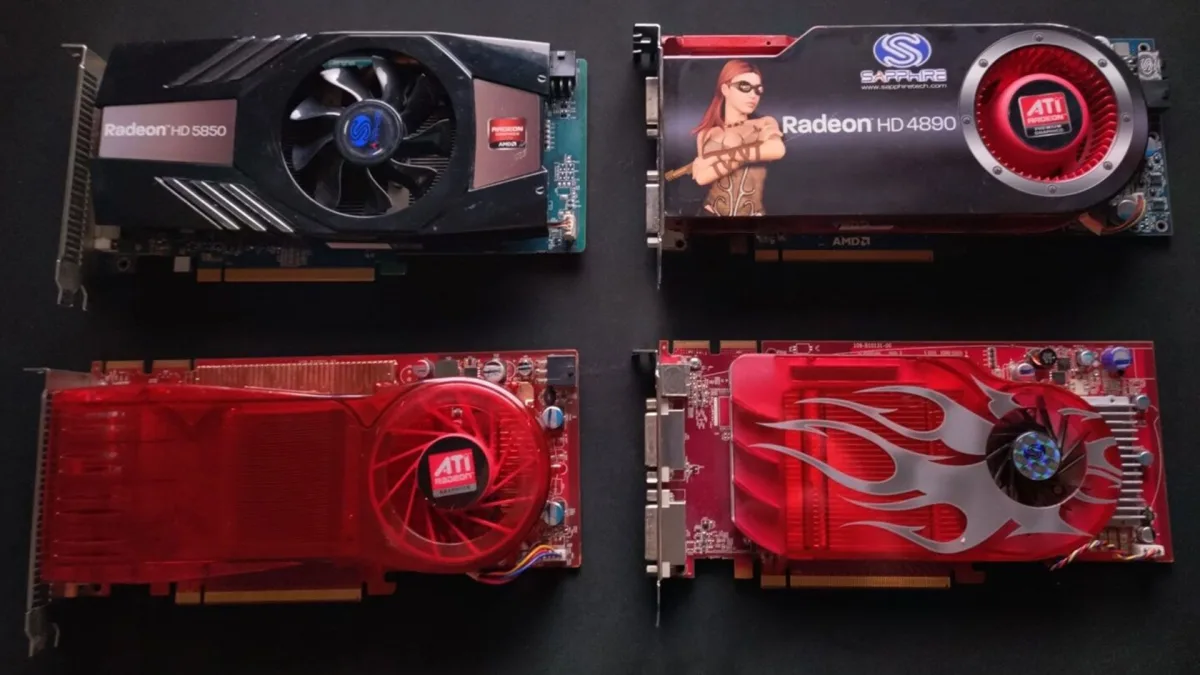
AMD's earliest unified shader graphics processors are receiving long-overdue relief. The Linux kernel will soon include a fix for a persistent hardware video decoding problem affecting the company's R600 architecture, discovered nearly twenty years after these cards entered the market. According to reporting by Phoronix, the patch addresses the Unified Video Decoder (UVD) engine on the RV610, RV620, RV630, RV635, and RV670 chip families—the backbone of the Radeon HD 2000 and HD 3000 lineups that debuted in 2007.
The corruption issue manifested when Linux users ran these older cards and attempted hardware-accelerated video playback while the GPU was simultaneously executing active 3D rendering or desktop composition tasks. The visual artifacts should disappear once the fix ships in the upcoming Linux 7.5 release.
I investigated video corruption on my older iMac7,1 (RV610/M74, device ID 1002:94c8). When the decoder was reading compressed video from system memory while the GPU was drawing, it would corrupt video frames. Moving the input to VRAM allowed frames to decode correctly. Disabling graphics draws also stopped the corruption. Here is a proposal to keep UVD buffers in VRAM for this family of devices, as the driver already does for some other chips. The patch covers RV610, RV620, RV630, RV635 and RV670. These chips share the RV6xx decoder path and legacy R600 firmware, so I think they are likely to have the same hardware requirements. Someone with the other hardware would need to verify that. I tested this on Debian. I used Codex to help with the investigation, testing and patch.
Ted Bullock, first-time kernel contributor