This week: Apple's touchscreen pivot, Micron's roadmap, and the optical consolidation reshaping AI infrastructure
Tom's Hardware Premium publishes deep dives into Apple's OLED-to-PROLED transition, Micron's semiconductor advances, GlobalFoundries' alternative to EUV, and major industry moves including Marvell's $115 billion acquisition of Lumentum.

Tom's Hardware Premium's latest coverage spans semiconductor strategy, consumer PC platforms, and the shifting landscape of AI-connected infrastructure. Subscribers gain access to technical analysis and industry interviews unavailable elsewhere.
Apple enters the touchscreen laptop market
Laptop expert Andrew Freedman examines Apple's decision to introduce a PROLED display with touch capability in 2026, a feature Windows machines have offered for over a decade alongside OLED panel technology. The feature article explores why Apple is adopting this functionality now and how the company may roll it out across its product lineup.
Micron charts its memory and manufacturing future
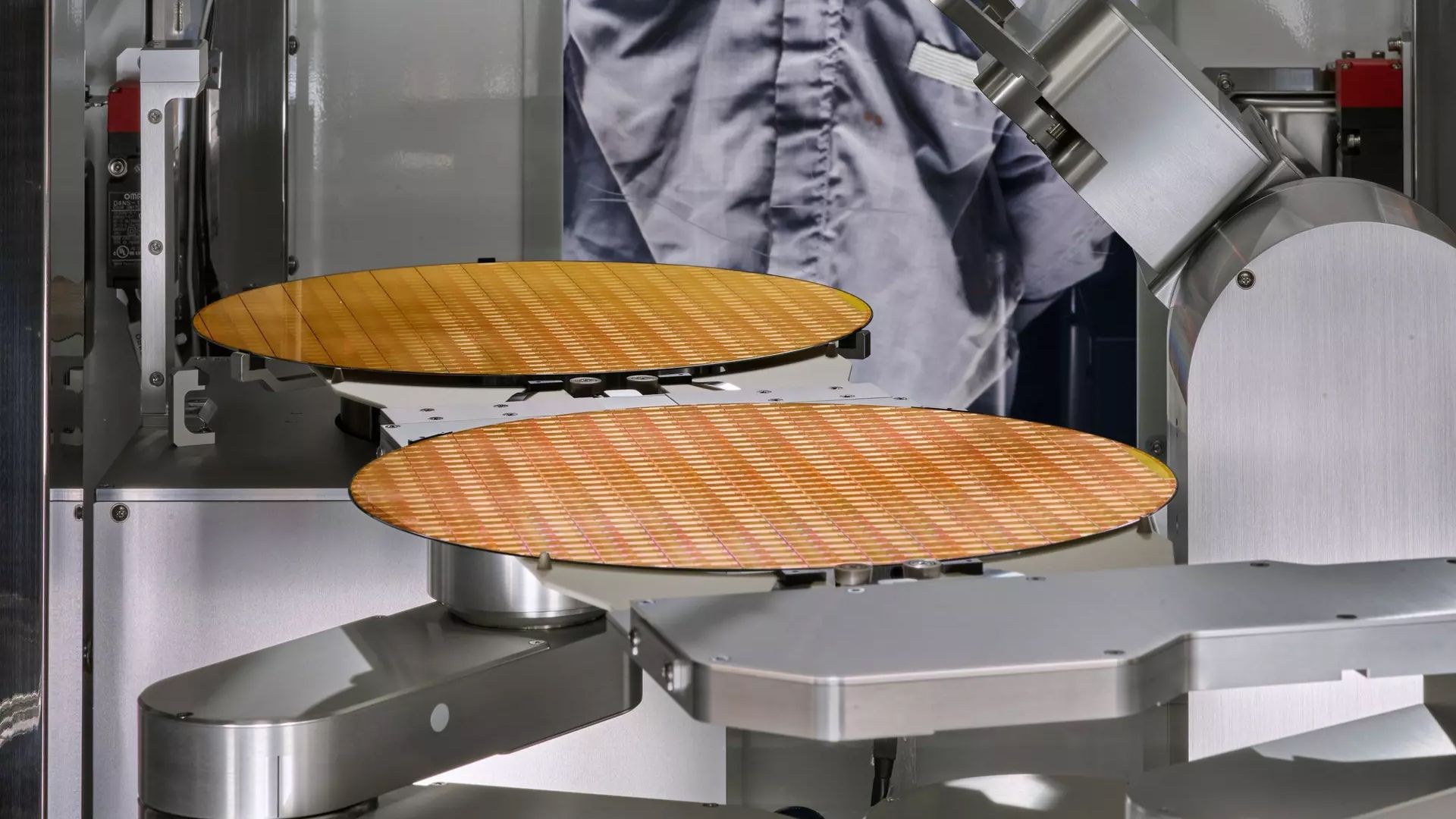
Micron's newly unveiled product roadmap details advances in DRAM and 3D NAND alongside deployment of high-NA EUV lithography tools. The company's 1δ DRAM will be produced domestically, while its 11th-generation NAND technology exceeds 400 layers. The detailed technical breakdown traces Micron's trajectory as demand for AI accelerator memory remains elevated.
GlobalFoundries pursues an alternative path with FDX Fusion
Semiconductor expert Anton Shilov conducts an unredacted interview with GlobalFoundries VP Sudipto Bose on the company's FDX Fusion technology, which delivers 7nm-class performance using advanced planar transistors without relying on EUV lithography. The discussion covers GlobalFoundries' rationale for this approach and potential future directions, with applications spanning data center and broader markets.
Intel's Nova Lake platform and the PC upgrade cycle
A new processor platform brings new motherboards and chipsets to market. Coverage examines Intel's Nova Lake architecture, expected in 2027, alongside speculation about boost clock speeds and a large last-level cache (bLLC) designed to compete with AMD's X3D offerings. The analysis covers motherboard options across multiple price points and the new socket standard accompanying the platform.
Marvell and Lumentum merge to reshape optical infrastructure
Marvell has agreed to acquire optics company Lumentum for $115 billion, combining two major players in optical connectivity. The transaction carries significant implications for Marvell's optical portfolio, particularly regarding in-house laser production. As companies expand both scale-up and scale-out AI systems, optical interconnects become increasingly critical as copper-based solutions approach physical limits.
Security vulnerabilities and emerging memory technologies
Coverage includes analysis of a recent PHP vulnerability and The PHP Foundation's response, highlighting how AI disruption extends to cybersecurity. Additionally, Nagare Labs—backed by former Intel CEO Pat Gelsinger—has unveiled Z2RAM, a memory technology combining SRAM-like speed with DRAM-level density. Early testing suggests the technology could rival High Bandwidth Flash as AI systems demand faster memory access.
Google's Gemini 4 Carbon enters the AI frontier race

Google's Gemini 4 Carbon AI model has ranked among the most capable frontier models available. The company has historically released AI systems less frequently than competitors like Anthropic and OpenAI, but Gemini 4 Carbon demonstrates particular strength in reducing hallucinations compared to rival systems.
Access premium analysis
Tom's Hardware Premium subscriptions cost $29 annually or $7 monthly, providing daily news analysis, deep technical coverage of semiconductor topics, and access to Bench, the industry's largest benchmarking database. All articles mentioned above require a subscription to read.