Storage on a Budget: Where to Find the Best SSD Discounts in 2026
Solid-state drive prices have climbed due to supply chain pressures and geopolitical factors, but savvy shoppers can still land meaningful discounts on quality models across major retailers.
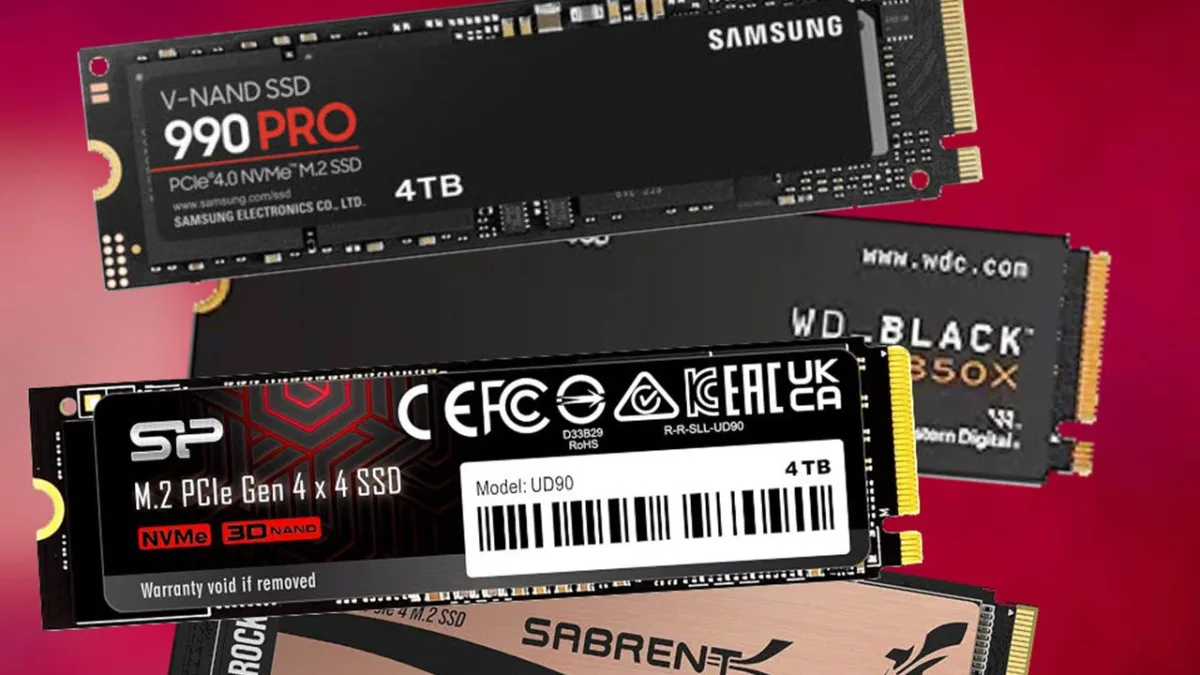
Finding affordable storage remains possible despite headwinds in the SSD market. We monitor pricing across retailers and compile a regularly refreshed guide to the most worthwhile discounts available right now. While the days of rock-bottom storage prices have largely passed, opportunities for savings persist—particularly on recently released drives.
Several forces are reshaping the SSD landscape. Tariffs, geopolitical tensions, and component scarcity all contribute to upward pressure on costs. Demand from artificial intelligence data centers is expected to strain supply chains for years to come, suggesting that price relief may be limited in the near term. Despite these headwinds, discounts on select models remain available for those willing to hunt.
Not all SSDs deserve your money or a spot in your system. We evaluate every deal using insights drawn from hands-on testing, rigorous performance benchmarks, and detailed price history tracking. Our selection process ensures you're getting genuine value, whether you're upgrading a desktop, laptop, or gaming console.
Quick Links to Top Deals
- Amazon: Best SSD deals on Amazon
- Amazon: Save up to 34% on Crucial SSDs
- Check out the best HDD Deals: Best Hard Drive HDD Deals
Best SSD Deals
Best External SSD Deals
SSD Deals: What to Look For
SATA or NVMe
Two interface standards dominate the SSD market: SATA and NVMe. The latter can deliver speeds up to six times faster or beyond. All 2.5-inch models use SATA, while M.2 drives may employ either standard, though SATA in the M.2 form factor has become uncommon. Systems manufactured within the past five years typically support NVMe, making it the faster choice. Since SATA technology is aging, most current discounts target NVMe drives.
2.5-inch or M.2
Internal SSDs come in two primary physical formats. The 2.5-inch design connects via SATA ports and can serve as a direct replacement for traditional mechanical drives. M.2 drives resemble memory modules and insert into dedicated M.2 slots on the motherboard. Deals on 2.5-inch models are scarce, yet they remain useful for additional capacity since many boards feature multiple SATA ports but only one or two M.2 slots.
PCIe 3, 4, or 5
NVMe SSDs come in three PCIe generations, each with increasing performance tiers. PCIe 3 maxes out around 3,500 MBps for sequential reads and writes, while PCIe 4 reaches approximately 8,000 MBps, and PCIe 5 climbs to 14,000 MBps. PCIe 4 has become the mainstream standard and delivers the strongest value proposition. PCIe 5 drives command premium prices, demand newer platforms for compatibility, and produce significant heat. The best bargains today focus on PCIe 4 models, which suit the needs of most users.
Capacity
Recent price movements have made capacity selection challenging. Locating a solid 2TB NVMe drive below $140 has become difficult, with premium variants commanding higher prices. The 4TB segment presents even steeper costs, typically starting at $250 and sometimes exceeding $400. Budget-conscious buyers should focus on 1TB drives, where options in the $70 to $80 range remain accessible.
More Tech Deals
Best Tech and PC deals | Best gaming PC deals | Best RAM combo deals | Best 3D printer deals | Best RAM deals | Best gaming laptop deals | Best monitor deals | Best Wi-Fi Router deals | Best GPU deals | Best SSD deals | Best hard drive HDD deals | Best CPU deals | Best gaming chair deals | Best PC building tool deals | Best PC peripherals deals | Best filament and resin deals | Best motherboard deals | Best CPU cooler deals | Best PC case deals | Best Dell and Alienware deals | Best USB charger deals | Best gaming and productivity laptop deals under $1,000 | Best laptop PC deals
Join the Tom's Hardware deals Discord for real-time hardware deal alerts.
Source: Tom's Hardware