Dell's Scimone: Building AI Agent Safeguards Now Enables Greater Risk-Taking Later
As enterprises deploy AI agents in production, security leaders face a paradox: thoughtfully designed guardrails can actually accelerate adoption and autonomy, not constrain it, according to Dell Technologies' chief security officer.
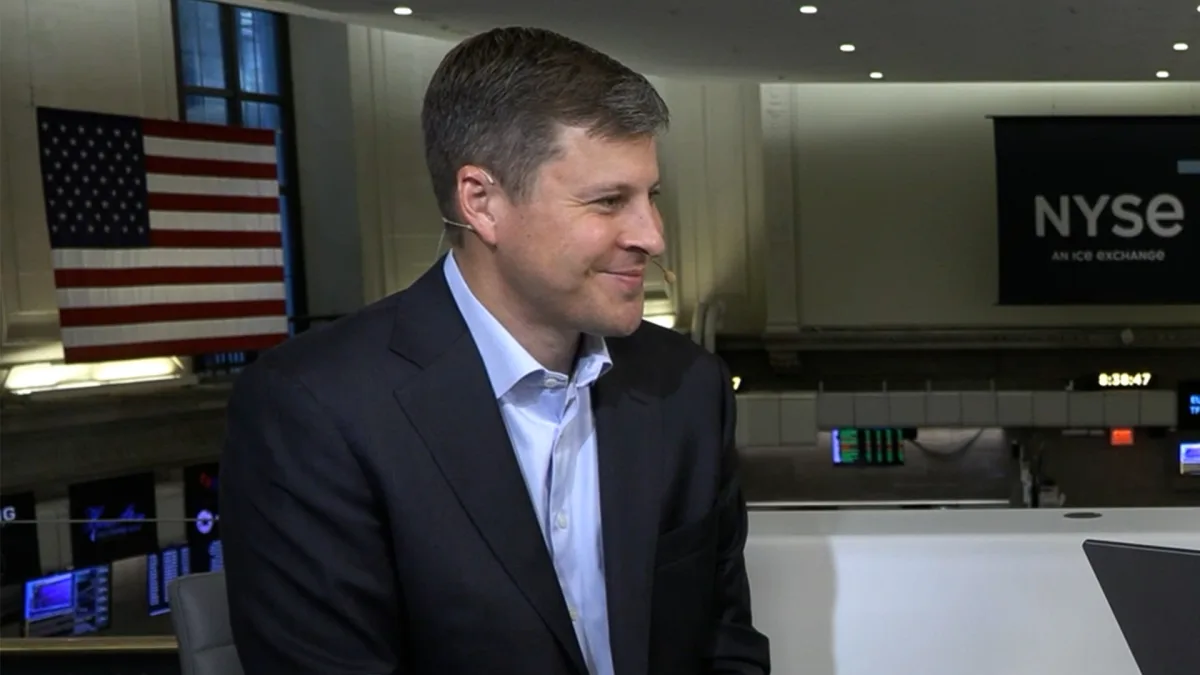
Enterprises deploying AI agents confront a fundamental tension: expanding what these systems can do independently while maintaining adequate oversight and control. The stakes have shifted as organizations move beyond isolated tasks to entrust agents with decisions affecting data protection and operational continuity, according to John Scimone, president and chief security officer of Dell Technologies Inc.
Speaking at the AI Cybersecurity and Resilience Summit in an interview with theCUBE's Dave Vellante, Scimone emphasized that the design phase represents the optimal moment to embed security and resilience into agent systems. "The good news is, this is the best time to get it right," Scimone said. "Organizations are today designing agents that are going to be working for years ahead. At that point of design is always the best time to get security done well, to get resilience done well. Security resilience by design for agentic is a huge opportunity."
Rethinking resilience in an agent-dependent world
The nature of business continuity has fundamentally transformed. Where disaster recovery once centered on natural disasters and infrastructure failures, the modern threat landscape centers on coordinated cyberattacks that could disable entire digital ecosystems. When agents perform critical functions, their unavailability cascades into operational paralysis.
"What happens if these agents aren't available?" Scimone posed. "What happens if the data that the agents are deciding on is not available? A core part of your resilience posture has to contend with the notion that if our agents go down, our work is not happening."
Research by theCUBE Research's Krista Case surveyed 25 enterprise technology and security leaders, finding that 19 organizations had deployed autonomous agents in production environments. Yet none permitted those agents to execute high-risk operations without human intervention. This caution reflects legitimate concerns, though Scimone argues it may be excessive.
Guardrails as enablers, not constraints
Scimone contends that carefully constructed boundaries actually liberate rather than restrict agent autonomy. "It doesn't mean doing it willy-nilly and just throwing caution to the wind," he explained. "It means being very thoughtful around where can't you fail, putting deterministic guardrails in place … and letting the business run. Right now, I'm seeing too much caution in the space on that front."
Dell's internal practices exemplify this philosophy. The company implements strict identity and access controls for every deployed agent, maintains comprehensive audit trails documenting decisions and actions, and ensures full traceability. Only four of the 25 surveyed organizations had conducted tabletop exercises simulating AI agent incidents, highlighting a broader gap in preparedness.
The survey uncovered a counterintuitive finding: organizations that granted agents bounded autonomy demonstrated superior recovery readiness compared to those relying exclusively on human approval workflows. From Scimone's perspective, this validates the thesis that upfront governance design enables rather than impedes risk-taking.
"Organizations that design those governance systems upfront are going to be the ones, ironically, that can move the quickest and can take the most risk because they can do it confidently with the right insights and the right data to know that they're not overstepping," Scimone said. "At the same time, they're not under-leaning."
The AI threat curve ahead
Adversaries have incorporated AI into attack operations for years, but deployment remains limited in scope. Scimone expects this trajectory to shift dramatically. "We haven't hit that curve that I do believe is coming, and in the coming quarters, not in the coming years," he said. This acceleration underscores why establishing security foundations now matters critically.
https://www.youtube.com/embed/7qFS7EzEe60?feature=oembed
Dell has responded by expanding its cyber resilience capabilities and joining OpenAI Group PBC's initiative calling for coordinated industry action on defensive measures. The convergence of agent adoption and evolving threat sophistication creates both urgency and opportunity for organizations willing to invest in governance infrastructure from the outset.