SpaceX targets orbital debut for Starship on September 22 flight
The aerospace company announced plans to attempt its first orbital launch of the Starship vehicle as early as next week, pending regulatory clearance, with a target liftoff in South Texas.
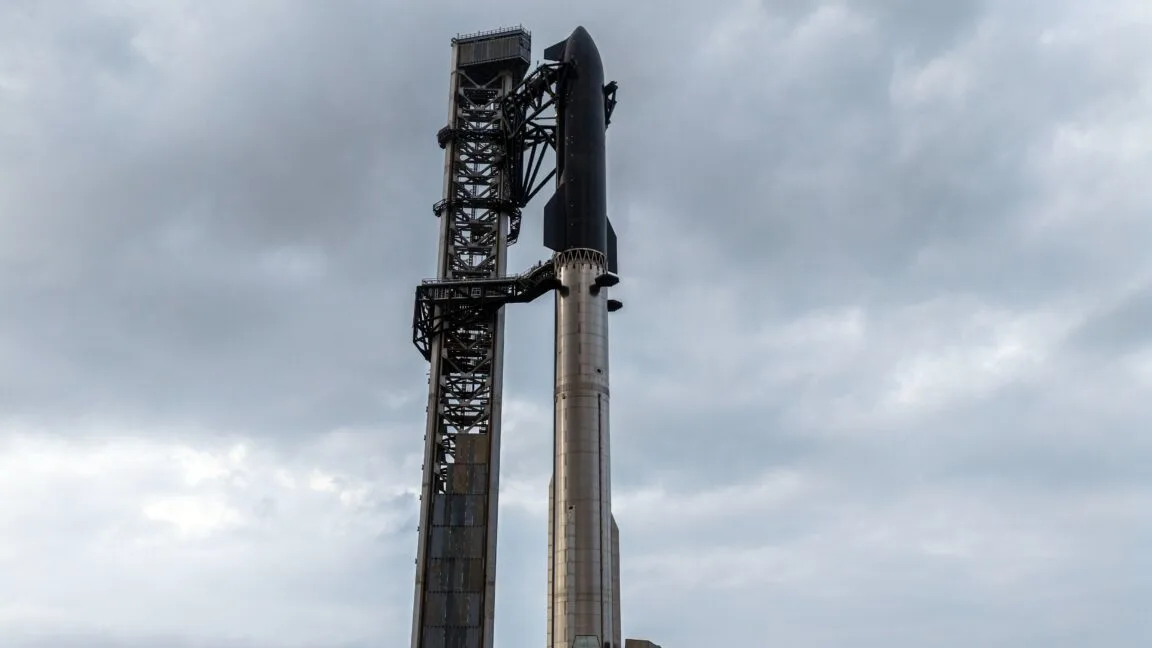
SpaceX disclosed intentions to conduct its 14th Starship test mission no earlier than September 22, contingent on regulatory approval. The flight represents a watershed moment for the program: it will mark the first occasion on which the company seeks to propel Starship beyond suborbital altitudes and into orbit.
Liftoff is scheduled for 7:15 am Central Time at the Starbase facility in Texas, or 12:15 UTC, with a 75-minute window available for launch operations. The timing aligns closely with sunrise in Brownsville, Texas, at 7:17 am CT, potentially creating dramatic visual conditions for the mission.
The super heavy-lift vehicle will transport 26 next-generation V3 Starlink satellites to an altitude of 275 kilometers. According to SpaceX's mission description, the upper stage will execute six complete orbits before concluding operations approximately 10 hours after launch.
An orbital achievement would represent substantial progress for Starship development since the program's inaugural test flight on April 20, 2023. The company has pursued iterative refinements to both the Super Heavy booster and Starship upper stage as it works toward a fully reusable, super heavy-lift architecture.
First-stage modifications
During the July 24 test flight, the first stage performed as intended during the ascent phase. Complications emerged later, however, when the booster attempted to return to Earth.
In the terminal phase of the burn, the three center engines showed signs of ice clogging, which triggered an early end to the maneuver. The booster went on to attempt a landing burn, with 8 of the 13 planned engines reigniting before the booster made a hard splashdown in the Gulf.
SpaceX
To address these challenges, SpaceX has incorporated engine filtering improvements and software enhancements designed to boost restart reliability on the booster destined for the September 22 mission. This first stage will forgo an attempt to return to the launch facility, instead targeting a controlled splashdown in the Gulf of Mexico. Success in this objective could pave the way for a booster catch attempt during the subsequent Starship test flight.
Second stage will again be ocean-bound
The upper stage will pursue orbital insertion for the first time and will release operational Starlink payloads. The V3 satellites represent a substantial capability increase compared to the V2 mini variants deployed on Falcon 9 missions, and will employ onboard propulsion systems to adjust their final orbital positions.
Although the upper stage achieved a largely successful ocean recovery during July's test flight, SpaceX will not attempt to return it to the Texas launch site during the upcoming mission. Instead, the company intends to accumulate additional performance data regarding the thermal protection system. Multiple enhancements have been incorporated since the previous flight, informed by telemetry and post-recovery analysis of the vehicle retrieved from the Indian Ocean.
[The upgrades] include additional retention mechanisms added to tiles in areas deemed to be at highest risk of falling off during ascent, addressing recently discovered areas that offer flow paths behind tiles for plasma, and flying multiple areas with a curved tile design that has shown the ability to reduce heating in the gaps between tiles.
SpaceX
In a first for the program, two tiles recovered from Ship 40 will be reflown on Ship 41, demonstrating tile reusability for Starship.