Pentagon downplays captured underwater drone as Iran signals reverse-engineering plans
Iranian officials have publicly mocked the U.S. Navy over the recovery of an Anduril-made autonomous underwater vehicle near the Strait of Hormuz, with one embassy posting about an imminent "unboxing ceremony" by reverse engineers.
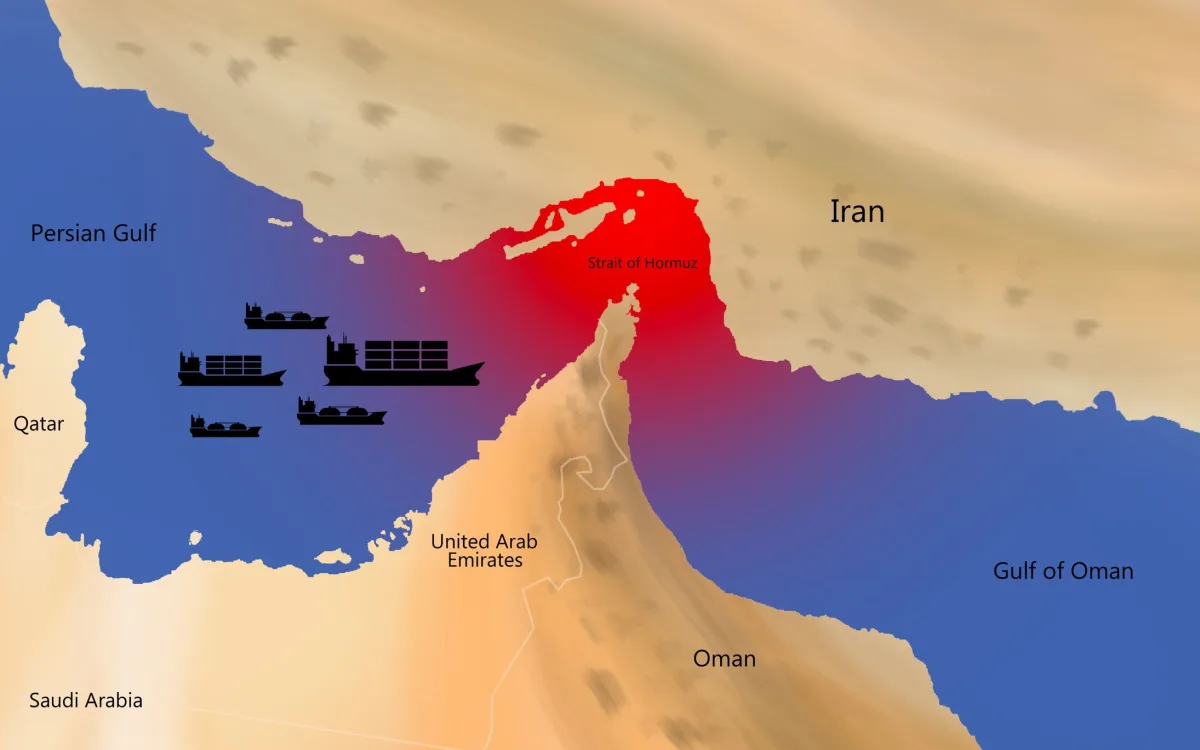
Tehran's capture of a U.S. Navy underwater drone in regional waters has triggered a sharp divergence in messaging: while American military officials and the vehicle's maker Anduril have sought to minimize the incident's significance, Iranian government accounts have seized on the loss as a propaganda opportunity. A Reuters report from September 9 detailed how the 19-foot Dive-LD autonomous underwater vehicle experienced a malfunction during a survey operation before Iran's Islamic Revolutionary Guard Corps retrieved it.
The Iranian government's public response has been notably celebratory. Multiple Iranian embassies have used social media to ridicule the U.S. over the incident. Iran's embassy in Ghana likened the recovery to "pulling a plastic bottle from a fishing net," describing the drone as "still blinking like an idiot." More pointedly, Iran's embassy in Hyderabad posted: "Unboxing ceremony by our reverse engineers, tomorrow morning!"
A notable disconnect exists between Anduril's marketing claims and the Pentagon's characterization of the lost vehicle. Anduril has promoted the Dive-LD as a highly dependable and flexible large autonomous underwater vehicle with operational endurance of up to 10 days in harsh conditions, previously marketing it as the market's most reliable and flexible option in its category. The Navy, by contrast, has characterized the captured unit as an older, defective model that "neither collected sensitive data nor carried any classified sonar or radar equipment."
Experts consulted by Reuters indicated that while Iran is unlikely to gain decisive military advantage from the capture, the country does possess genuine technical capabilities. Bryan Clark, director of the Center for Defense Concepts and Technology at the Hudson Institute, told Reuters that Iranian engineers "could definitely reverse-engineer the mechanical systems." Clark expressed greater doubt about whether Tehran could overcome the software's built-in protections designed to prevent unauthorized access.
Historical precedent suggests the U.S. government typically treats such losses with considerable concern. Following Iran's 2011 recovery of an RQ-170 Sentinel stealth reconnaissance drone, then-President Barack Obama made a public request for its return. Iran subsequently announced it had reverse-engineered the aircraft and displayed domestically produced drones that appeared to incorporate design elements from the captured vehicle. In 2022, the Navy deployed a patrol ship and an MH-60S Seahawk helicopter after an Iranian vessel attempted to recover an American Saildrone surface vehicle in the Gulf.
Analysts expect Iran to leverage the incident for narrative purposes regardless of technical gains. Mona Yacoubian, director of the Middle East program at the Center for Strategic and International Studies, observed that "This is something that Iran has proven very adept at exploiting for its own benefit in terms of seeking to frame the narrative as one of U.S., in this case, ineptitude and their ability to sort of retain control over the Strait of Hormuz."

The drone capture occurs within a broader context of U.S.-Iran technological conflict. Since Washington launched Operation Epic Fury in late February, the confrontation has repeatedly affected the technology sector and its supply networks. An Iranian strike in April 2026 halted operations at Saudi Arabia's Jubail petrochemical complex, disrupting supplies of a critical resin essential for PCB laminates. Iranian cruise missiles also reportedly targeted an Amazon data center in Bahrain during July.