Nvidia's RTX 5090 Pushes 16-Pin Connector to Dangerous Limits With DLSS 5
Testing reveals that enabling DLSS 5 on Nvidia's flagship GPU drives power connector temperatures above 90 degrees Celsius and current draw to 10.1 amperes—exceeding safety specifications when connections are imperfect.
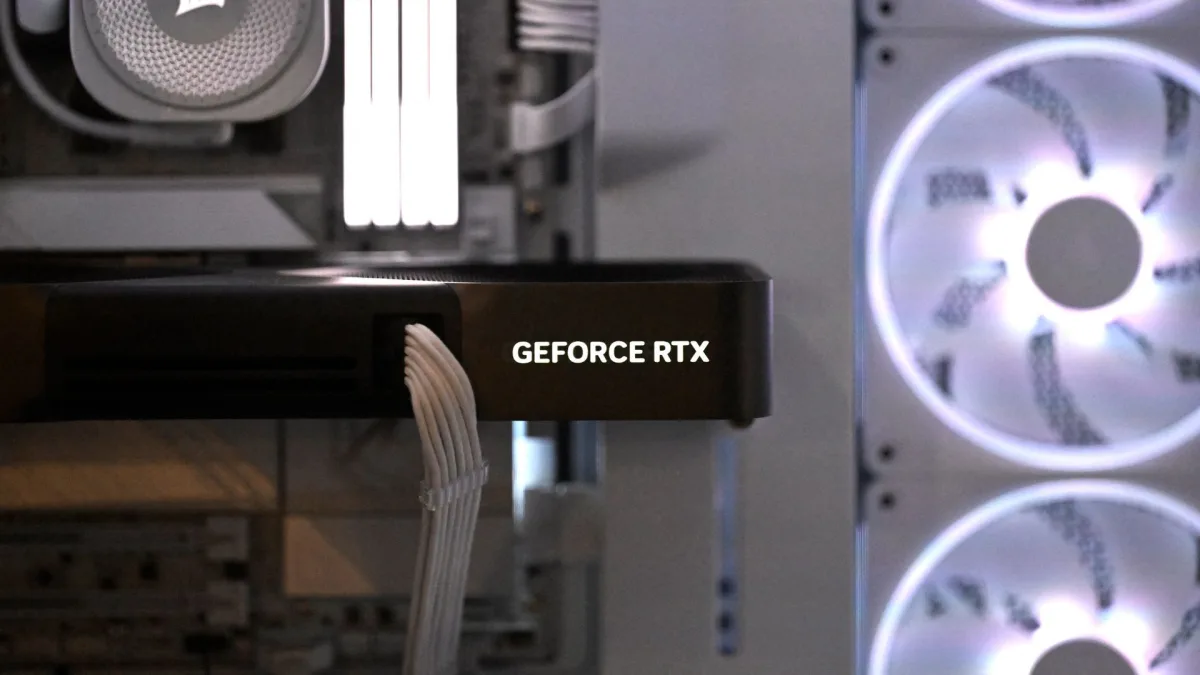
The GeForce RTX 5090 delivers impressive performance gains through DLSS 5, but thermal and electrical stress on the graphics card's power delivery system raises concerns for users considering the upgrade. Testing conducted by Korean tech publication QuasarZone found that the 16-pin (12VHPWR) power connector on the RTX 5090 Founders Edition reached temperatures exceeding 90 degrees Celsius under peak load—surpassing even the GPU die itself. Peak power consumption approached 650W during the tests.
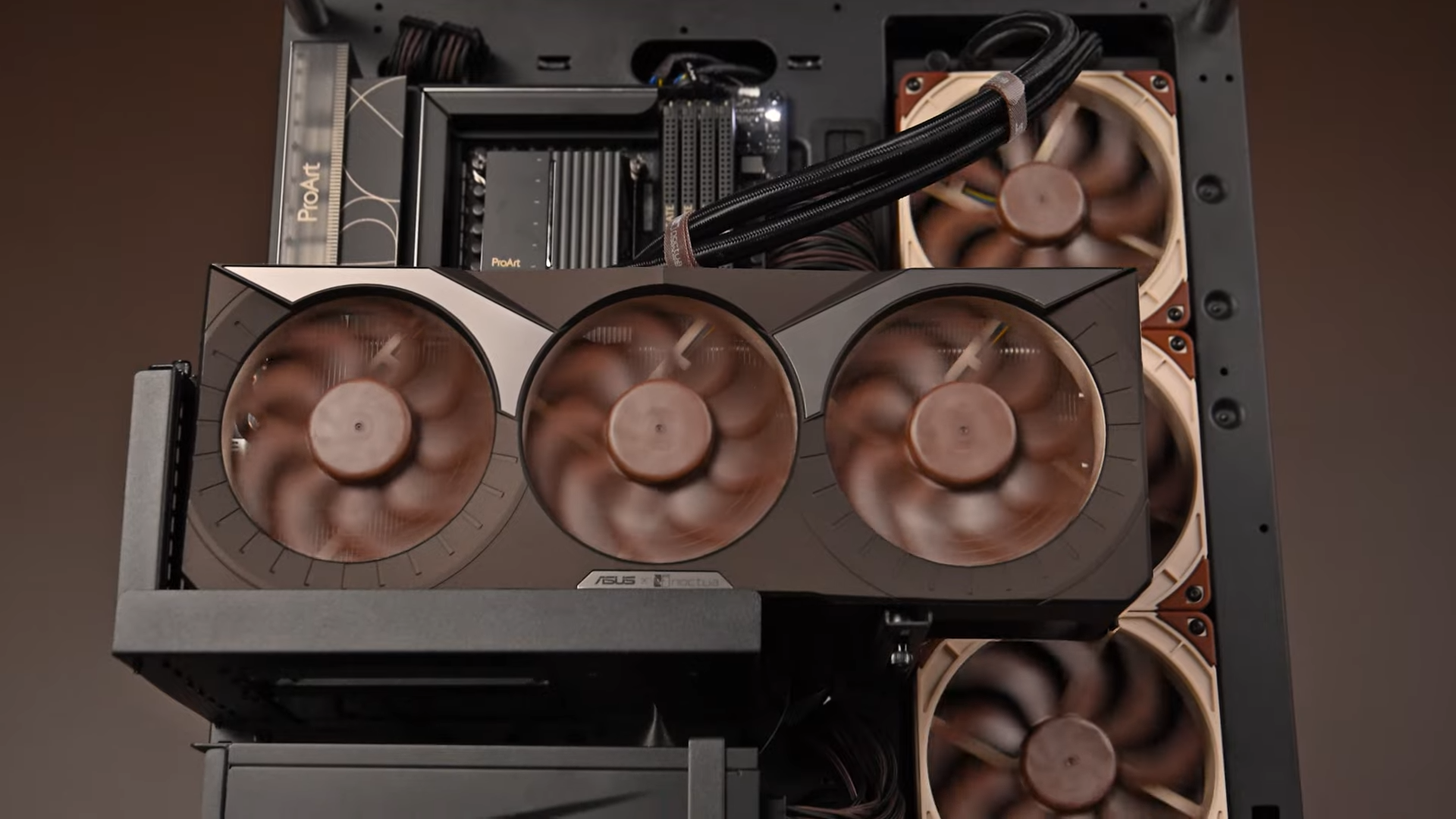
Reports of 16-pin power connector failures continue to surface across online forums and social media, with both mainstream tech outlets and experienced users encountering meltdowns. The problem is not limited to Nvidia's Blackwell architecture; similar failures have been documented on AMD Radeon graphics cards as well. Enabling DLSS 5 appears to intensify the thermal and electrical stress on these connectors.
QuasarZone's controlled testing environment maintained ambient temperatures at 27.5 degrees Celsius while running Cyberpunk 2077 at 4K resolution with DLSS Quality and Ultra image settings for 20 minutes. The team evaluated three cards: the GeForce RTX 5090 Founders Edition, Asus ROG Astral GeForce RTX 5090, and GeForce RTX 5080 Founders Edition.
Temperature Spikes With DLSS 5 Enabled
On the RTX 5090 Founders Edition, the 16-pin connector's latch side measured 77.1 degrees Celsius without DLSS 5, jumping to 83.4 degrees with it enabled. The opposite side climbed from 80.9 degrees to 91.7 degrees. Meanwhile, the GPU core temperatures rose from an average of 79.4 degrees and peak of 82.3 degrees to 83 and 86.3 degrees respectively.
The RTX 5080 Founders Edition exhibited far more moderate thermal behavior. Its 16-pin connector measured 45.8 degrees on the latch side and 47.6 degrees on the opposite side without DLSS 5, rising only to 52.2 and 48.6 degrees with the feature active. The lower power consumption of the RTX 5080 explains the significantly reduced thermal load.
Power Consumption Exceeds Specifications Under Stress
Software-based power monitoring through HWiNFO showed the RTX 5090 drawing 13% more power with DLSS 5 enabled, while the RTX 5080 increased by 17%. Both cards remained within their official TDP ratings—575W for the RTX 5090 and 360W for the RTX 5080—according to software telemetry.
Direct circuit board measurements using Nvidia's Power Capture Analysis Tool (PCAT) revealed a more concerning picture. The RTX 5090's power draw through the 16-pin connector reached 582.7W without DLSS 5 and 646.7W with it enabled, an 11% increase. Custom models showed even higher consumption: the GeForce RTX 5090 32G Lightning Z spiked to 592W at 1080p, 695W at 1440p, and 848W at 4K when running DLSS 5.
Current Draw Approaches and Exceeds Safety Limits
QuasarZone measured current flowing through each of the six power pins on the Asus ROG Astral RTX 5090. Without DLSS 5, pin currents ranged from 6.94 to 7.47 amperes. Enabling DLSS 5 pushed these values to between 7.83 and 8.51 amperes. The PCI-SIG specification allows up to 9.2 amperes per pin, leaving only 0.69 amperes of headroom above the peak measured current.
A simulation of a loose or imperfectly connected pin revealed the vulnerability of the system. With one nonfunctional pin redistributing electrical load across the remaining five, peak current reached 8.9 amperes without DLSS 5—already uncomfortably close to the 9.2-ampere limit. Activating DLSS 5 pushed current to 10.1 amperes, exceeding the specification by 10 percent. This scenario represents the most common cause of 16-pin connector failures due to unbalanced power distribution.
While QuasarZone's findings paint an alarming picture, they align with observations that DLSS 5 substantially increases power demands on high-end graphics cards. At least one user has reported a 16-pin connector meltdown while using DLSS 5, suggesting the theoretical risks documented in testing can translate to real-world failures.