Nvidia Creates Export Control Committee After Huang's Departure
The chipmaker's board has established a new oversight body to manage national security and trade compliance issues, following Jensen Huang's resignation from the company.
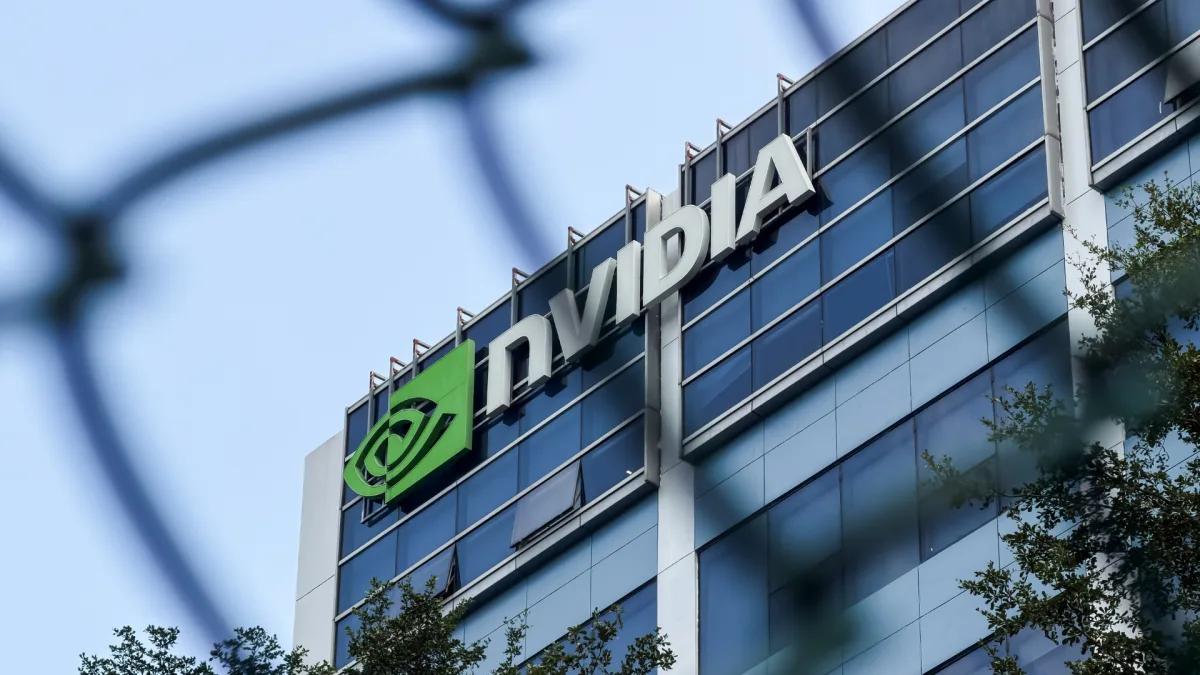
Nvidia's board has moved quickly to establish a National Security and Export Control Oversight Committee, a newly formed standing body created just days after Jensen Huang stepped down from his role. The committee will handle high-level supervision of the company's "national security policies, export control compliance, and global trade risk management," with both the National Security Team and Global Trade Compliance Team reporting to it and to interim CEO Colette Kress.
Nvidia chairperson Harvey Jones framed the move as a response to the strategic importance of the company's technology. "Nvidia recognizes that advanced silicon technologies and the emergence of artificial and superintelligence present unprecedented challenges for national security," Jones said. "As the world's leading advanced computing company, Nvidia has both a responsibility and an opportunity to lead the industry in addressing these challenges. We are committed to working constructively with government and industry partners to help establish and advance a robust framework that uses every tool at our disposal to safeguard national security while supporting continued technological innovation."

The committee's creation follows a period of significant turbulence for the company. Huang's admission of an affair with Alice Huang, identified as an alleged Chinese spy, sparked investigations into potential security breaches. Subsequent reporting revealed that she was connected to a network of entities and allegedly played a role in channeling approximately $7.5 billion worth of restricted Nvidia chips into China. Further scrutiny uncovered that her husband, Kang Wei, was instrumental in her prominence and apparently condoned her relationship with the billionaire executive. The precise motivations behind their activities—whether driven solely by profit or influenced by external state actors—remain unconfirmed, but the situation has intensified regulatory attention on the company.
Congressional leaders have responded to the situation. The heads of the House committees focused on China, Foreign Affairs, and Intelligence have requested a closed-door briefing with Huang to examine Nvidia's "security protocols against foreign adversary espionage." Additionally, President Donald Trump indicated that the FBI is investigating Huang's relationship with Alice Huang.
The company has faced escalating export restrictions over the past several years. Washington first imposed export controls on Nvidia's A100 and H100 chips in 2022, prompting the company to develop the A800 and H800 variants for the Chinese market that met U.S. performance standards. A 2023 policy adjustment led to the creation of the H20, a further-restricted version that nonetheless saw strong demand. While the Trump administration did not adopt Biden's AI diffusion rule—which would have blocked multiple countries from purchasing Nvidia AI chips—the president did institute a ban on H20 exports to China spanning April through June 2025.
Concerns about unauthorized chip flows to China predate the recent controversies. A semiconductor analysis firm has documented more than 1.5 gigawatts of restricted AI chips reaching China, with estimates suggesting that up to 1.5 million Nvidia GPUs have been smuggled in recent years. Huang has consistently disputed these allegations, stating that "There's no evidence of any AI chip diversion." Regardless of the veracity of the claims, Nvidia's establishment of the oversight committee signals the company's determination to address potential vulnerabilities. Huang, despite his departure from the company, faces ongoing congressional scrutiny and federal investigations.