NEC Exits Quantum Hardware Development, Shifts Focus to Applications
The Japanese technology firm has quietly ended its quantum computing hardware program after determining that commercialization timelines and development costs made the business case untenable, though it will continue exploring practical quantum applications.
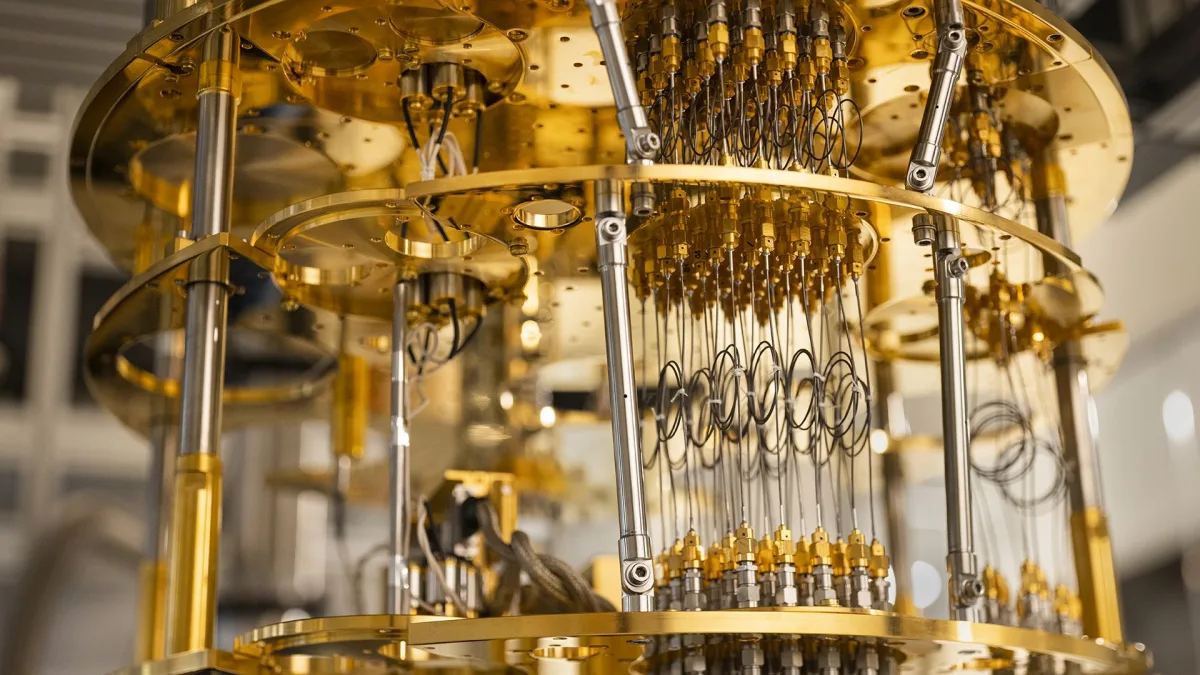
NEC, a pioneer in quantum computing research dating back to the 1990s, has become one of the earliest entrants in the field to abandon hardware development, according to reporting by Diamond Online. The company's decision marks a strategic pivot away from building physical quantum machines, even as it maintains interest in quantum technology applications and customer-focused proof-of-concept initiatives.
The Japanese conglomerate's involvement with superconducting quantum computing traces to the field's infancy. In 1999, NEC researchers achieved a landmark demonstration of the world's first superconducting solid-state qubit, establishing a technological foundation that would later underpin quantum systems developed by Google and IBM. Yet the company concluded in March 2026 that the path to profitable quantum hardware commercialization extended too far into the future to justify continued investment. Following the discontinuation, multiple researchers from the program, including senior leadership, transitioned to competitor Fujitsu.
When approached about the shift, NEC declined to characterize its move as a full exit from quantum computing. The company stated instead that it "continues to evaluate practical applications and industrialization of quantum technologies as well as conduct proof-of-concept projects with customers." This framing suggests NEC is withdrawing specifically from the hardware development track while preserving opportunities in quantum software, algorithms, and customer-facing applications—areas that avoid the substantial capital requirements and technical risks inherent in building quantum processors and complete systems.
Fujitsu stands to benefit from the influx of NEC talent. The company already operates an advanced superconducting quantum computing program and unveiled a 256-qubit system last year in partnership with Riken. Fujitsu has set targets to achieve machines exceeding 1,000 qubits during 2026 and to surpass 10,000 superconducting qubits by fiscal 2030.
NEC's departure from quantum hardware development is striking given the landscape of early quantum computing pioneers. Among the major corporate research laboratories that initiated quantum computing exploration in the 1990s and remain operational today, virtually none have completely withdrawn from hardware development. IBM, which participated in some of the earliest experimental quantum computer efforts alongside NEC, has instead become a leading developer of quantum computing systems.
The company's current decision reflects a historical pattern. In 1990, NEC ranked first globally in semiconductor revenue, surpassing Toshiba, Hitachi, Motorola, Intel, and Fujitsu. The firm's 1999 superconducting-qubit breakthrough emerged from this position of strength, backed by substantial semiconductor research infrastructure and expertise in solid-state physics. However, Intel's dominance in the PC microprocessor market during the 1990s eventually eroded NEC's semiconductor leadership.
NEC's exit from semiconductors unfolded gradually across roughly a decade. The company spun off its DRAM operations in 1999 into a joint venture with Hitachi called NEC-Hitachi Memory, later known as Elpida. In November 2002, NEC separated its remaining semiconductor business—microcontrollers, system LSIs, SoCs, and related devices—into an independent entity initially named NEC Electronics, which subsequently became Renesas Electronics.

Today, as commercialization of quantum computers remains years away and development expenditures continue climbing, NEC's business priorities have shifted elsewhere. The company now concentrates on IT services, enterprise systems, aerospace and defense, telecom infrastructure, and artificial intelligence and security solutions—domains where quantum computing hardware represents a less natural strategic alignment.