Microsoft's Cobalt 200 ARM chips reach general availability with tuned performance for AI workloads
Microsoft has made its second-generation Arm-based Cobalt 200 virtual machines generally available across Azure, delivering up to 50% better performance than its predecessor and targeting the specific demands of AI agent execution.
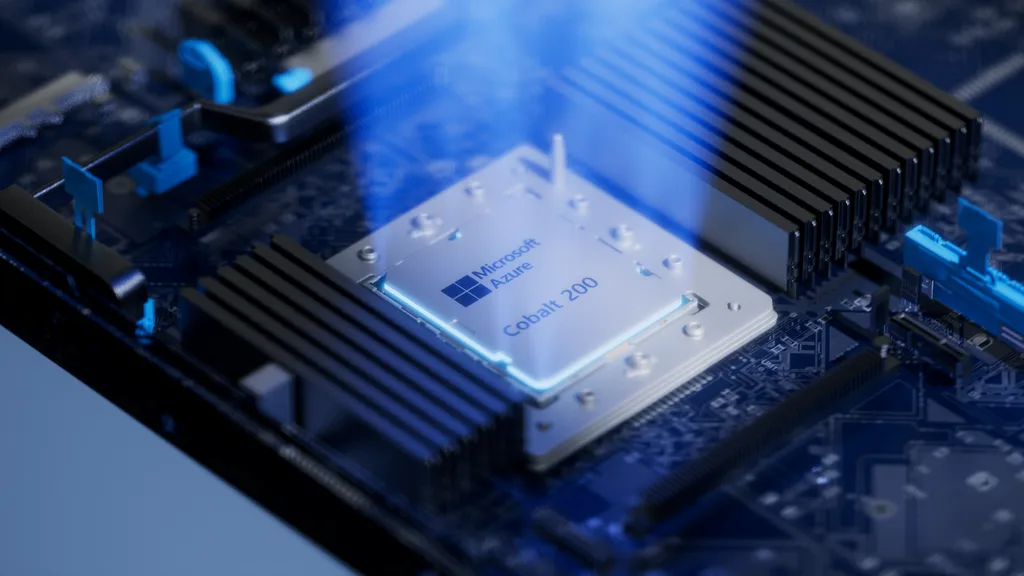
At its Ignite conference in San Francisco on Tuesday, Microsoft announced that Cobalt 200 virtual machines powered by its second-generation Arm-based processors are now generally available in 14 Azure regions, with plans to expand to 23 regions by year's end. The company reports up to 50% performance gains compared with the Cobalt 100 generation.
The announcement comes roughly one year after Microsoft first introduced Cobalt 200 and six months after the VMs entered preview. According to Microsoft's testing, the new processors deliver up to 1.5 times the performance for AI agent tool execution—including operations such as file searching, code compilation, and task execution within sandboxes—relative to Cobalt 100.
Pat Stemen, Microsoft's vice president for Azure Cobalt, explained to The Silicon Ledger that the team spent the past year refining infrastructure specifically for these operations. He noted that the chip's large caches, memory performance, and physical cores were already well-suited to workloads involving sandbox initialization. Microsoft subsequently created "a set of benchmarks inside the company for those common operations" and optimized the product against them.
Two processor modes for different workload profiles
Cobalt 200 offers developers a choice between two operational modes. Deterministic mode maintains a fixed 3.2 GHz frequency across all cores, while opportunistic mode permits cores to reach 3.6 GHz when power and thermal conditions permit.
Microsoft indicates that opportunistic mode can yield up to 12% additional performance, though clock speeds will fluctuate. According to Stemen, "Customers love fixed frequency, by the way. They love the predictability that comes with that."
The company recommends deterministic mode for distributed data and analytics clusters, where the slowest node becomes the bottleneck, and for services with strict performance requirements. Web and API services, transaction processing, and media workloads may see greater benefit from opportunistic mode's additional speed.
Developers can select the mode when creating each VM or modify it later through the Azure portal, command-line tools, or infrastructure templates. Stemen noted that "if you buy four cores from us, you can choose all four of them to run flexibly or deterministically." He added that the extra performance typically remains available until the machine's cores reach heavy load.
Hardware design tailored to Azure's workload patterns
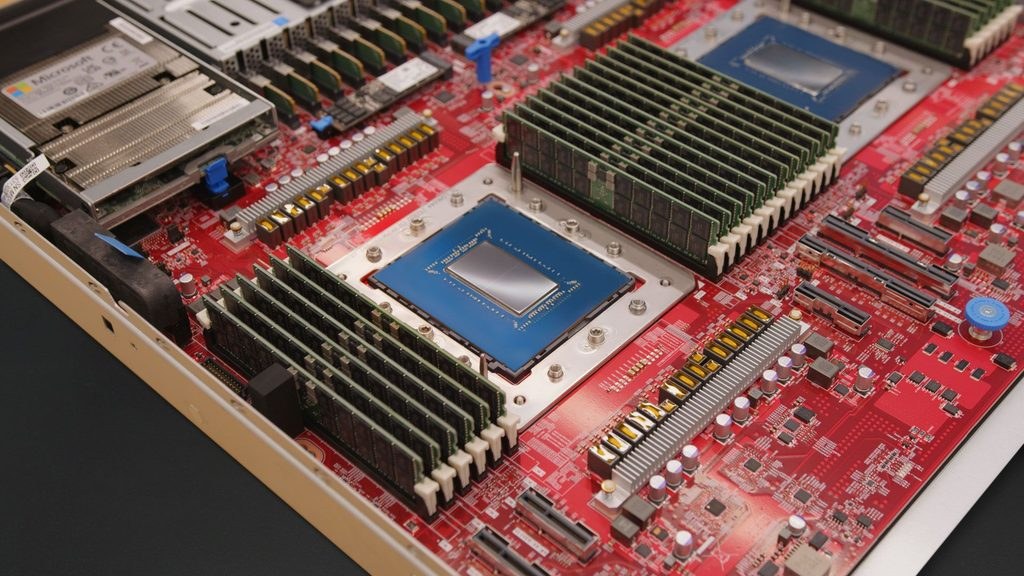
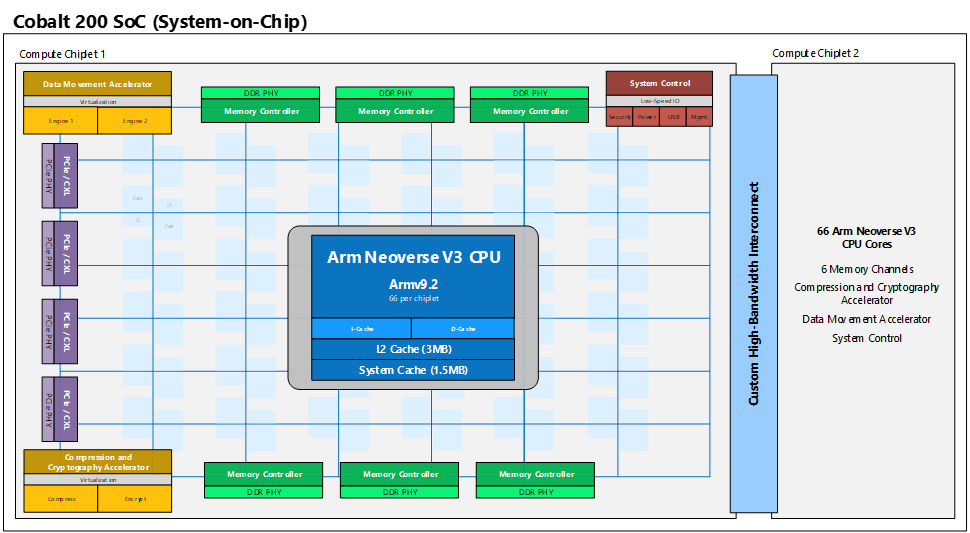
Cobalt 200 incorporates 132 Arm Neoverse V3 cores manufactured on TSMC's 3nm process, with VMs scaling to 128 vCPUs. Each vCPU maps to a full physical core and includes 3 MB of private L2 cache. The processor also features 192 MB of system-level cache and 12 channels of DDR5 memory.
The transition from Cobalt 100 involved moving from a cost-optimized Arm core architecture to a performance-optimized design, complemented by expanded caches and enhanced memory bandwidth. Every Cobalt 200 VM incorporates Azure Boost, which offloads networking and storage processing from the host system. Microsoft reports up to 15% higher network bandwidth and 20% higher remote storage IOPS relative to Cobalt 100.
Stemen explained that "They need remote storage. They need high-performance networking. They need local SSD" when describing the requirements of customer workloads on Azure.
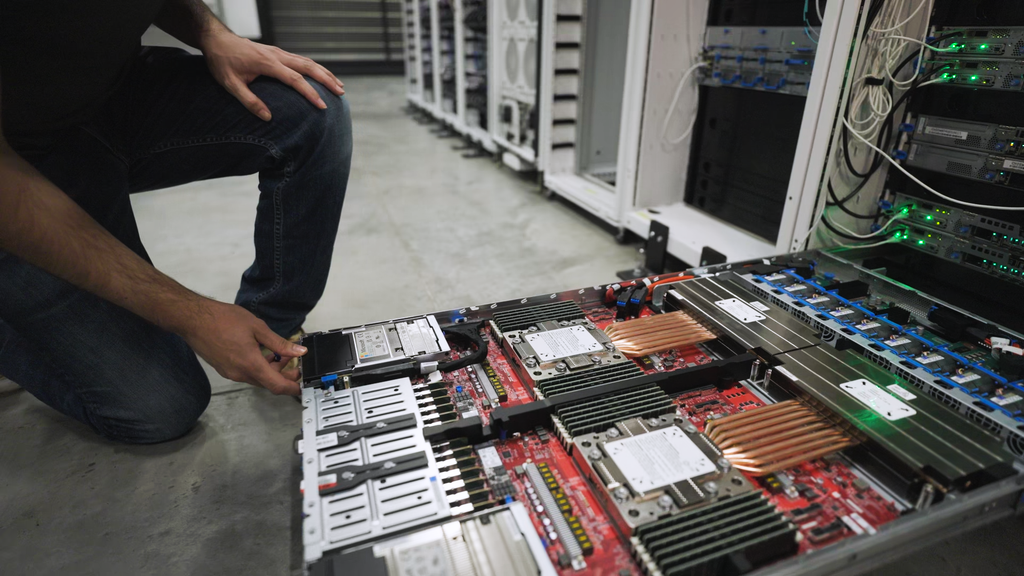
According to Stemen, the team decomposes Microsoft's internal workloads into smaller components, models their behavior before hardware exists, and uses those findings to inform decisions about cache sizes, memory configuration, and even server rack cooling. Product teams participate in the earliest planning phases. "They're influencing the beginning of the product from when it's just in PowerPoint," Stemen said.
Microsoft's Teams media-processing service demonstrated 1.65 times the performance on Cobalt 200 compared with Cobalt 100, with the service achieving linear scaling across physical cores and reaching 90% vCPU utilization while serving traffic. Outside Microsoft, Amadeus reported more than 30% higher flight-search throughput in its benchmark testing relative to Cobalt 100.
Expanding the range of workloads running on Arm
Multiple Microsoft services including Azure Database for PostgreSQL, Azure DevOps, Azure SQL, Microsoft 365, and Xbox already operate on Cobalt processors today.
Stemen noted that previously "customers had real concern about the lift." He continued, "Since then, there's more evidence of that working out, and the tools have improved, and the products have gotten better all at the same time."
Beyond its general-purpose and memory-optimized VMs, Cobalt 200 brings two additional families to general availability: the high-memory Mpsv4 family, offering 16 GiB of memory per vCPU, and the storage-optimized Lpsv5 family, providing up to 23 TB of local NVMe storage.
Stemen observed that "now we're seeing interest and desire for large in-memory databases, large existing enterprise workloads, and the ability to port them now being easier has helped."
While Microsoft will continue investing in x86 processors, the company anticipates that Cobalt 200 will represent "a significant portion of our new Azure Compute capacity in 2027 and moving forward."
Developers can deploy the VMs using existing Azure tools and integrate them into Virtual Machine Scale Sets or as Azure Kubernetes Service node pools.