LogicMonitor Elevate: AI-driven observability reshapes enterprise IT operations
At LogicMonitor's Chicago conference, enterprise IT leaders demonstrated how artificial intelligence and observability tools are automating incident response and reducing operational complexity across hybrid environments.
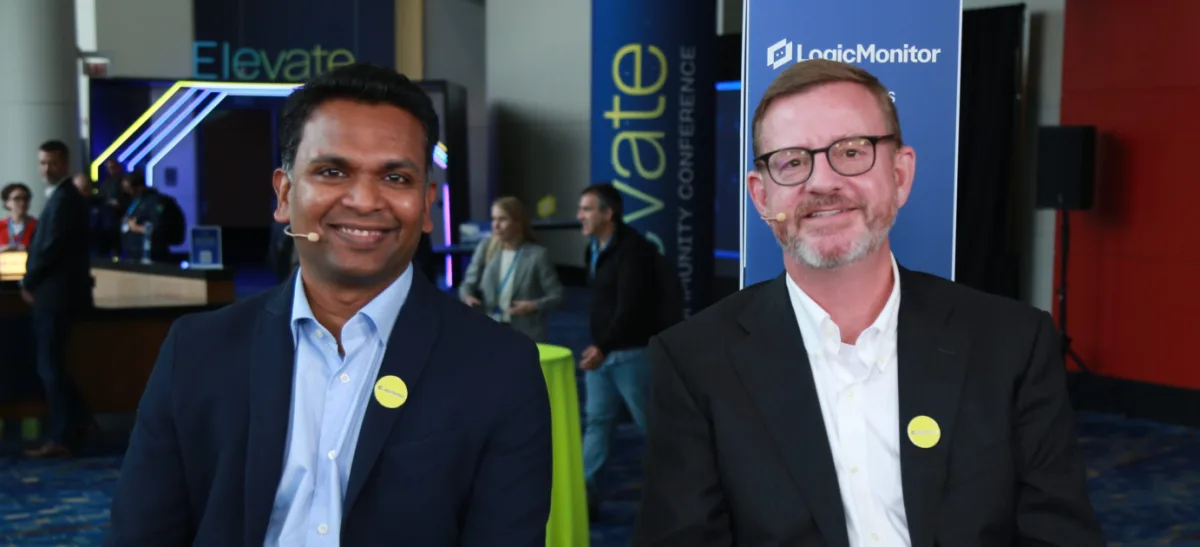
Traditional monitoring approaches are giving way to AI-powered observability systems that enable organizations to detect infrastructure problems faster and respond with greater precision. LogicMonitor's Elevate conference in Chicago this week centered on integrating operational telemetry, AI automation and governance frameworks to tackle the complexities of hybrid IT environments. The shift is producing concrete results: GlobalFoundries cut alert noise by 98% using Edwin AI, while managed service providers reported faster incident resolution and improved engineering productivity. LogicMonitor's vision of autonomous IT remains ambitious, though industry observers note that questions persist around how broadly these systems will be adopted, whether organizations will trust them with critical decisions, and how to maintain proper oversight.
Observability is becoming an important foundation for both human decision-making as well as autonomous workflows. The opportunity is to connect performance, availability, resources utilization, as well as costs, so that engineering teams can understand operational trade-offs behind the problem.
Paul Nashawaty, practice lead and principal analyst for application development at theCUBE Research
During the event, Nashawaty engaged with technology executives, customers and partners to explore how Edwin AI, OpenTelemetry, application dependency mapping and governed automation are reshaping enterprise operations. Discussions also covered the rising significance of digital experience monitoring, the evolving responsibilities of managed service providers and the practical hurdles of transitioning AI from pilot projects to production deployments.
Eight key takeaways from the conference
1. LogicMonitor's AI strategy shifts observability toward governed automation
Enterprise observability is evolving beyond static dashboards and alert fatigue as AI-driven operations demand richer context, more automation and stronger control mechanisms. Steven Dickens, chief executive officer of HyperFRAME Research, joined Nashawaty to examine LogicMonitor's keynote announcements and its five strategic pillars: unified context, AI-governed action and trust. The conversation underscored how OpenTelemetry, Edwin AI and Catchpoint are enabling LogicMonitor to connect complex hybrid environments and deliver actionable intelligence directly into existing business processes. Dickens stressed that customer adoption rates, governance effectiveness and execution quality will ultimately determine whether LogicMonitor's AI roadmap translates into real operational improvements.
2. Autonomous IT gains ground as AI governance and trust take priority
Organizations are increasingly adopting autonomous IT systems to lower operational overhead, streamline incident response and establish confidence in AI-driven decision-making. A measured rollout beginning with low-risk, trustworthy automation can enable enterprises to expand AI across more demanding environments, according to Karthik Sj, chief artificial intelligence officer at LogicMonitor, and Garth Fort, chief product officer. LogicMonitor's latest Edwin AI improvements broaden capabilities through multi-agent investigations, connections to existing systems and governed automation. Catchpoint integration and governance mechanisms further support this transition by enhancing visibility into application performance while preserving control over autonomous agents.
3. AI adoption drives workforce transformation and measurable business results
Deploying AI technology alone is insufficient; successful AI transformation requires employee confidence, strong leadership and organizational restructuring to support adoption. Alyene Schneidewind, chief performance officer of LogicMonitor, described how the organization achieved 95% employee adoption of ChatGPT in four months and saw staff develop more than 2,000 custom GPTs in the first year. This internal shift has progressed toward reimagining workflows and tracking business outcomes, including an AI sales assistant that frees up half a day per week for employees. Governance structures, cross-team coordination and new workforce development strategies are helping the company rethink operational models and convert AI investments into tangible business value.
4. AI-powered managed services shift focus toward business outcomes
Managed service providers are reimagining conventional IT support as AI automation creates pathways to reduce spending, accelerate incident fixes and redirect technical staff toward strategic initiatives. AI-powered observability and autonomous workflows are helping enterprises move away from reactive troubleshooting toward anticipatory service delivery, according to John Grosshans, president of field operations at LogicMonitor, and Tim Wheeler, chief artificial intelligence officer of Bell Techlogix Inc. Bell Techlogix is leveraging AI assistants to expedite incident categorization, automate record-keeping and shorten resolution cycles, while LogicMonitor is advancing organizations toward autonomous IT via integrated data, event analysis and governed automation. This evolution is also reshaping the managed service provider role, with heightened focus on demonstrable business outcomes, customer partnerships and preventive problem-solving.
5. Breaking down IT silos creates a path to autonomous operations
Disconnected IT systems are compelling enterprises to reconsider how they handle observability, automation and service delivery in hybrid infrastructures. Merging disparate platforms and standardizing procedures can help organizations boost efficiency and speed AI implementation, according to Ryan Crosby, vice president of intelligent operations sales at AHEAD. One customer consolidated from 72 separate tools to seven integrated platforms, streamlining its support structure and establishing a foundation for expanded automation. Progressing toward autonomous IT also demands executive commitment, robust governance and an integrated strategy that unites observability with incident management, change governance and automated remediation.
6. AI agents accelerate incident resolution and improve customer retention
AI is transforming the business model of managed services as providers transition from incident repair to incident prevention and demonstrating quantifiable business value. Shorter resolution windows, stronger service-level guarantees and improved customer loyalty are emerging benefits of AI deployment, according to Kyle Hill, chief technology officer of ANS Group Ltd., and Steve Smith, CTO of cloud services at Specialist Computer Centres PLC. ANS has seen Edwin AI boost engineering performance and customer retention, while Smith described an AI agent that pinpointed a technical problem in roughly three minutes after engineers had invested 40 to 50 hours in investigation. Earning customer trust in autonomous IT remains a gradual undertaking, with governance, compliance and concrete outcomes helping managed service providers broaden automation while preserving control.
7. AI-driven observability cuts alert noise by 98% at GlobalFoundries
Protecting semiconductor manufacturing operations from disruption demands early detection of potential infrastructure failures before they impact production. GlobalFoundries U.S. Inc. has deployed an observability modernization program achieving 98% implementation in six months, with Edwin AI slashing alert noise by 98%, according to Vishal Mehra, chief information officer. The organization is also consolidating observability platforms, applying dependency mapping to comprehend older applications and linking AI insights with ServiceNow to strengthen incident handling. Through executive backing and incremental automation rollout, GlobalFoundries is building toward autonomous IT operations capable of spotting potential problems and enabling corrective measures before expensive manufacturing interruptions occur.
8. Five pillars of AI-driven observability point toward autonomous IT
https://www.youtube.com/embed/videoseries?list=PLQ90g6GnUTsQ
Enterprise observability is progressing beyond conventional monitoring toward an architecture that combines telemetry, operational intelligence and governed AI to strengthen application stability and incident handling. In his closing remarks at Elevate, Nashawaty outlined five priorities steering this evolution: enterprise data foundations, unified context, AI-governed action, integrated experiences and trust and governance. OpenTelemetry, Edwin AI and expanded integration with existing systems are helping enterprises link infrastructure performance to business outcomes while lowering alert volume and enhancing root cause investigation. The subsequent phase of observability hinges on linking operational data to informed choices and governed automation, positioning enterprises to move from AI pilots toward production-grade autonomous operations.