Blue Origin Doubles Down on Florida Infrastructure to Fly 150 Rockets Annually
Blue Origin unveiled a sweeping expansion of its Cape Canaveral operations Friday, committing billions to new launch pads, manufacturing capacity, and support facilities as it races to establish New Glenn as a heavy-lift alternative to SpaceX's Falcon vehicles.
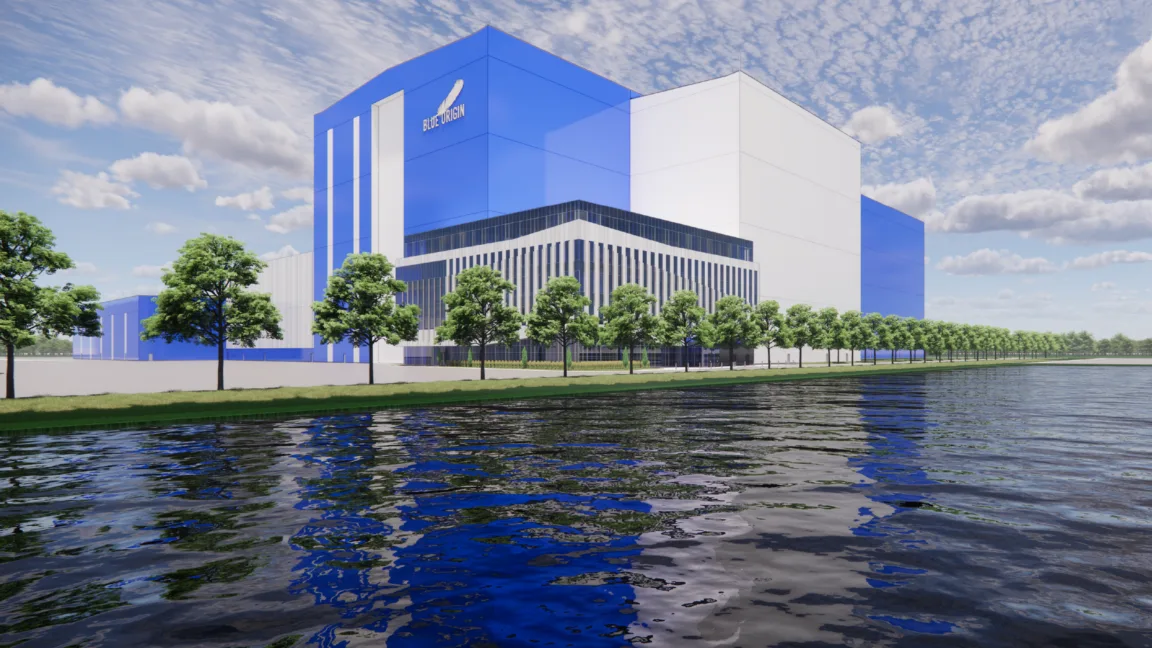
Blue Origin laid out an ambitious infrastructure push at its Florida Space Coast operations on Friday, announcing plans to eventually conduct 150 launches per year from the facility. The aerospace company will construct two additional launch pads for the New Glenn rocket alongside two pads already in development at Cape Canaveral, while simultaneously building a new manufacturing complex capable of producing 150 upper stages annually for a larger variant of the vehicle.
The expansion encompasses several complementary initiatives. Blue Origin intends to acquire two more landing vessels to retrieve and refurbish first stages of New Glenn—supplementing its existing recovery ship, Jacklyn. The company is also constructing a joint facility with the U.S. Space Force featuring four payload processing bays to handle concurrent mission preparations.
These investments are centered on one goal: building the capacity to support more missions, more reliably, and more efficiently. As we look ahead, this infrastructure is designed to support multiple flights per week by the end of the decade.
Ian Richardson, senior vice president of operations at Blue Origin
$3 billion and counting
Blue Origin has poured approximately $3 billion into Florida facilities and infrastructure to date, primarily supporting New Glenn development and operations. The company now maintains a workforce exceeding 5,000 in Florida and collaborates with 500 state-based suppliers.
According to Richardson, "Our manufacturing and operations footprint has more than doubled in the last couple of years, now spanning more than 20 sites across Brevard and Orange Counties. Blue Origin is the only company—and the largest employer—to manufacture, launch, and refurbish rockets on the Space Coast."
The statement appears positioned as a contrast to SpaceX, which has dominated Florida launch operations for years but is now retreating from the commercial satellite market with its Falcon 9 and Falcon Heavy rockets. A shortage of available Falcon launch slots after 2028 has created a supply gap that Blue Origin is positioning itself to capture with New Glenn. To date, Blue Origin has reached orbit just twice, while SpaceX has conducted hundreds of orbital launches from Florida.
Barreling back from BE-4 setback
New Glenn's trajectory suffered a significant setback in late May when a BE-4 engine malfunction destroyed a test vehicle and rendered Launch Complex 36A inoperable. Blue Origin has since mobilized to restore the site for a return-to-flight attempt, though a 2026 target appears unlikely. The company is currently tracking toward resuming New Glenn launches in early 2027.
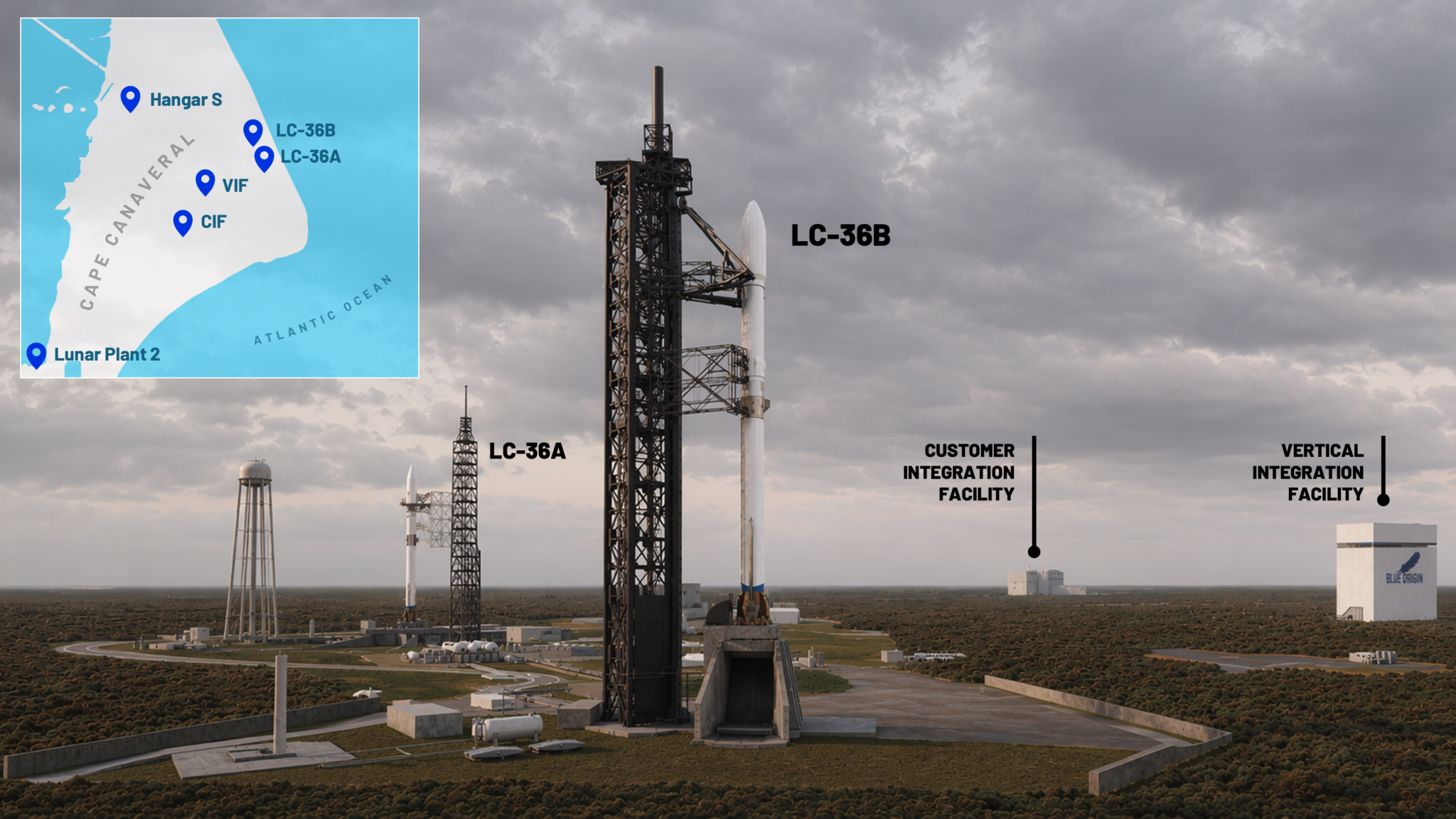
Blue Origin has committed to rapidly reconstructing 36A while simultaneously completing the adjacent Launch Complex 36B to accommodate a larger New Glenn variant. The 9×4 configuration features nine first-stage engines, compared to seven engines on the smaller 7×2 version.
Richardson indicated the newly announced pads will follow the same design and construction methodology being deployed at LC-36B. The 9×4 variant can deliver 70 metric tons to low-Earth orbit and over 20 tons to trans-lunar injection. Though unconfirmed, the heavy-lift capability suggests Blue Origin is preparing the 9×4 for NASA's Artemis Program, which requires a lunar lander launch capability. A 2028 debut is possible if development proceeds on schedule.