Lisuan Tech's Chinese GPU Struggles to Match Western Rivals in Latest Benchmarks
Four months after launch, the LX 7G100 graphics card shows performance on par with AMD's nine-year-old Radeon RX 580 but lags significantly behind current-generation Nvidia and AMD offerings.
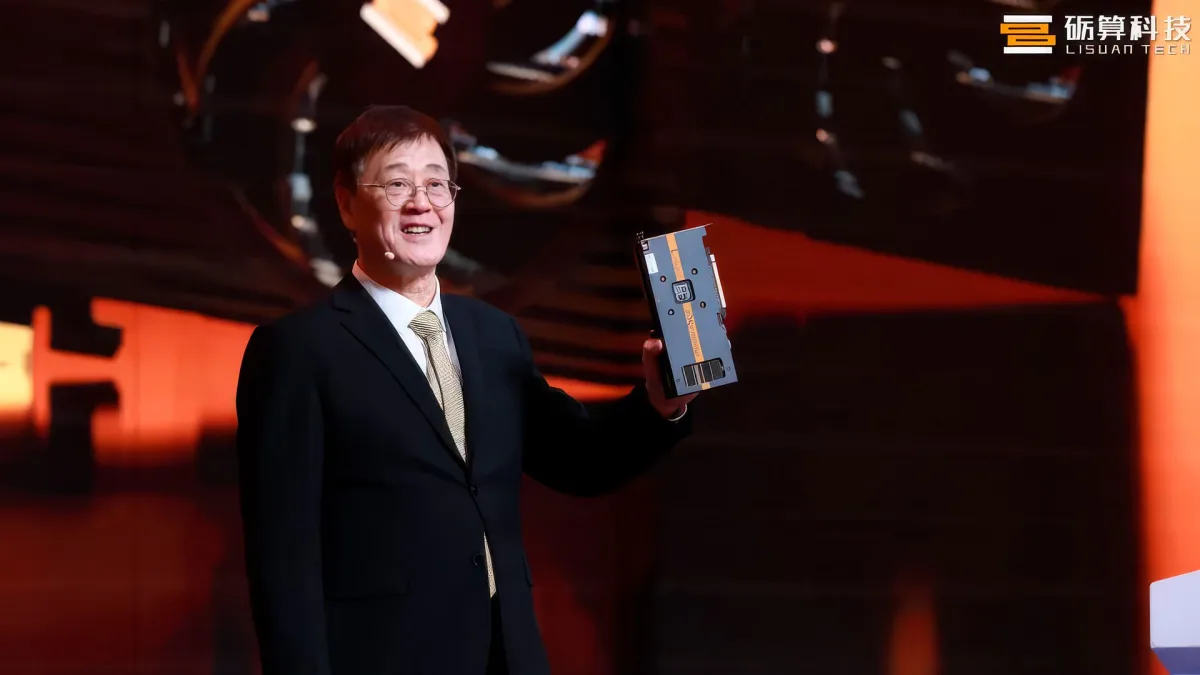
Lisuan Tech's LX 7G100 has proven to be a stronger success domestically than as a global competitor, according to recent testing by German publication PC Games Hardware. Benchmark data reveals the Chinese graphics processor delivers performance levels comparable to AMD's Radeon RX 580, a card released nine years ago, while falling as much as 35% short of Nvidia's seven-year-old GeForce RTX 2060.
The LX 7G100 arrived with considerable fanfare as a potential rival to Nvidia's GeForce RTX 4060. Early benchmark results quickly dampened expectations, however. Four months into its market presence and following multiple driver refinements, the card's performance trajectory appears to have stalled despite continued software optimization efforts.
In head-to-head comparisons, the LX 7G100 matches the Radeon RX 580's capabilities with a marginal 5% performance advantage. The card also surpasses Nvidia's GeForce GTX 1060 6GB by 23%. However, these gains place it outside the competitive range of modern mid-range graphics processors. Performance gaps widen dramatically against newer hardware: the LX 7G100 trails the GeForce RTX 4060 and Radeon RX 5050 by more than 2.2 times, and delivers roughly one-third the performance of the GeForce RTX 5060. A substantial technological divide separates Lisuan Tech from established manufacturers including Nvidia, AMD, and Intel, requiring significant advancement to close the gap.
Driver Support as a Breakthrough
One significant achievement distinguishes the LX 7G100 from previous Chinese graphics card attempts: robust driver infrastructure. Chinese chipmakers have historically struggled with software compatibility and driver maturity. Lisuan Tech became the first Chinese graphics chipmaker to secure WHQL certification, and the LX 7G100 shipped with stable DirectX 12 gaming support from day one. This foundation has enabled compatibility with demanding titles including Cyberpunk 2077, Clair Obscur: Expedition 33, Assassin's Creed Shadows, and Battlefield 6.
The company has demonstrated commitment to driver maturation by releasing three WHQL-certified updates during the card's first four months on the market. Driver development requires sustained effort over extended periods, and given that the LX 7G100 has not yet completed a full year in commercial availability, comparing Lisuan Tech's progress to decades of accumulated expertise at Nvidia and AMD would be premature.
Hardware Specifications and Performance Ceiling
From a hardware engineering perspective, the LX 7G100 represents a competent design. The processor utilizes TSMC's N6 FinFET manufacturing process and incorporates 6,144 shading units operating at clock speeds reaching 2,000 MHz, yielding peak FP32 performance of 24.5 TFLOPs. The card pairs this with 12GB of GDDR6 memory across a 192-bit memory interface, delivering maximum bandwidth of 432 GB/s. These specifications position the LX 7G100 theoretically close to Nvidia's GeForce RTX 3060 12GB or AMD's Radeon RX 6700 XT. In practice, the GeForce RTX 3060 12GB achieves twice the performance of the LX 7G100.
Closing a 2X performance gap presents a formidable challenge. Whether Lisuan Tech can extract additional performance through driver optimization or has already reached the hardware's practical limits remains uncertain. Future driver updates may narrow the performance disparity with the GeForce RTX 3060 12GB, or the card may have already approached its ceiling. Revisiting the LX 7G100's performance in coming months will clarify whether meaningful gains remain achievable.