Intel Secures One-Year Waiver to Keep Foreign Robots Running in US Fabs
Confusion over a sweeping FCC ban on foreign-made robots prompted Intel to seek and obtain emergency relief, allowing the chipmaker to continue operating critical automated equipment in its domestic manufacturing plants.
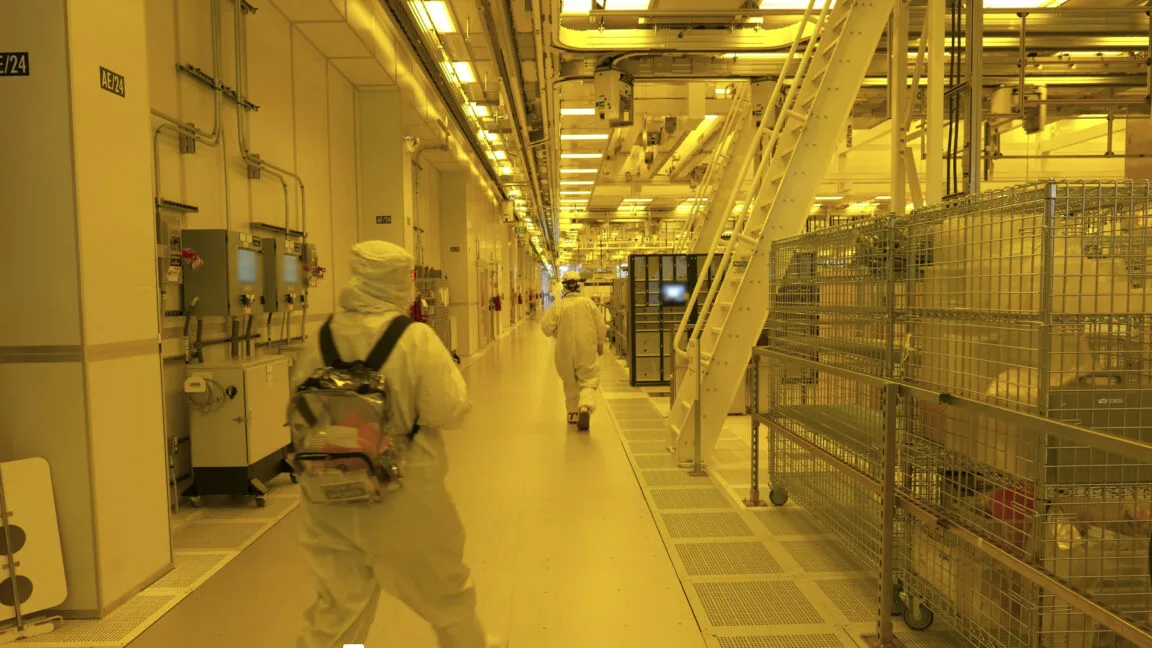
Intel, the US semiconductor industry's flagship company, found itself uncertain about how a federal ban on foreign-made robots would affect its operations. The chipmaker requested and received a waiver to keep using certain robotic equipment in its American chip factories, moving forward "out of an abundance of caution."
On October 22, the Federal Communications Commission published an order granting Intel's request. The waiver permits the company to continue deploying foreign-manufactured robots at its US semiconductor production sites for one year.
The robots at issue are automated guided vehicles that travel on "tracks or predefined paths" and often need human supervision, per Intel's description. These machines transport materials and components across factory floors and warehouse spaces.
Japanese manufacturers including Murata Machinery and Daifuku Co. typically produce such robotic vehicles, Bloomberg News reported. Intel did not publicly identify the specific models it uses; those details appeared only in a "confidential appendix" submitted with the waiver application.
The FCC's restrictions primarily target new categories of mobile robots, such as humanoid robots and robot vacuums, while permitting continued imports of robot models already cleared for US sale. The agency's rules do, however, appear to limit significant modifications to "previously authorized devices."
In its waiver filing, Intel stated that it remained "unclear" whether its robotic vehicles even fell under the scope of the FCC ban. The company sought protection regardless, and also won approval to "make certain hardware, software, and firmware changes" needed to sustain the robots' operation and upkeep.
Intel characterized the robotic vehicles as "critical to its domestic semiconductor manufacturing operations" and stressed that maintaining them was essential to preventing production interruptions. The company also noted that no US-manufactured alternatives currently meet its specifications.
The FCC acted swiftly on Intel's request, which arrived on October 16. The rapid approval reflects Intel's strategic importance to the Trump administration's push to rebuild domestic chip production capacity, particularly given that the US government acquired an $8.9 billion equity stake in the company.
The broader US robotics sector continues to navigate the fallout from the FCC's foreign robot restrictions. China dominates global robot and robotic component supply, making the ban's impact substantial across the industry. One US robotics distributor previously shifted from importing Chinese humanoid robots to launching a domestic manufacturing operation.
Industry observers have cautioned that the government's strategy to strengthen domestic robot production through import restrictions may ultimately harm US companies. International Data Corporation, a market research firm, projects that the FCC rule could slash US revenue from humanoid robot deployment by 58 percent by 2030 relative to what would have occurred without the restrictions.