Intel Recaptures Overall CPU Market Share as PC Demand Crumbles
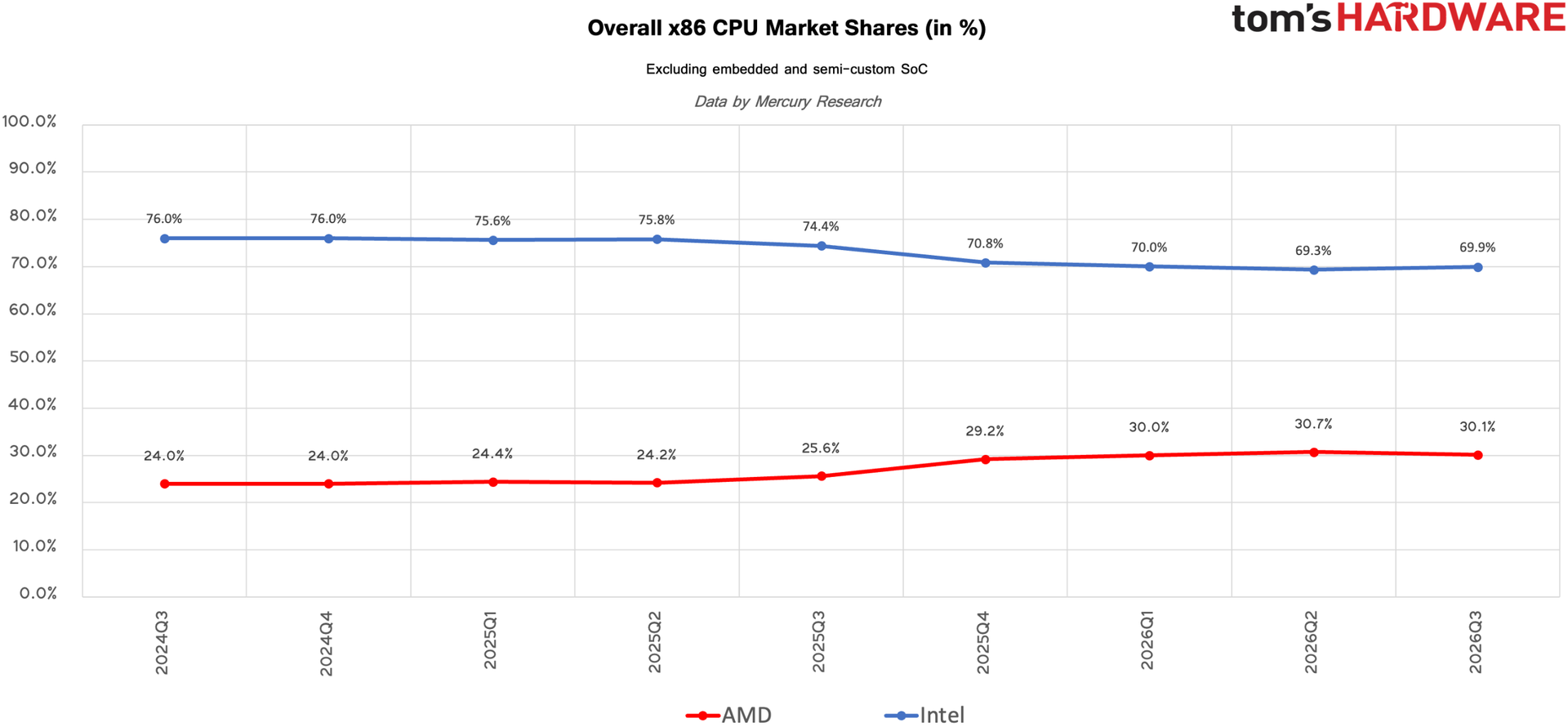
Intel has regained overall x86 CPU market share from AMD for the first time since Q2 2025, driven by a dramatic recovery in desktop processors, while AMD continues to dominate the booming server market.
The x86 CPU market experienced a significant contraction in the third quarter of 2026, with total shipments reaching 68.93 million units as client processor demand weakened substantially, according to data from Mercury Research and Jon Peddie Research. However, the market showed stark divergence between segments: server CPU shipments surged 20 percent year-over-year, while client processors declined sharply. Intel's resurgence in overall market share—its first gain since the second quarter of 2025—came almost entirely from an unexpected surge in desktop CPU sales, even as AMD maintained its commanding position in data center processors and reached record highs in mobile chips.
Client CPU Market Contracts Sharply
The broader x86 CPU market contracted in both sequential and year-over-year comparisons during Q3 2026, following a surprisingly robust second quarter, Mercury Research reported. AMD and Intel combined to ship 60.8 million client CPUs and 8.13 million data center processors during the period. A critical distinction: these figures represent shipments to manufacturers, which occur months before the processors reach consumers in finished systems.
After a far better than expected second quarter market for client processors, the third quarter PC CPU market declined far more than expected, entirely due to a downturn in mobile CPUs — this was the same segment that was unexpectedly higher last quarter, hinting that part of the downturn may have been due to CPU demand pulling in sales from the third quarter.
Dean McCarron, principal analyst at Mercury Research
Both Intel and AMD indicated in their earnings results that there was a rapid softening in PC demand late in the third quarter that impacted client processor shipments and that the outlook for client CPUs in the fourth quarter will be a decline in excess of 20%. Unlike client CPUs, however, server processors continued to grow strongly in the past quarter, as did embedded CPUs.
Dean McCarron, principal analyst at Mercury Research
The sequential decline was driven primarily by mobile processor weakness, with notebook CPU shipments falling more than 10 percent. Desktop shipments recovered, bolstered by Intel's performance, while server and embedded processors continued their upward trajectory. When excluding IoT, semi-custom SoCs, and embedded products, both vendors shipped fewer x86 processors than the prior quarter, though AMD's decline exceeded Intel's.
Year-over-year comparisons revealed weakness across most segments except servers. Desktop and notebook shipments declined due to softening PC demand amid elevated component costs, particularly memory pricing. Embedded processor and semi-custom SoC shipments also fell, largely attributable to AMD's contracting game console business. Server CPUs, by contrast, expanded more than 20 percent year-over-year—their strongest annual growth in nearly five years—fueled by accelerating AI infrastructure deployment.
Client CPU shipments softened in Q3 as OEMs kept inventories lean and the DIY channel remained weak. Server CPUs continued growing, with AMD gaining share and AI-related demand supporting the market. We expect PC conditions to remain difficult into the first half of 2027.
Dr. Jon Peddie, president of Jon Peddie Research
AMD's overall x86 market share, excluding embedded and semi-custom SoCs, declined 0.6 percent sequentially—the first such drop in years—yet still expanded 4.5 percent year-over-year, according to Mercury Research.
Desktop CPUs: Intel's Dramatic Reversal
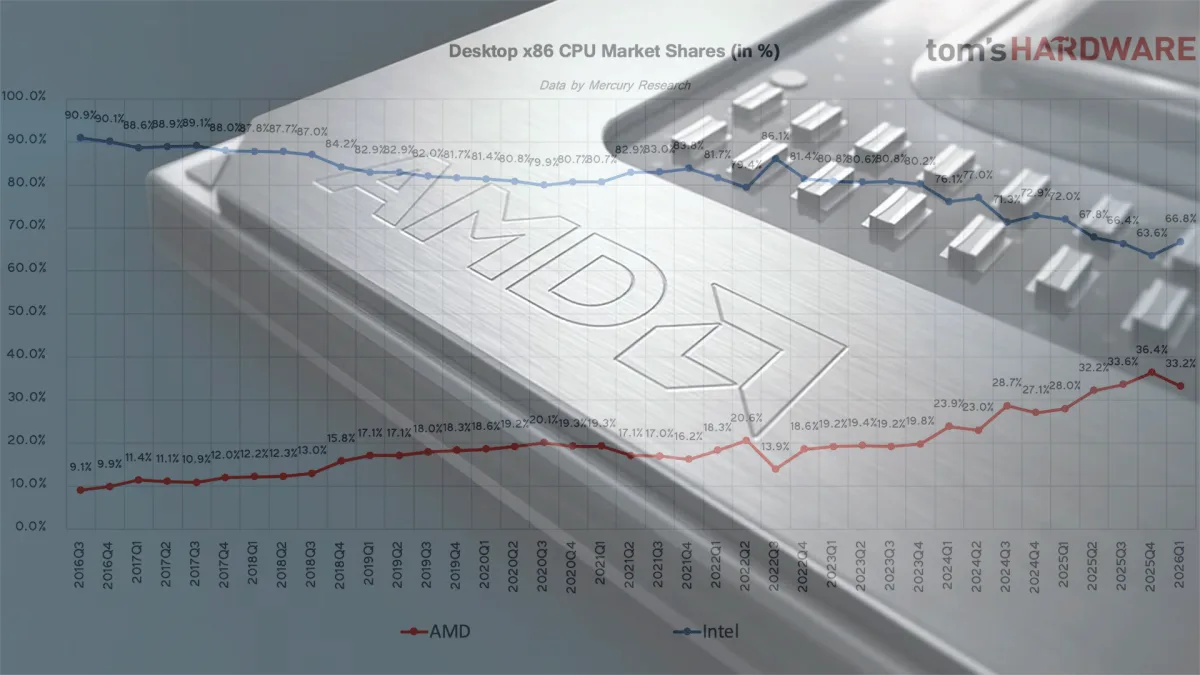
Intel staged a remarkable recovery in desktop processors during Q3 2026, reclaiming 5 percentage points of market share in a single quarter. The company's desktop CPU unit share climbed to 70.1 percent, up 5 percent sequentially and 3.7 percent year-over-year. AMD's share plummeted to 29.9 percent from 34.9 percent in the prior quarter and 33.6 percent a year earlier, effectively erasing its accumulated gains over the preceding twelve months.
Mercury Research suggests that reduced demand for notebook processors allowed Intel to redirect silicon allocation toward mainstream desktop CPUs, a market both companies had chronically undersupplied. AMD's steeper decline also reflected its greater exposure to the gaming PC segment, which faced graphics card shortages and unusually elevated costs for memory and storage components.
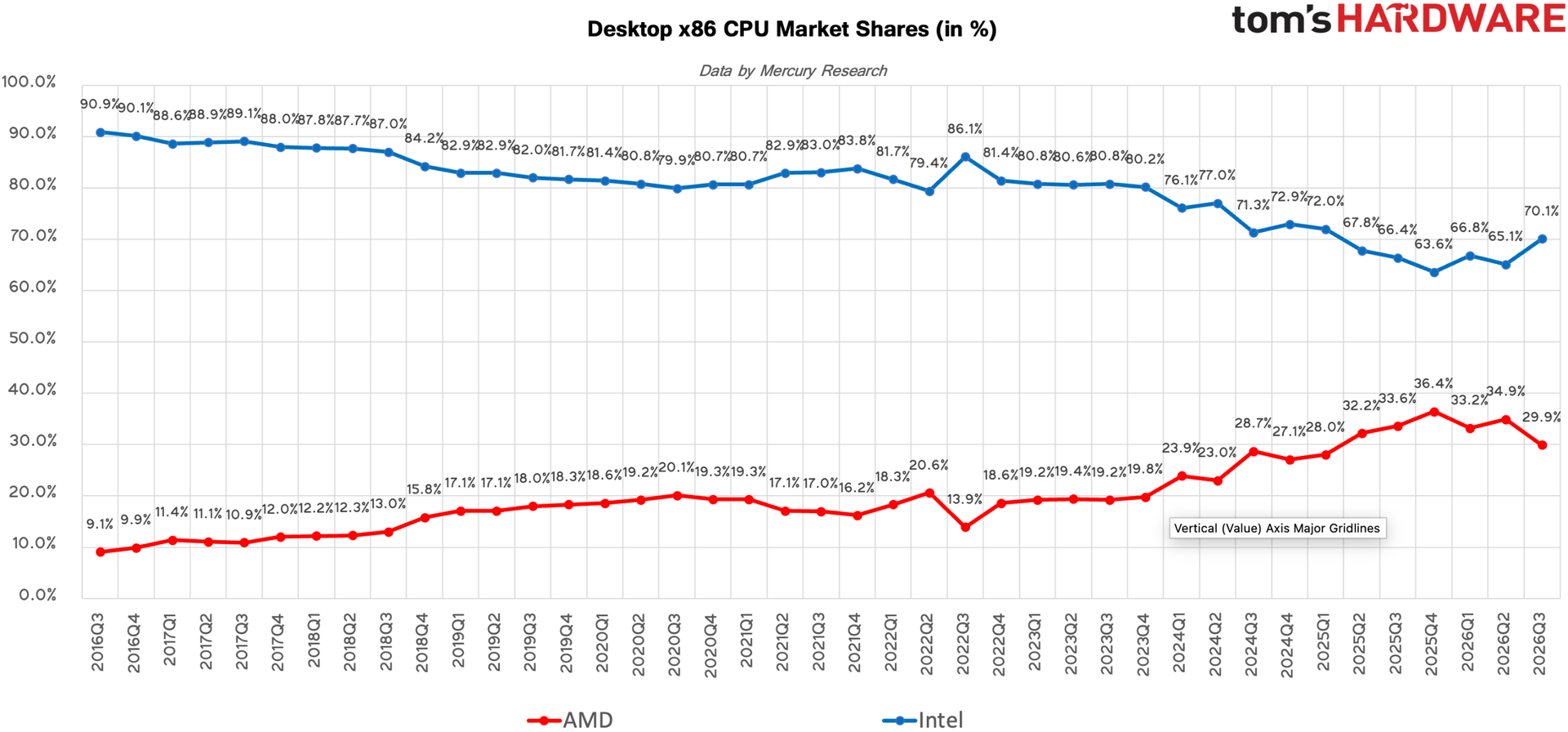
Desktop became the sole major x86 CPU market segment where AMD lost unit share on both sequential and year-over-year bases.
Mobile CPUs: AMD Reaches New Heights
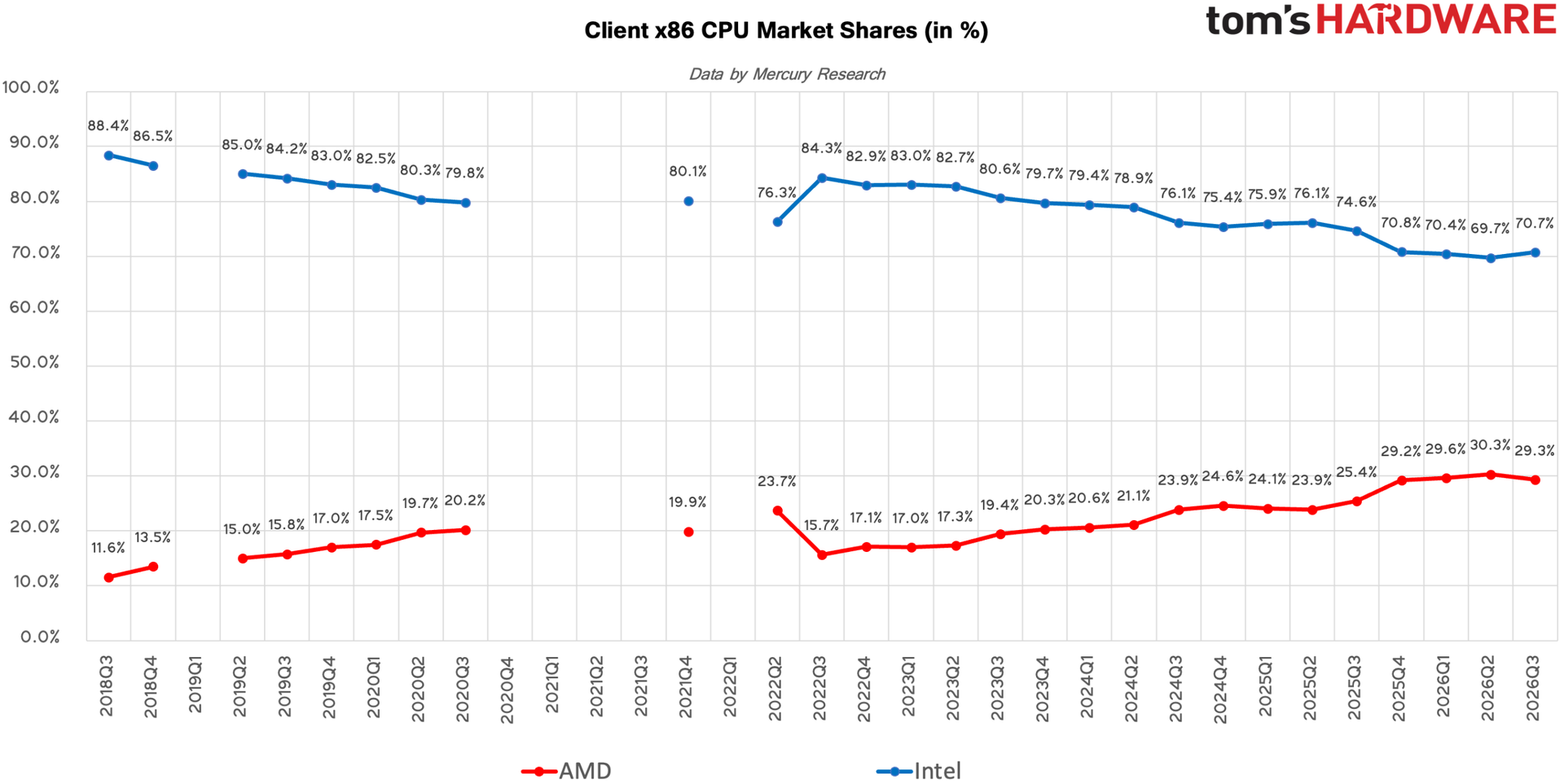
Both vendors experienced substantial declines in mobile CPU shipments during Q3 2026 as the notebook market contracted more than 10 percent sequentially. AMD's shipments fell less steeply than Intel's, enabling the company to reach a record mobile CPU unit share of 29.2 percent, up from 28.9 percent in Q2 2026 and 21.9 percent a year prior. Intel retained dominance with a 70.8 percent share, down from 71.1 percent sequentially and 78.1 percent year-over-year.
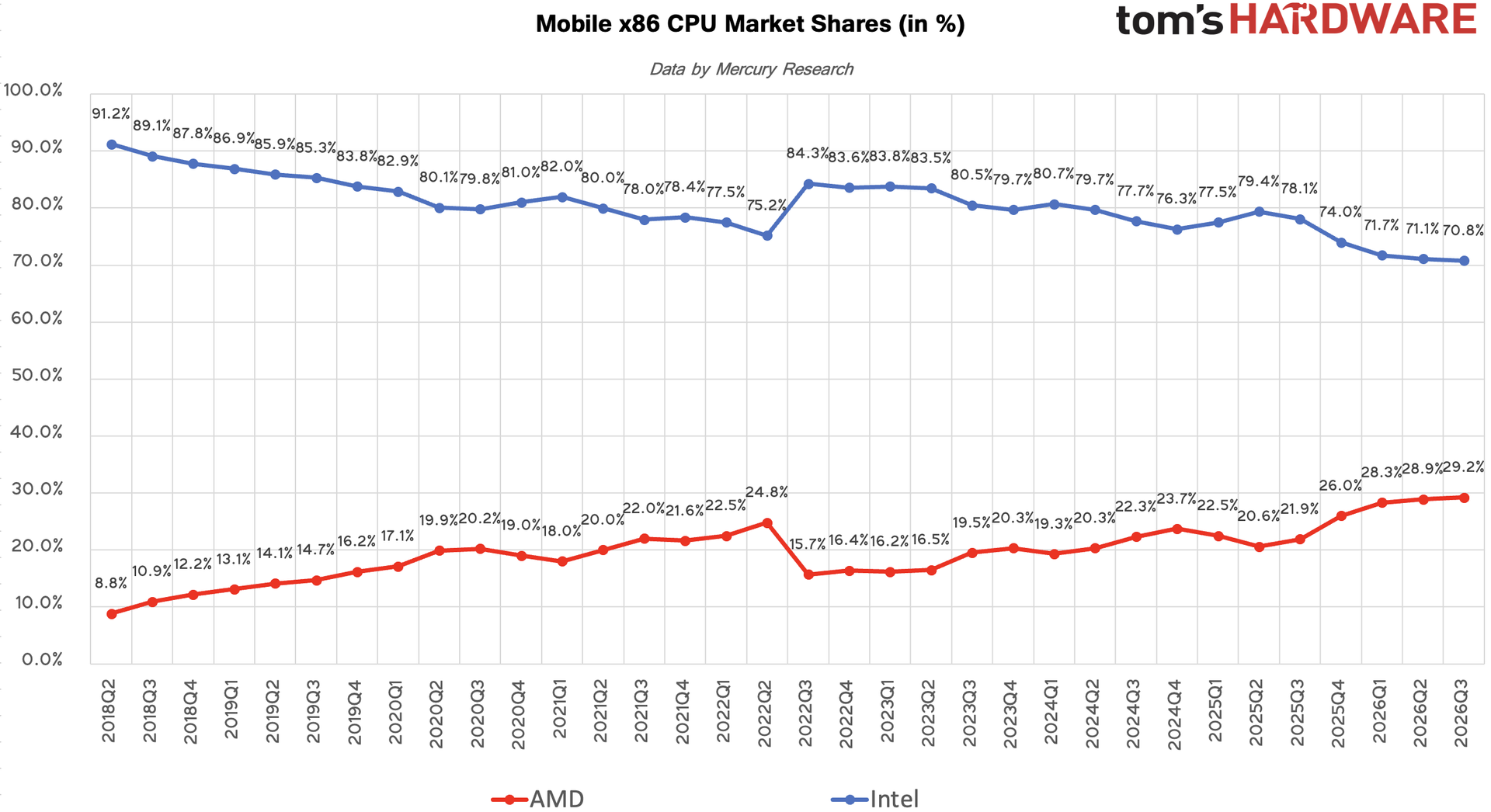
While AMD's sequential share gain of 0.2 percent was marginal, its 7.2 percent year-over-year expansion proved impressive given Intel's historical strength in notebooks. Mercury Research attributes the sharp sequential decline in mobile shipments partly to PC manufacturers accelerating CPU purchases into the unusually strong second quarter.
The fourth quarter outlook remains challenging for both companies, as rising memory and component costs push up notebook prices and suppress consumer demand.
Server CPUs: Sustained Growth Trajectory
The server CPU market presents a starkly different picture from the struggling client segment. Data center processor shipments reached 8.13 million units in Q3 2026, growing 20 percent year-over-year—the highest annual expansion rate in nearly five years, per Mercury Research.
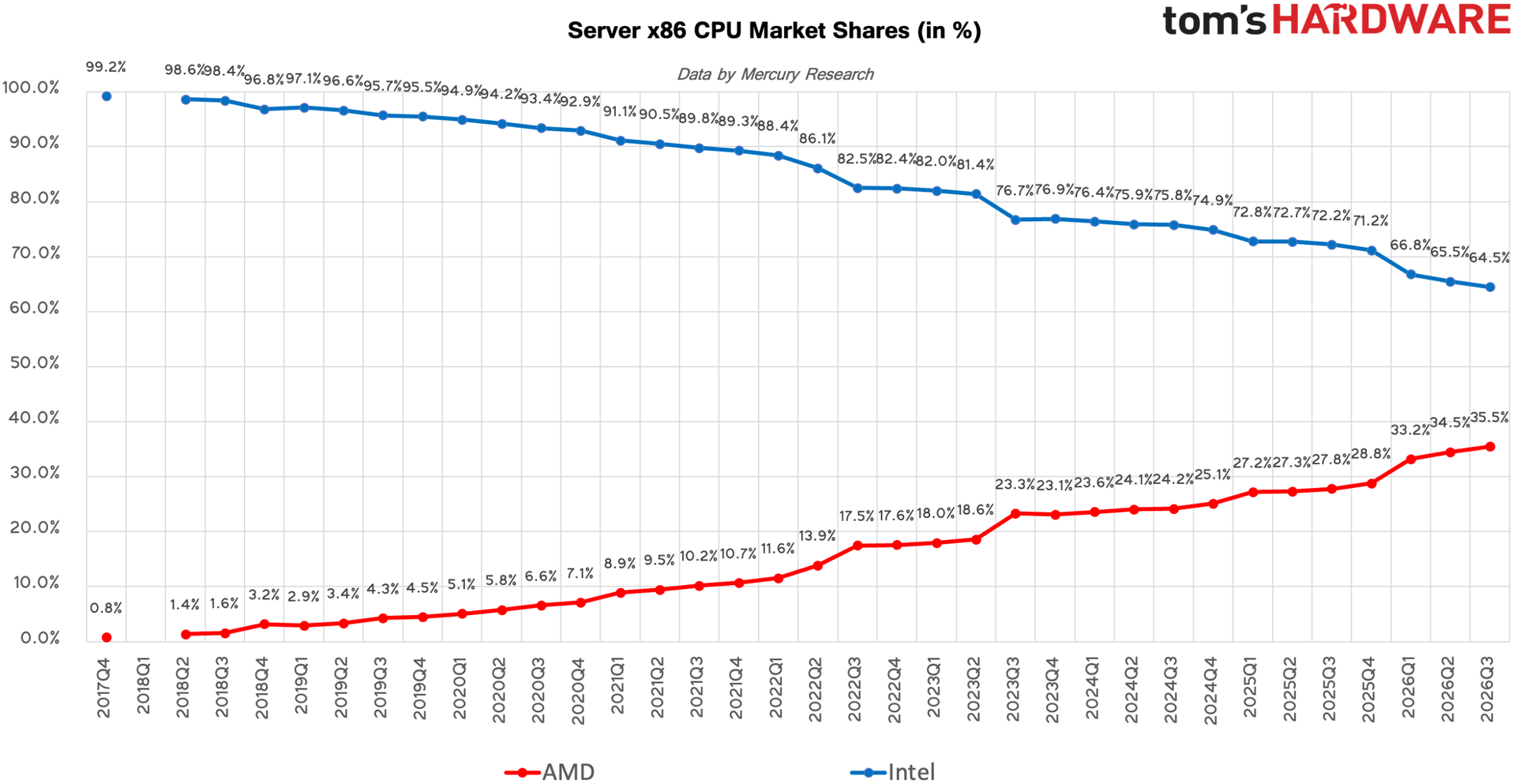
AMD extended its dominance in server CPUs, achieving a record unit share of 35.5 percent, up from 34.5 percent in Q2 2026 and 27.8 percent a year earlier. Intel remained the leading supplier with a 64.5 percent share, down 1 percent sequentially and 7.7 percent year-over-year.
Intel appears to have slowed AMD's advance in core data center CPUs by substantially increasing Xeon SP processor shipments, McCarron noted. When comparing only AMD's EPYC and Intel's Xeon SP processors directly, AMD's unit share reached 46.8 percent, up just 0.4 percent sequentially—AMD's smallest sequential gain over the past year, contrasting with an average 3 percent quarterly gain over the preceding three quarters.
Unlike the client CPU market, the server processor outlook remains robust for both vendors. Ongoing AI infrastructure buildout drives demand for conventional data center processors and workstation-class CPUs deployed in smaller departmental AI servers.
Key Takeaways
- x86 CPU shipments declined to 68.93 million units in Q3 2026 as rising component costs suppressed client PC demand, while server shipments grew more than 20 percent year-over-year
- Intel regained overall x86 CPU market share from AMD for the first time since Q2 2025, driven primarily by a dramatic desktop CPU recovery where its share reached 70.1 percent
- AMD achieved record mobile CPU share of 29.2 percent and record server CPU share of 35.5 percent
- Both companies expect client CPU shipments to decline more than 20 percent sequentially in Q4, while server processor demand continues expanding due to AI infrastructure investment