Goodram PX700 2TB Delivers Solid Performance at a Competitive Price Point
The Goodram PX700 faces stiff competition in today's crowded SSD market, but testing reveals it punches above its weight across most real-world workloads while maintaining excellent thermal efficiency.
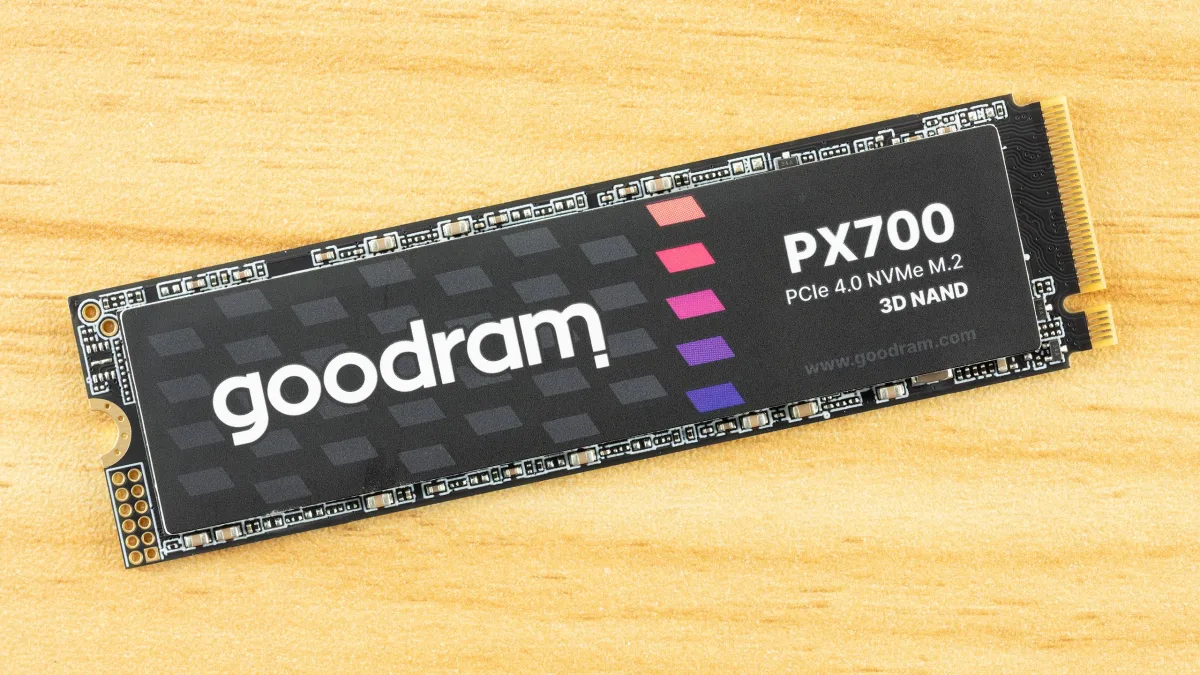
Comparison Products
The PX700 operates in a densely populated segment where rivals have multiplied in recent years. Notable competitors include the Sandisk WD Blue SN5100, praised for random read latency, the Crucial P310 with balanced performance across the board, and the Samsung 990, which arrived considerably later to market. Other comparable options feature QLC flash like the Acer FA200, or TLC memory such as the Biwin Black Opal NV7400, Addlink A93, and Inland TN470—the latter using a Phison controller instead of the more prevalent Maxio MAP1602. The budget-focused Kingston NV3 remains a persistent alternative in this space.
Trace Testing — 3DMark Storage Benchmark
Designed with gaming in mind, 3DMark's Storage Benchmark evaluates real-world gaming scenarios. The test stresses storage through gaming-specific activities: launching titles, saving game progress, installing game files, and recording gameplay footage. Upcoming gaming benchmarks will incorporate DirectStorage support, with future-proofing assessments included where relevant.
The PX700 achieves appropriate results for its class, posting roughly 40µs latency with bandwidth exceeding 700 MB/s. Such performance proves excellent for gaming applications, with only the NV3 falling short of this tier. While the NV3 remains sufficiently fast for gaming and represents solid value, the PX700 offers superior speed. Notably, the PX700 performs better than its position in this lineup suggests, remaining competitive with all but the WD Blue SN5100.
Among QLC-based drives, the WD Blue SN5100, 990, and P310 cluster near the top. The BiCS flash in the first drive delivers recognized responsiveness, providing marginal advantages in game load times. The 990 matches the P310's performance closely, indicating no shortage of capable options. Most slower drives represent older PCIe 4.0 generation hardware, making genuinely fast gaming drives readily available. This suggests that factors beyond 3DMark performance—such as drive reliability—may ultimately determine purchasing decisions.
Trace Testing — PCMark 10 Storage Benchmark
PCMark 10 functions as an industry-standard trace-based benchmark employing diverse real-world traces from mainstream applications and daily tasks to evaluate storage device performance. Results prove particularly valuable for assessing drives intended as primary or boot storage and for professional environments.
While the PX700 registers merely average against competitors in 3DMark—though its absolute performance remains solid—its PCMark 10 showing improves noticeably. TLC-based drives, including the TN470 with Phison's controller, underperform in this scenario. This outcome may confuse buyers accustomed to the principle that TLC surpasses QLC. Several explanations exist, though the general observation that benchmarking often examines ideal conditions offers perhaps the simplest answer.
Both TLC and QLC drives leverage pSLC cache to maximize performance. This pSLC mode differs from native pSLC and typically operates at equivalent speeds regardless of flash type. QLC demonstrates advantages and disadvantages relative to TLC in different areas. QLC benefits more substantially from optimizations, potentially receiving advanced techniques first—including 4K latency improvements. Conversely, QLC features four planes while TLC has advanced to six. As demonstrated by BiCS flash's four-plane design compared to six-plane TLC from Micron and YMTC, fewer planes can produce lower effective latency. Higher plane counts improve bandwidth but introduce costs and tradeoffs.
The PX700 outperforms QLC-based drives using identical controllers, such as the FA200. The FA200 employs twice as many dies—thirty-two total—placing greater load on the controller and increasing latency. Conventional wisdom holds that larger drives perform faster, which frequently proves accurate. Larger capacity drives deliver more bandwidth and achieve higher IOPS through improved parallelization. Beyond four dies per channel—where the PX700 sits, with the FA200 exceeding this threshold—power consumption and overhead rise substantially. The PX700 occupies a favorable position for how this benchmark operates.
The P310, WD Blue SN5100, and 990 all surpass the PX700. These QLC-based drives employ varying controllers. The BiCS advantage has already been explained. Samsung's newer QLC implementation also performs admirably. The P310 stands somewhat apart, as its specifications suggest performance below what it actually achieves. Crucial's historical reliance on proprietary controllers suggests substantial optimization efforts here. WD and Sandisk applied similar approaches with the Black SN8100 and Optimus Pro GX 8100, indicating proprietary advantages at work. The PX700 ranking best among remaining drives represents a positive indicator, as these represent its actual market competitors.
Console Testing — PlayStation 5 Transfers
PlayStation 5 systems accept one additional PCIe 4.0 or faster SSD for expanded game storage. While any 4.0 drive technically functions, Sony recommends drives delivering at least 5,500 MB/s sequential read bandwidth for optimal results. Extensive testing indicates PCIe 5.0 SSDs provide minimal benefit and generally should not be used in PS5 systems, particularly since they may require supplemental cooling. Refer to our Best PS5 SSDs article for additional details.
Testing employs the PS5's internal storage test plus manual read and write operations using over 192GB of data transferred both from and to internal storage. Throttling is minimized where feasible to observe each drive under ideal operating conditions. While game load times should remain consistent across drives, results indicate which drives may demonstrate greater responsiveness during extended use.
For PS5 applications, nearly any drive meeting the console's minimum specifications qualifies. The PX700 substantially exceeds those requirements, shifting focus to value considerations. What distinguishes this drive from alternatives? For this category, that typically means prioritizing drives with heatsinks or superior reliability ratings. Reliability proves difficult to quantify, though warranty coverage provides reassurance. Regarding heatsinks, users can always add aftermarket solutions. Drawing clear distinctions becomes challenging under these circumstances.
Our Power Consumption and Temperature section below offers additional perspective. The PX700 operates at cool temperatures, representing a significant advantage for PS5 use. Performance-wise, it ranks alongside competing drives, trailing only the Blue SN5100. Premium branding is unnecessary to achieve strong results here, and the PX700 performs admirably.
Transfer Rates — DiskBench
DiskBench storage benchmarking measures file transfer performance using a custom 50GB dataset. The test writes 31,227 files of varied types—photographs, PDFs, videos—to the test drive, creates a copy of that data in a new folder, and concludes with reading a newly created 6.5GB zip file. This workload reflects real-world scenarios fitting within most drives' cache capacity.
The PX700 performs impressively here. Understanding this test and its implications provides valuable context. Whether copying between drives or copying within a single drive, certain universal principles apply. Bottlenecks invariably emerge, typically on the write side since drives write slower than they read. Flash memory must erase cells before rewriting them, producing unusual behavior under specific workloads. Generally, writes exhibit higher latency—with flash, this stems from technology characteristics where multi-bit cells typically require multiple write passes—and writes require acknowledgment while reads simply retrieve data from typically static media.
When drives belong to different classes—NVMe versus SATA, or PCIe 4.0 versus PCIe 3.0—the slower class becomes the bottleneck even if it's on the read side. This principle extends back to HDD eras when larger drives operated faster. SSDs generally accelerate with capacity, but flash speeds have rendered these rules less absolute. Other technology aspects complicate matters, including pSLC caching and TLC versus QLC flash, where sustained writes can produce dramatic performance swings. This matters because many purchasers focus primarily on transfer performance, and when encountering speeds far below box ratings, they become concerned.
DiskBench testing accounts for these factors by approximating real-world workloads using varied file sizes. Transferring numerous large files proceeds quickly. Copying many small files—familiar to anyone who has manually backed up Windows or documents—can prove very slow, even on SSDs. The test employs a mixture of both. Additionally, on-drive copying eliminates external variables. Many system operations benefit from caching in system memory, potentially producing misleading metrics depending on activity.
The PX700 emerges as the fastest drive on the list for reads and ranks near first for copying operations. Competing against some of the strongest budget drives available, this achievement proves noteworthy. This represents a real-world workload, likely more meaningful than 3DMark for game load time assessment.
The performance gap between fastest and slowest drives for reads falls below 10%, yet nobody wants purchasing a drive that feels sluggish. The PX700 delivers the sensation of a premium drive—weaker write performance here is genuine, but most activities prove read-heavy—and building a system with it instead of, for example, the Samsung 990 leaves users unable to perceive differences. This observation holds broadly, yet underscores reliability's importance. Consumers select Samsung and WD/Sandisk for established reasons. Given Goodram's European headquarters, celebrating this performance while acknowledging it's not an obscure AliExpress brand seems appropriate.
Synthetic Testing — ATTO / CrystalDiskMark
ATTO and CrystalDiskMark (CDM) represent free, accessible storage benchmarking utilities that SSD manufacturers commonly employ to establish performance specifications. Both tools reveal how each device manages different file sizes and queue depths for sequential and random workloads.
The PX700 maintains consistent ATTO performance without significant concerns. Sequential performance in CDM shows similar characteristics. QD1 reads merit primary attention as a real-world metric, and performance aligns closely with the NV7400. Random 4KB read performance at QD1 positions it somewhat lower but still competitive with excellent drives like the P310. Performance below approximately 45µs qualifies as solid. This drive should demonstrate considerable responsiveness. If forced to criticize, high QD 4KB write performance lags. Fortunately, this doesn't represent a real-world workload for this drive category.
Sustained Write Performance and Cache Recovery
Official write specifications represent only part of the performance picture. Most SSDs incorporate write caching, a rapid pseudo-SLC (single-bit) programmed flash region that absorbs incoming data. Sustained write speeds can degrade substantially once workloads exceed cache capacity and spill into "native" TLC (three-bit) or QLC (four-bit) flash. Performance can deteriorate further if the drive undergoes folding, the process of migrating cached data to free space for additional incoming information.
Iometer testing hammers the SSD with sequential writes for 15 minutes, measuring both write cache size and post-saturation performance. Cache recovery monitoring occurs across multiple idle cycles. This process reveals drive performance across various states, including steady-state write speeds.
The PX700 begins in pSLC cache mode, writing at 5.8 GB/s for over 86 seconds. Initial two-second speeds run slightly higher, a pattern observed previously with this controller, but ultimately a 500GB cache emerges. This constitutes clear evidence identifying the flash as QLC. Four-bit QLC flash operating in one-bit pSLC mode trades four times the capacity for performance, meaning a 2TB drive typically maintains a 500GB cache maximum. A three-bit TLC drive could support a larger cache, though nothing prevents a 500GB cache, even if coincidental.
A TLC drive with a smaller-than-maximum cache might sustain some speed. The PX700 immediately enters folding mode—awaiting data migration from pSLC to native flash—averaging 163 MB/s. TLC flash occasionally reaches this speed, though less frequently, particularly with available space. Even the FA200, sharing identical hardware, performs faster. The FA200 does possess twice the flash, though the controller approaches saturation. The FA200's cache speed of 5.54 GB/s trails the PX700's, potentially from additional flash, meaning post-cache speed will increase. This reinforces QLC identification. A 4TB HP FX700 comparison would further demonstrate this point, though comparing a 4TB drive offers more valuable perspective.
This represents the PX700's first genuine weakness in our evaluation. However, QLC SSDs with substantial caches typically exhibit this behavior. We don't consider it disqualifying. Budget SSD buyers don't typically subject drives to sustained write hammering. The 600TBW per TB warranty, however, suggests some capacity for this activity. Lower performance here could surface in fuller-drive scenarios. Additionally, some PX700 units ship with TLC flash. Overall, assume QLC will perform like TLC competition 99% of the time.
Power Consumption and Temperature
The Quarch HD Programmable Power Module provides deeper insight into power characteristics. Idle power consumption matters significantly, particularly for laptop upgrades where even premium ultrabooks sometimes feature mediocre stock storage in capacity and performance. Desktops typically prioritize performance with less power-saving support, so we report worst-case idle scenarios.
Some SSDs consume watts during idle while superior designs sip milliwatts. Average workload power consumption and maximum consumption represent additional considerations, though performance-per-watt efficiency matters more. A drive consuming more power during workloads but completing tasks faster can drop into idle states sooner, ultimately conserving energy.
For temperature measurement, we poll the drive's primary composite sensor during testing with approximately 22°C ambient conditions. Our rigorous testing heats the drive to realistic maximum temperatures, though actual temperatures vary based on environment and workload.
Temperature results bring positive news. Goodram emphasizes the graphene label on this drive, which genuinely aids cooling in our experience, particularly on a drive with four flash packages. The PX700 peaked at 61°C during testing, nearly 30°C below the initial throttling threshold, well exceeding the 20°C headroom we prefer. The MAP1602 tends to generate more heat than alternatives like the Phison E27T on the P310 and TN470, but a heat-spreading label helps considerably. This qualifies as a cool-running drive suitable for any application.
Test Bench and Testing Notes
Testing employed an Alder Lake platform with most background processes—indexing, Windows updates, antivirus—disabled to minimize run-to-run variation. Each SSD was prefilled to 50% capacity and tested as a secondary device. Active cooling was applied to all SSDs unless otherwise noted.
Goodram PX700 Bottom Line
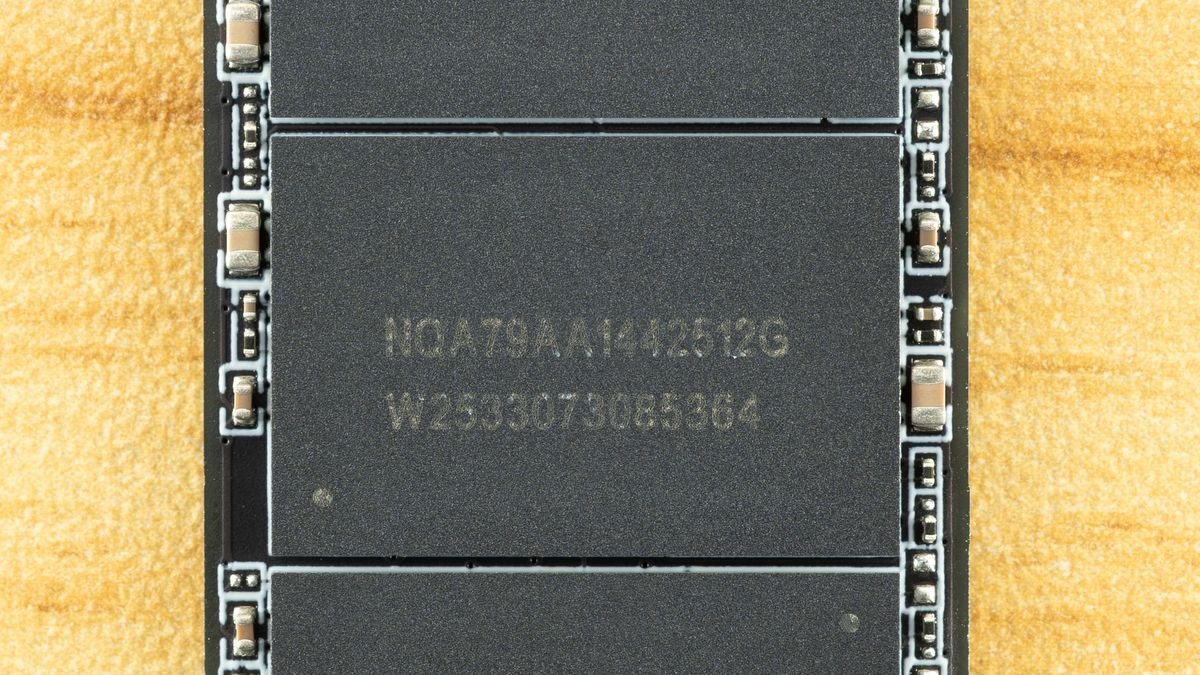
Consider what this means for your specific use case. Game and application loading times depend heavily on random and sequential reads at low queue depth. The PX700 performs well here. File transfers may occur frequently, and DiskBench results prove impressive. For laptops or HTPCs, power efficiency matters, and thermal management without heatsinks becomes important—this applies equally to PS5 use. The PX700 ran cool in testing with only the graphene label and demonstrated strong efficiency. The warranty doesn't suffer from reduced TBW like Samsung's 990 or some QLC drives, and manufacturing location is known. This combination appears stellar if pricing remains reasonable.
Beyond pricing, sustained write performance represents our sole complaint. It's quite disappointing, though expected. The drive offers tradeoffs here. Its standard pSLC write performance exceeds the 4TB FA200, and approaches the 2TB HP FX700's performance, so some compensation exists for the later decline. The PX700 actually folds faster than the FX700. Overall, this matters little since this state shouldn't occur—the drive should remain sufficiently fast for 1GbE networks if that becomes a bottleneck—and slightly faster peak performance translates to better benchmark scores. The drive could suffer in specific scenarios, such as when nearly full, where a drive with DRAM and guaranteed TLC flash might ease concerns.
For typical use cases, the PX700 proves more than adequate and actually exceeds expectations. It works well for virtually any machine type: PS5, laptop, HTPC, desktop, and beyond. Primary or secondary drive roles suit it equally. Heatsinks aren't necessary. Capacity options remain solid—8TB isn't available on drives like this—and users can add their own software. Performance suffices to overlook QLC flash use, so pricing remains our primary concern. Reduce it to competitive levels with comparable drives in our list, and you have a genuine contender. We avoid specifying exact pricing since SSD costs fluctuate considerably, so compare it against the comparable drives we tested today.