Gears of War: E-Day's RAM-Offloading Storage Tech Tested Across SSD Generations
The Coalition's innovative use of NVMe storage as virtual memory extension delivers measurable benefits on resource-constrained systems, sustaining over 1 GB/s of disk throughput to reduce RAM consumption by roughly 2GB.
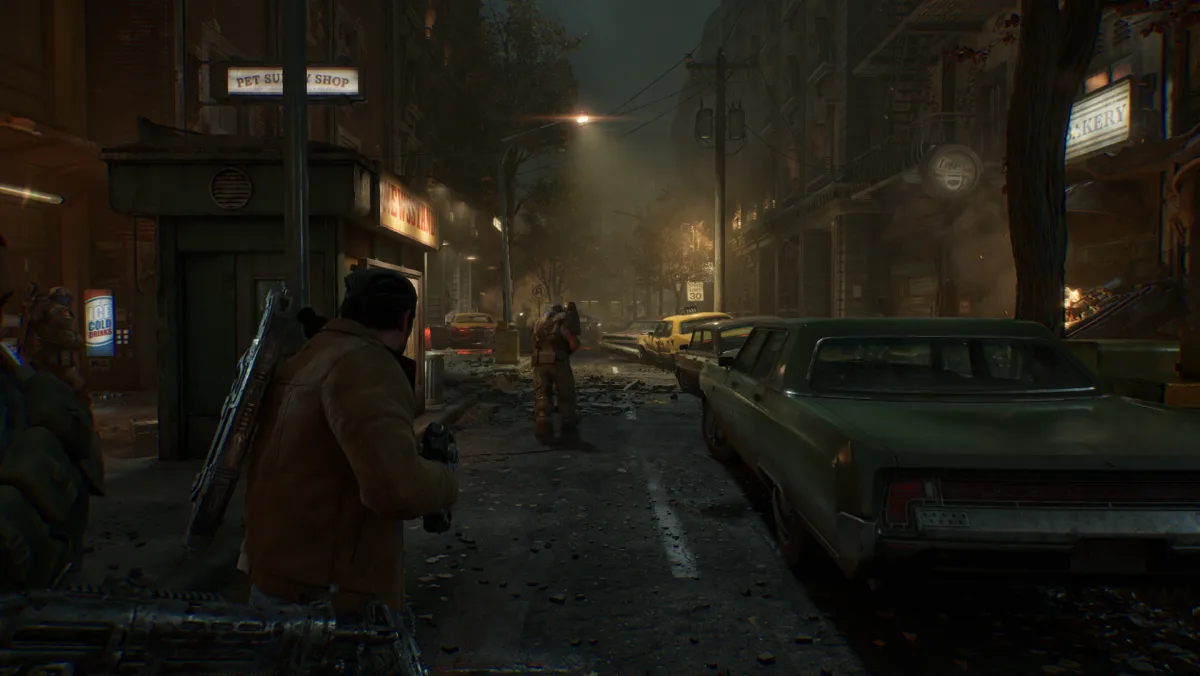
Gears of War: E-Day showcases not only cutting-edge graphics—Unreal Engine 5's Nanite and Lumen, MegaLights, and RTX Mega Geometry among them—but also a less visible engineering achievement: a storage-based system that alleviates RAM pressure on systems with modest memory budgets.
The game's technical foundation rests on several advanced rendering methods working in concert. Yet beneath these visual technologies lies a storage strategy that proves equally crucial for delivering the game's dense, detailed environments to PCs with limited resources.
How The Coalition Engineered the Storage Solution
In conversation with Digital Foundry, The Coalition revealed how they harnessed the Xbox Series S's rapid SSD to bring Gears of War: E-Day's intricate urban landscape to a memory-constrained platform. By treating the NVMe drive as an extension of system RAM, the studio can load and unload intricate city geometry on the fly. This strategy permits the game to fetch required assets for each scene at the precise moment they're needed, circumventing the console's RAM limitations.
According to Digital Foundry, The Coalition's core innovation resides in intelligent data orchestration. The team applies sophisticated algorithms to decide which assets to retrieve from storage and at what moment, maintaining equilibrium between responsiveness and frame rate. Excessive reliance on this technique risks degrading performance, so the mechanism activates only when it enhances gameplay.
The game incorporates DirectStorage support, though prior testing suggests this API alone does not guarantee elevated SSD utilization or throughput rates.
Storage Streaming Observed on PC Hardware
Content creator Mostly Positive Reviews documented elevated SSD activity in Windows Task Manager while running the title on PC. His observations prompted deeper investigation into how the storage technology performs across different hardware configurations.
Gears of War E-Day is visually very impressive, but something has to be done with how the game either compiles shaders or streams data.My 14400F is constantly sitting at 80% CPU usage, 16GB RAM is maxed out, and disk read is sitting at a constant 120 MBps, with spikes up to 500 MBps. Will test this with the 9060 XT as well.These are settings I chose to maintain 60 fps, which it does, except for the massive shader compilation stutters every so often.
Mostly Positive Reviews, October 7, 2026
Test Configuration
High-end system:
- MSI GeForce RTX 5090 VANGUARD SOC Launch Edition
- Ryzen 7 9800X3D
- 64GB (2x32GB) G.SKILL Flare X5 DDR5 @6200 MHz CL30
- Crucial T700 Gen5 SSD
- Sabrent Rocket 4 Plus-G SSD Gen4
- ADATA XPG SX8200 Pro SSD Gen3
- Samsung 870 EVO SATA III SSD
- ASUS ROG STRIX B850-F Gaming WiFi
- Corsair Nautilus 360 RS AIO Cooler
- HAGS enabled
- Windows 11 26H2 (Build 26300.9711)
- NVIDIA GeForce Game Ready Driver 617.42
Laptop system:
- RTX 4060 Laptop GPU
- Intel Core i7-13620H
- 16GB DDR5
- PCIe Gen4 NVMe SSD
- Samsung 870 EVO SATA III SSD
- HAGS enabled
- Windows 11 26H2 (Build 26300.9711)
- Nvidia GeForce Game Ready Driver 617.42
Sustained SSD Throughput Reaches 1 GB/s
Measuring SSD activity required HWInfo configured with a 20-millisecond polling interval, since Windows Task Manager lacks sufficient precision. Testing encompassed all graphics presets at 4K resolution using DLSS Quality mode.
Prior evaluations of storage-intensive titles revealed none sustaining 1 GB/s of mean bandwidth. The peak recorded was 366 MB/s in Forspoken at maximum 4K settings; most games remained below 100 MB/s. Certain titles exhibited higher momentary spikes, but these lasted mere milliseconds. For practical assessment, sustained throughput—the average bandwidth measurement—carries the most significance.
Gears of War: E-Day at elevated settings maintains a continuous stream exceeding 1 GB/s, demonstrating that storage functions as a genuine RAM extension. Peak throughput reached 3.7 GB/s.
RAM Consumption Reduction
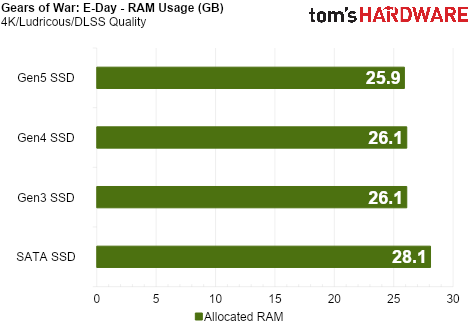
Testing on the high-end platform revealed that installing the game on any NVMe generation conserves approximately 2GB of system memory compared to SATA storage, confirming the storage technology operates as designed.
Visual Quality Trade-offs with SATA Storage
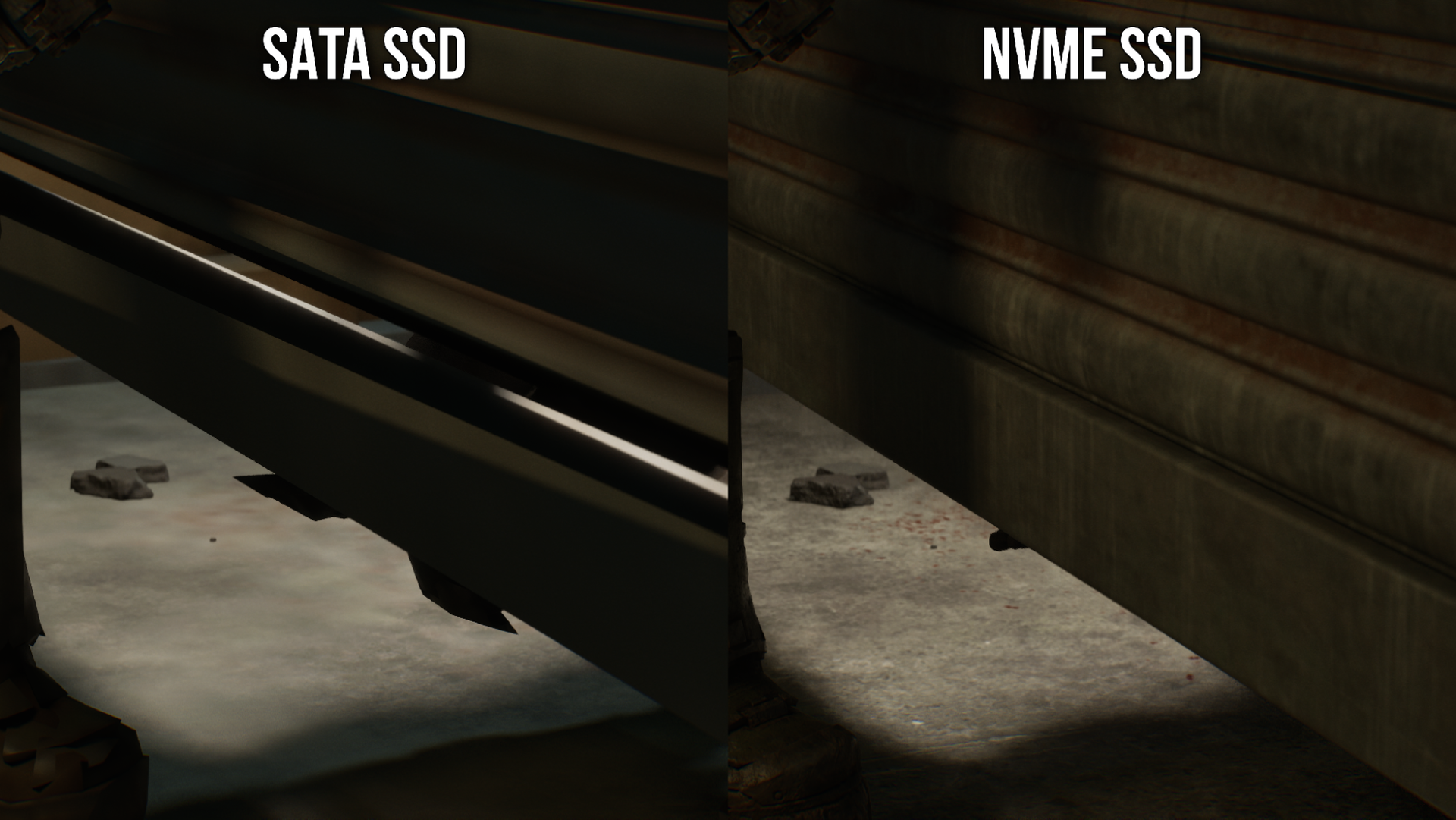
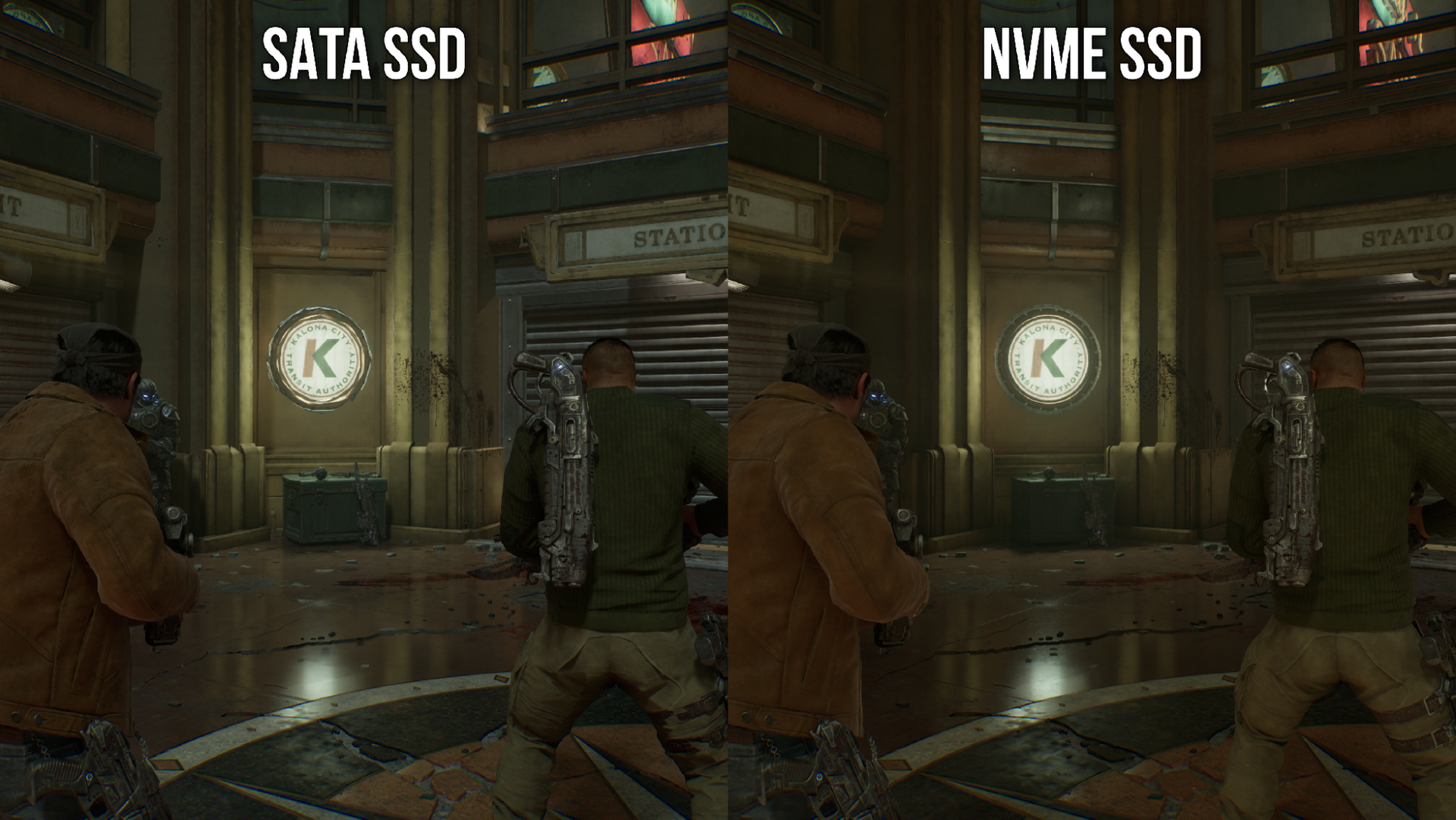
Given the game's average read bandwidth far surpasses SATA SSD capabilities, visual degradation occurs when running from SATA drives. Texture loading delays noticeably compromise image fidelity in some scenes, while lighting and shadow rendering lag in others. Though assets eventually appear correctly, the experience suffers from reduced immersion.
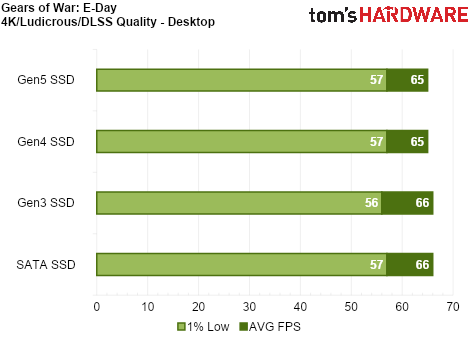
Performance Across Four SSD Generations
Testing spanned four storage generations to assess performance variance. On the well-resourced high-end system, SATA SSD installation produced no measurable frame rate impact—only the aforementioned visual quality loss.
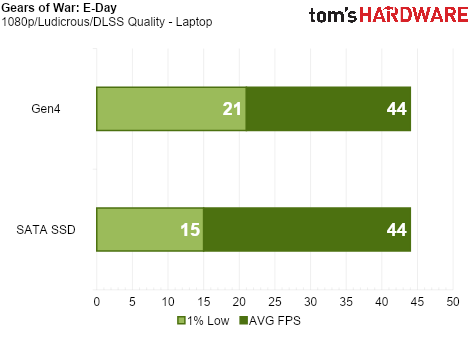
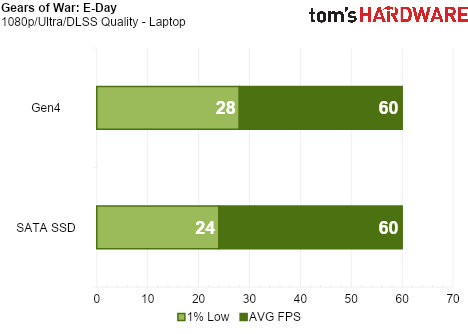
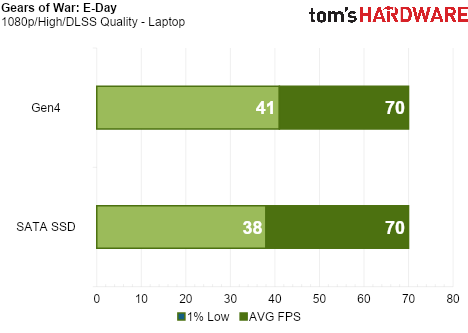
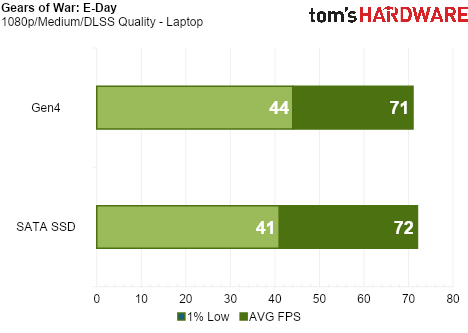
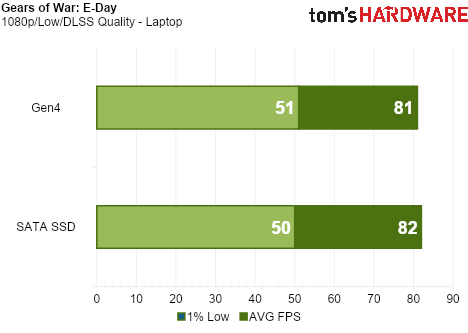
The memory-constrained laptop system with 16GB DDR5 demonstrated clearer benefits from NVMe storage, particularly at higher graphics settings. While average frame rates remained comparable between NVMe and SATA configurations, the 1% low frametime metric improved significantly with NVMe, delivering more consistent and responsive gameplay.
Implications for Future Game Development
The technique extends a concept Windows has employed for years through virtual memory paging. The Coalition's refinement tailors this approach specifically to gaming, ensuring paged data retrieval avoids noticeable performance degradation. Testing confirms the method successfully reduces RAM demands when the game resides on NVMe storage.
NVMe installation enables rapid asset delivery, benefiting systems with 16GB or less memory through improved 1% low framerates and smoother frametimes. As RAM costs rise and many gamers operate machines with 16GB—or even 8GB—of capacity, other studios may find this storage-leveraging strategy attractive. For developers pursuing visually intricate, densely populated worlds, fast storage optimization could represent a viable path to maintaining artistic vision on budget-conscious hardware.