DARPA Demonstrates Autonomous Robot Packs in Coordinated Battlefield Scenarios
The Pentagon has conducted tests of autonomous ground vehicles operating in formation during simulated combat exercises, with human operators retaining control over weapons deployment.
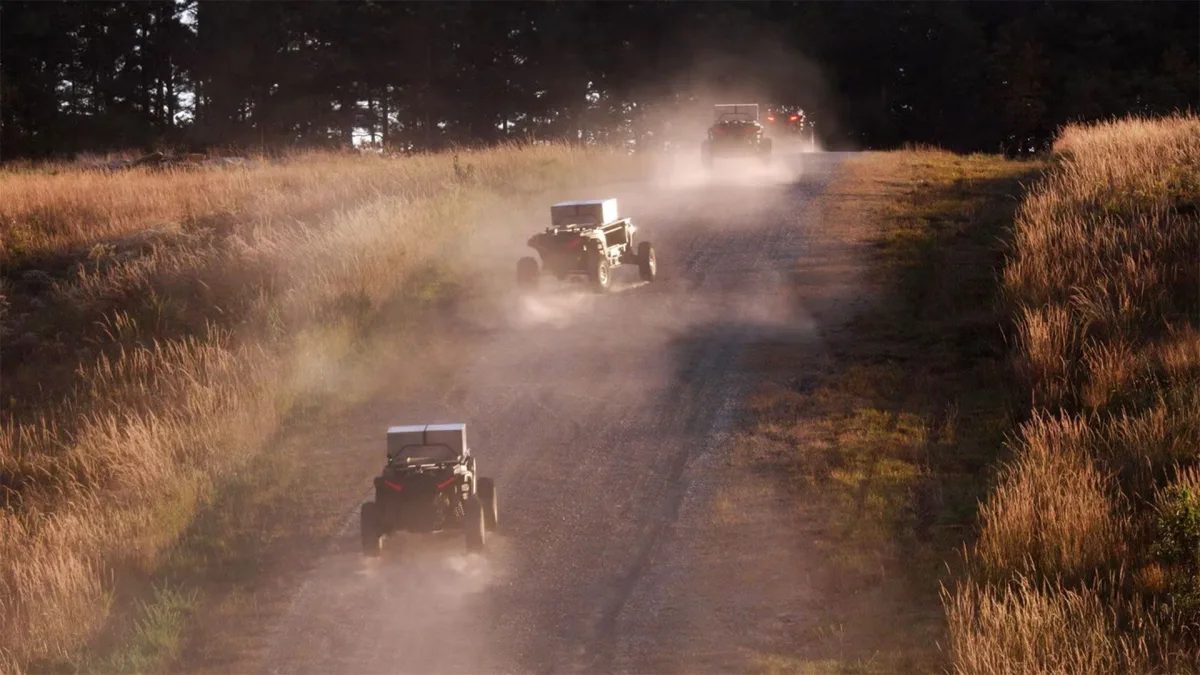
Military researchers have been evaluating teams of autonomous ground vehicles (UGVs) performing coordinated tasks in mock warfare settings. A demonstration took place in mid-October at Fort Knox's St. Vith Range in Kentucky, where four UGVs "worked as a team, negotiating and surveilling the rolling landscape in search of enemy forces," according to a DARPA blog post. The vehicles themselves are highly modular platforms capable of carrying various tactical equipment, though decisions to engage targets remained under human control. European allies' requirements prompted this latest evaluation.
"Out here at Fort Knox, we're looking at how autonomous mobility technology can be paired with payloads to enable new warfighter capabilities," explained Jason Gregory, technical advisor at DARPA. The location was selected partly because its terrain mirrors conditions found in European operational theaters.
How the Exercise Unfolded
During the demonstration, an operator received intelligence about a simulated threat along with satellite imagery. The operator then directed the UGV pack to the location for reconnaissance and target identification. One vehicle advanced ahead of the others to scout while three remained in reserve positions. This lead UGV carried an aerial drone that could have been deployed for enhanced surveillance or offensive strikes in an actual combat scenario. "Soldiers can mount anything and everything onto – 240 Bravos, drones, rockets," noted a technician at the event, highlighting the platforms' "super modular" design. Three of the four vehicles in the exercise carried drones.
Once the scout UGV completed its reconnaissance, the remaining vehicles advanced "to provide cover and support." A simulated rocket strike was directed at a target located approximately 300 yards from the robot formation. A fourth vehicle then moved into position on higher terrain to survey the engagement area.
Human Control Remains Central
Throughout the exercise, a human operator maintained authority over any weapons employment. "All the mobility, all the movement, all the detections, all of that is autonomous," Gregory stated. "But they don't pull the trigger until a human says pull the trigger."
RACER Program and Future Deployment
The exercise formed part of DARPA's Robotic Autonomy in Complex Environments with Resiliency (RACER) program. The initiative draws on expertise spanning vehicle engineering, algorithm development, artificial intelligence, and encrypted communications systems.
After five years of development, these UGVs can now receive task assignments for battlefield operations rather than requiring continuous manual control, according to Gregory. The vehicles traverse rough terrain at speeds comparable to human drivers operating at normal pace.
Program officials believe the UGV packs are prepared for operational deployment across "a host of other missions, including food, ammunition and supply logistics and more," the DARPA blog states. Additional tests involving active-duty soldiers are scheduled for December.