Anthropic's Claude Mythos Slashes AMD GPU Integration Time From Years to Days
Anthropic demonstrated to IPO investors that its Claude Mythos Preview model can automatically write the specialized code needed to run AI on AMD hardware in roughly three days—a task that previously required six to twelve months of engineering effort.
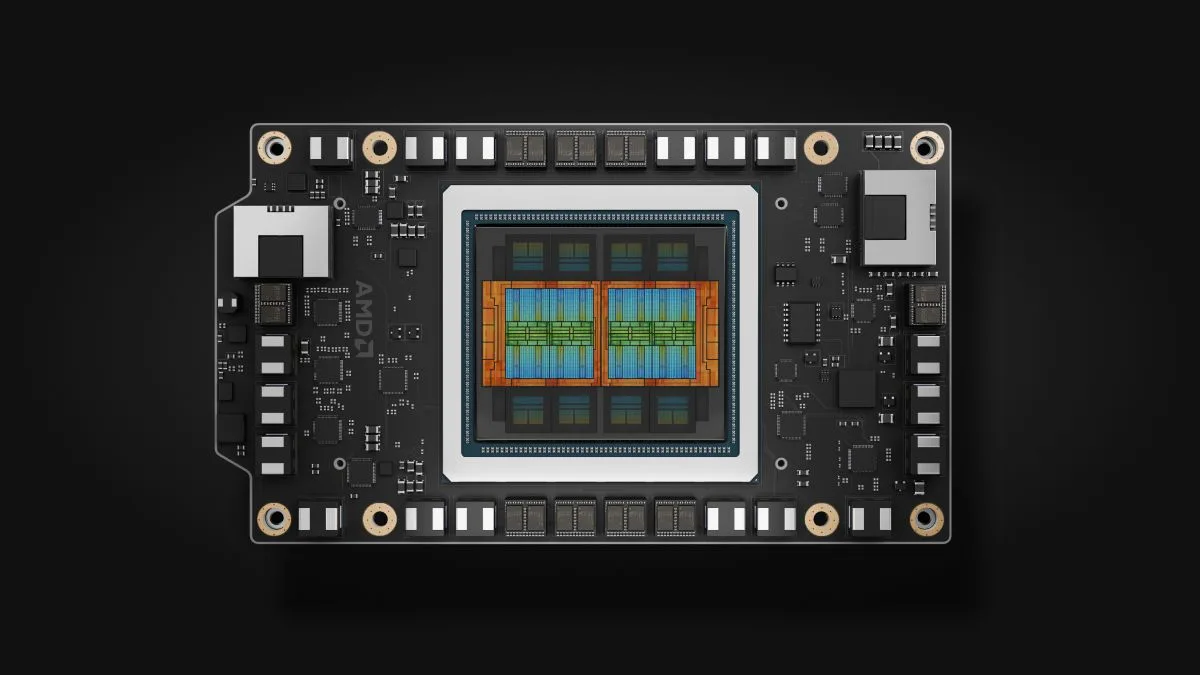
When artificial intelligence can generate the specialized code that binds models to particular hardware architectures, the technological advantages that have long protected dominant chipmakers begin to weaken.
During investor presentations ahead of its initial public offering, Anthropic revealed that Claude Mythos Preview accomplished the engineering work necessary to deploy its AI systems on AMD's graphics processors in approximately three days, requiring what the company described as "basically no human intervention." This represents a dramatic compression of a process that historically consumed between six and twelve months. The demonstration involved processing prompts for a single Anthropic model running on AMD MI355X GPUs while maintaining "a useful level of performance," with Mythos generating or adapting "almost 100% of the kernels"—the low-level code that traditionally locks AI models into a specific manufacturer's hardware ecosystem. This capability strikes at the foundation of Nvidia's competitive advantage, known as the CUDA moat, suggesting that such technological barriers may be gradually losing their protective power.
Tom Brown, Anthropic's co-founder and chief compute officer, provided the timeline comparison during investor meetings, emphasizing that the conventional approach would have required assembling a team of "dozens of engineers." Anthropic has already adopted a diversified hardware strategy, running its models across multiple processor types including graphics processors from both Nvidia and AMD, Google's tensor processing units, and AWS Trainium chips. The company manages this heterogeneous infrastructure as "one fungible pool of compute," according to Brown, who characterized the early decision to support multiple chip architectures as "an unconventional bet." Recent developments in the broader AI ecosystem suggest this approach may prove prescient, particularly given that Google's TPUs now offer native support for models developed using PyTorch, and Meta has begun deploying them in production environments.