Amazon's Kuiper satellite constellation hit by first ULA Vulcan launch failure
A United Launch Alliance rocket carrying 40 Amazon broadband satellites failed 10 minutes after liftoff from Cape Canaveral on Sunday, marking the company's first total mission loss in two decades.
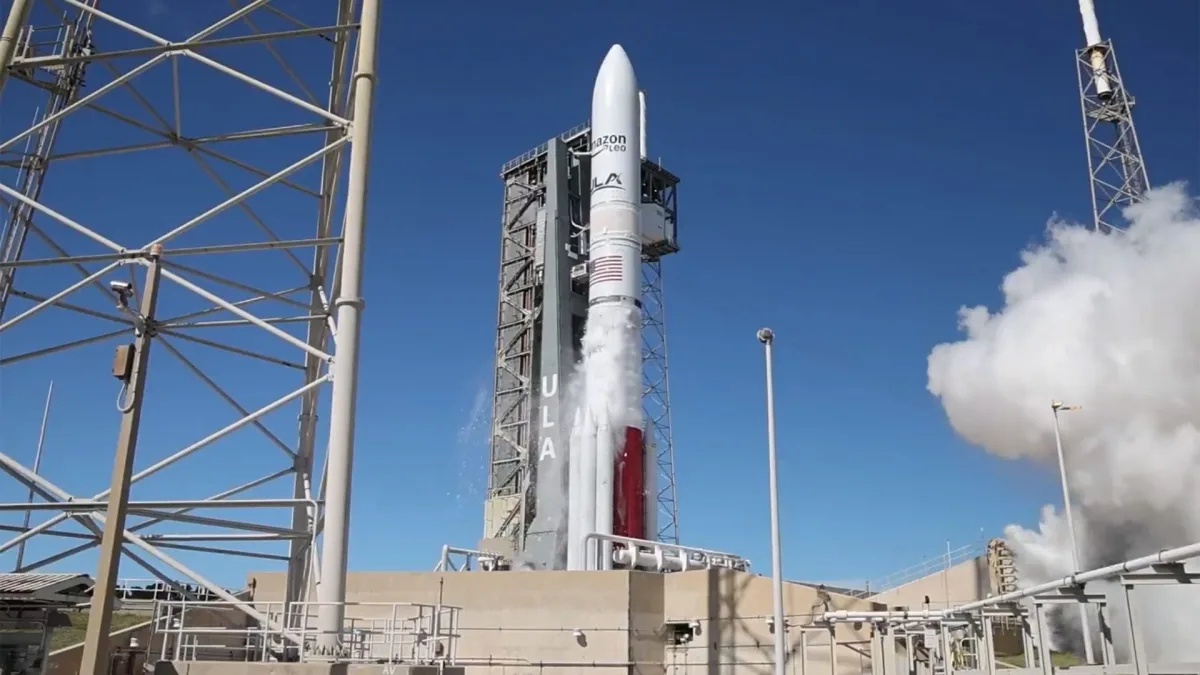
Amazon's effort to build a competitive satellite internet network suffered a significant blow when a United Launch Alliance Vulcan rocket failed to reach orbit carrying 40 broadband satellites destined for low Earth orbit. The vehicle lifted off from Space Launch Complex 41 in Cape Canaveral, Florida, on Sunday but experienced what ULA described as an "anomaly" approximately ten minutes into flight. The failure prevented the Amazon mission from reaching its intended destination.
Based on data received by our Launch Director, we confirm that the Vulcan vehicle launched from Space Launch Complex 41 suffered an anomaly 10 minutes into the flight and failed to deliver the Amazon mission to orbit. Every flight generates data, and every flight teaches us something. Since the anomaly just occurred, we don't have any specific data yet to understand what occurred today. ULA exists to provide assured access to space for our nation and for the customers who depend on us. That purpose is why we take on some of the hardest missions in spaceflight, and why we hold ourselves to the standard of mission success. Today, we did not meet that standard. We will work closely with our customer and other appropriate organizations to find the cause, determine the appropriate corrective action, and return to flight as quickly as possible. ULA is committed to full transparency with our customers, and they will have visibility into the investigation process, which utilizes rigorous methodology and corrective action. We will provide further updates when new information becomes available.
United Launch Alliance
The setback threatens to delay Amazon's commercialization timeline for its Kuiper satellite internet service. According to ISPReview, Amazon has successfully deployed 392 Kuiper communications satellites to date but requires a minimum of 500 units to achieve basic global coverage. The company's transition from its current commercial beta phase to full service launch, originally targeted for the end of 2026, now faces uncertainty.
Amazon has already manufactured approximately 1,000 satellites for the constellation. However, ULA—a joint venture between Boeing and Lockheed Martin—must conduct thorough analysis and reassure customers that similar failures will not occur again. The Vulcan vehicle had been grounded for nine months prior to Sunday's launch while engineers investigated problems with its solid rocket side boosters and core BE-4 engines, which are manufactured by Amazon's Blue Origin subsidiary.
Sunday's incident represents ULA's first complete mission failure in its 20-year operational history. Early telemetry data has already identified potential causes for the satellite destruction. Investigators are examining whether the first-stage BE-4 engines burned longer than expected and whether altitude-related issues occurred near the staging separation point.
Despite this setback, Amazon's launch schedule will continue with other partners. Within a week, the Kuiper constellation is scheduled to receive 36 additional satellites launched aboard a European Ariane 64 Block 2 (LE-04) rocket.
Amazon holds regulatory approval for an initial constellation of 3,236 LEO broadband satellites, with 392 currently operational, plus an additional 5,105 satellites designated for 5G service. By comparison, satellite tracking data indicates that Starlink already maintains more than 11,200 satellites in orbit.