YouTuber PewDiePie Releases Ajax, a Fine-Tuned AI Model He Says OpenAI Tried to Block
The content creator unveiled Ajax, a locally-runnable AI agent based on Qwen3.5-9B, claiming OpenAI banned his account twice during development over concerns about model distillation.

PewDiePie has launched Ajax, what he describes as an "uncensored AI model" designed to operate on personal computers. In a recent video, the YouTuber revealed that OpenAI terminated his account on two separate occasions while he was developing the system. According to correspondence from OpenAI that PewDiePie displayed, one suspension explicitly cited "distillation"—the technique of extracting knowledge from one model to train another.
Ajax functions as an autonomous agent within Odysseus, PewDiePie's self-hosted AI workspace. The model, which is based on Alibaba's Qwen3.5-9B, was designed to manage "daily tasks from search to browse the web to email to your calendar," all operating "completely privately," according to the Ajax project page. The system removes refusal mechanisms to deliver what PewDiePie characterizes as a "freer, less restricted AI experience," though the page urges responsible use. This release represents the first version following the workspace's debut in May.
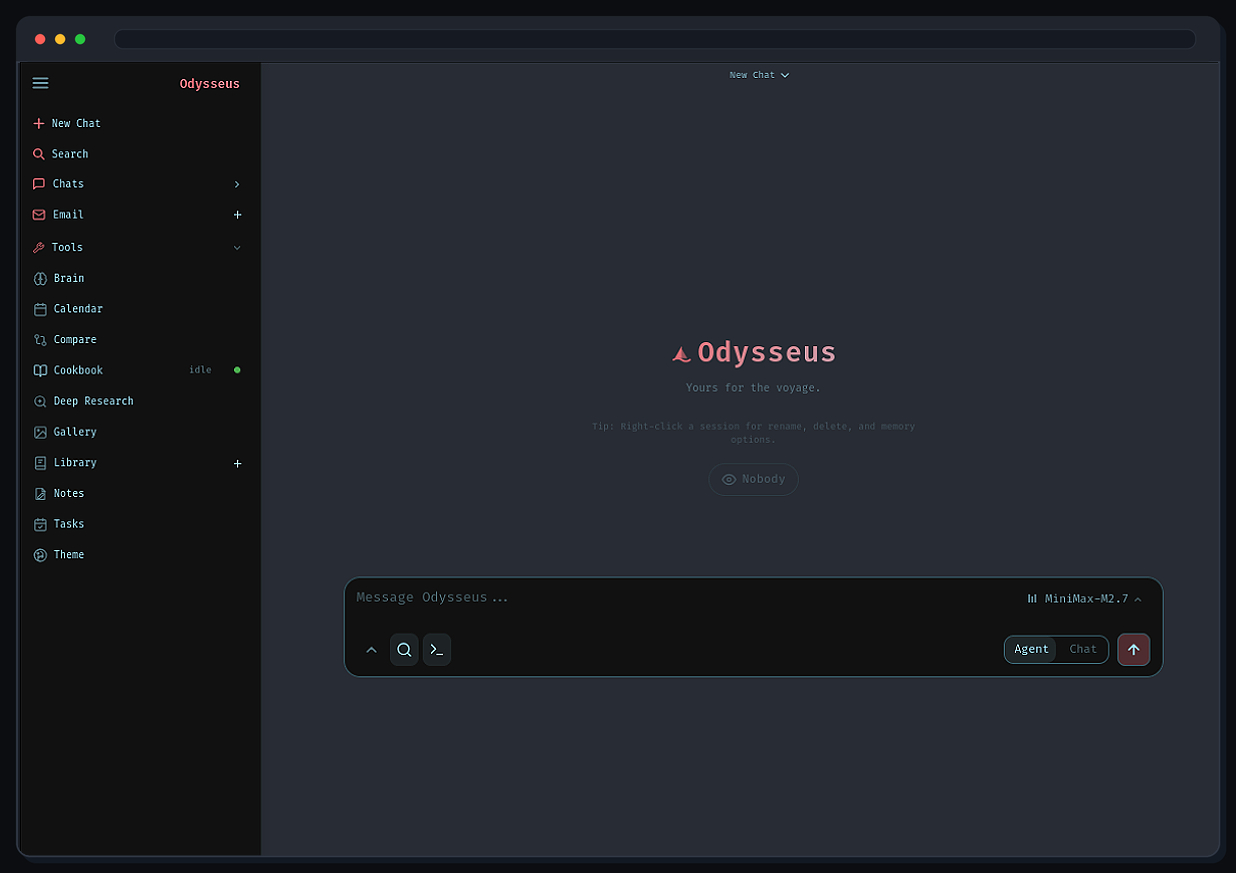
The architecture mirrors approaches taken by projects like OpenClaw and Nous Research's Hermes Agent. PewDiePie explained that he sought to "distill just a little bit" to enhance his model's capabilities. Major frontier AI developers, including OpenAI and Anthropic, employ multiple safeguards against distillation attempts, such as encryption and other protective measures. OpenAI has previously attributed such efforts to actors associated with Moonshot AI, viewing them as a significant security concern.
After his initial account reinstatement, a second ban followed when PewDiePie ran the model again "to create my seed data." He questioned the timing, asking, "How did they even know?" The OpenAI message provided no detailed explanation. PewDiePie responded by asserting, "They worked hard stealing all of our data to make their AI machines," implying that his distillation efforts were comparable to the data practices underlying frontier models.
To remove safety restrictions from his model, PewDiePie employed automatic ablation using Heretic, an open-source tool that identifies prompts the model declines to answer and strips away the corresponding refusal mechanisms—ideally without causing what he termed "brain damage" through excessive removal. He established boundaries around content that could harm individuals. Following legal counsel, he stated the model is "not designed to provide dangerous actionable instructions," citing nuclear weapons as an example, though the precise scope of these limitations remains unclear.
PewDiePie expressed strong conviction that smaller models tailored "for a specific harness" represent a superior path compared to massive frontier systems. He referenced the rumored scale of frontier models at "one trillion parameter" size, arguing, "I think it makes no sense to poke that giant beast" for routine applications. His focus centers on research and delivering a practical model, with an emphasis on smaller scale. He appealed to his audience to contribute training data rather than having Odysseus collect it directly from users, though he acknowledged receiving no submissions.
PewDiePie outlined his development roadmap, planning two additional days of reinforcement learning before repeating the decensoring process, applying quantization, and running benchmarks. He expressed enthusiasm, stating, "I can't wait to release the next version of Ajax and Odysseus," and noted that Odysseus itself has "gotten a huge update as well." The naming reflects the classical rivalry between Ajax and Odysseus, though PewDiePie joked that the name also references the cleaning product. The trajectory of open models and custom configurations demonstrates a pathway for users to deploy unrestricted AI systems on their own infrastructure.