Nvidia's RTX Mega Geometry 2.0 Brings On-Demand Ray-Tracing Geometry Streaming
Nvidia has released RTX Mega Geometry 2.0, an updated SDK that streams ray-tracing geometry into graphics memory on demand, enabling scenes too large for VRAM to render with full geometric detail.

The latest iteration of Nvidia's RTX Mega Geometry SDK introduces streaming capabilities for what the company calls "continuous level-of-detail clusters," designed to manage high-density mesh scenes. According to Nvidia's developer documentation, the technology functions even when scenes exceed available VRAM capacity. Version 2.0 ships as part of the broader RTX Kit 2026.3 release. The timing aligns with the launch of Gears of War: E-Day, which leverages RTX Mega Geometry technology, though Nvidia has not disclosed which specific version the game implements.
Mega Geometry "organizes detailed meshes into clusters so ray-traced scenes can adapt geometric detail efficiently," according to Nvidia. The SDK first appeared as version 0.9.0 beta in 2025 and subsequently integrated into Alan Wake 2's title update 1.2.8 that same year. Testing on an RTX 4090 demonstrated approximately 1GB of VRAM savings alongside a 13% performance improvement at native 4K resolution using DLSS Quality. For systems with 8GB graphics cards, that 1GB represents one-eighth of total memory.
Version 2.0.0 became available on GitHub this week. The technology reduces the computational expense of ray tracing dense environments, with the 2.0 release specifically addressing geometry that cannot fit within VRAM constraints. As Nvidia's changelog explains, "a scene's source geometry no longer has to fit in VRAM [with detail] bounded by a memory budget rather than by mesh count." When a scene exceeds the memory threshold, the system reduces geometric detail rather than continuously swapping data between storage and VRAM. Default allocations include 2GB for streamed geometry, 2GB for ray-tracing acceleration structures, and 4GB for material textures, all configurable by developers. The previous tessellation approach remains available as an alternative.
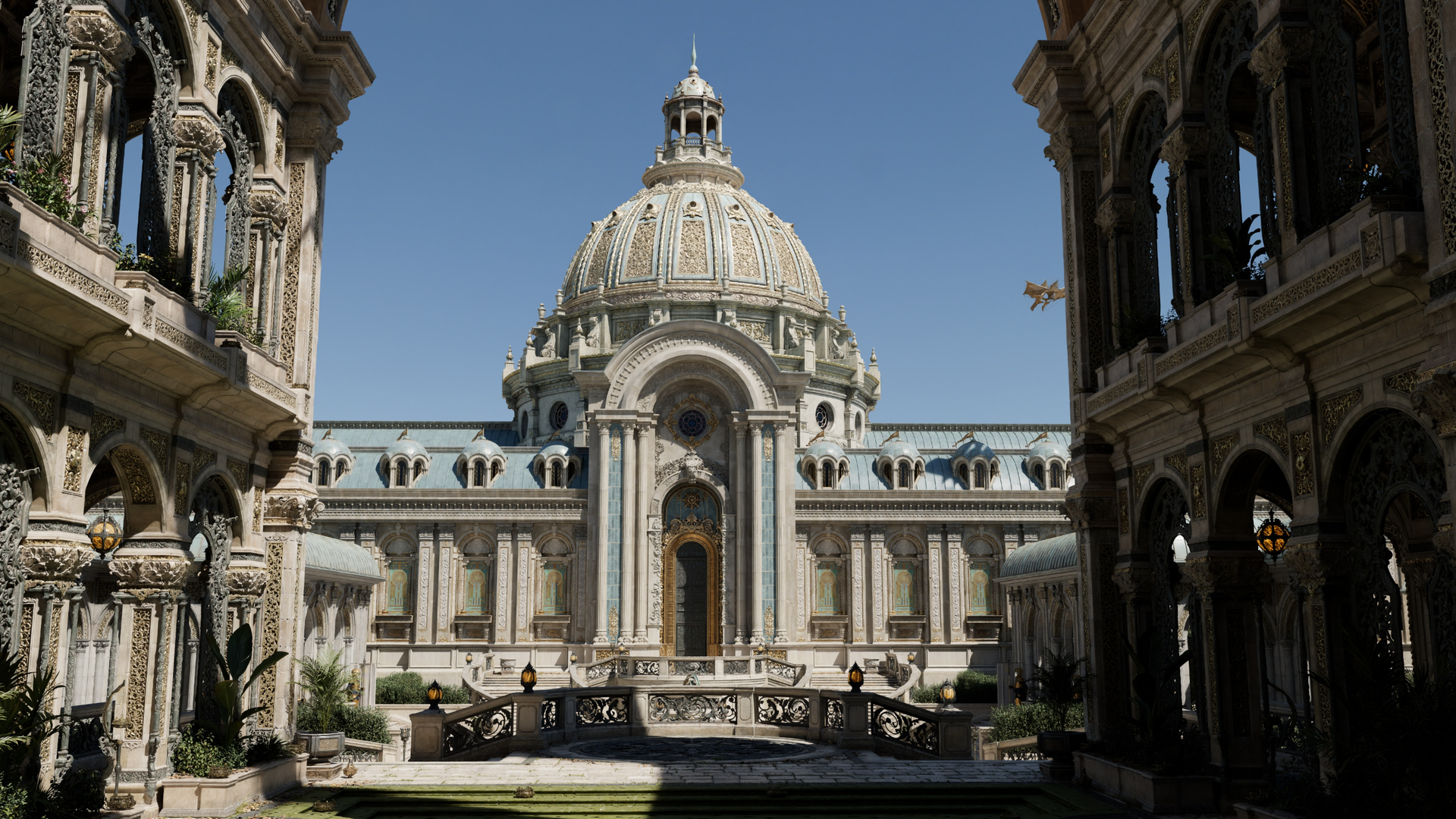
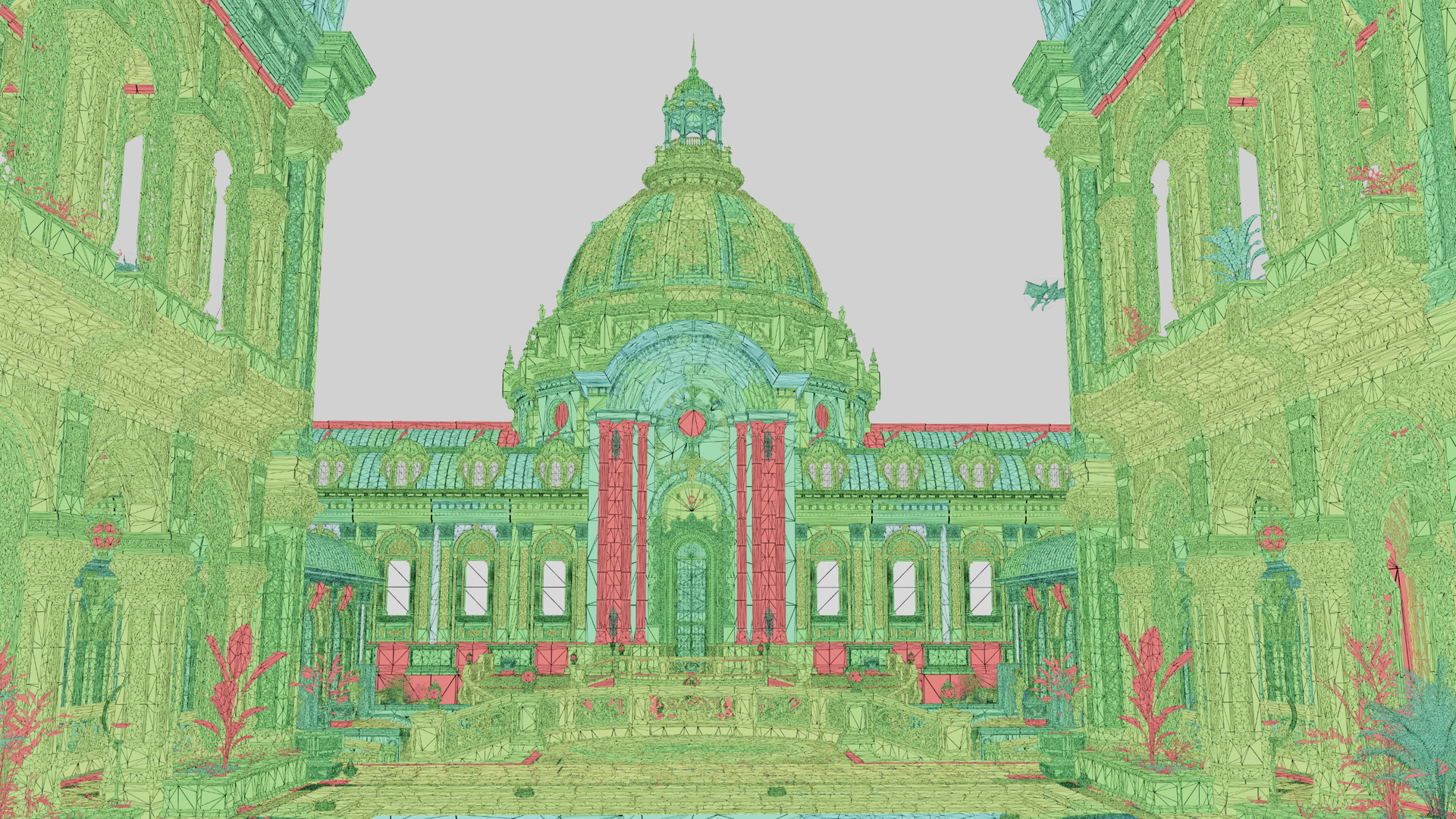
Nvidia's demonstration sample, Zorah, contains 1.6 billion unique triangles distributed across a 70GB download, with initial loading potentially requiring up to 64GB of system RAM at peak usage. The sample encompasses 31GB of mesh data overall, but the courtyard view displays only 1.5GB of mesh data in VRAM when running on an RTX 5090 at 4K with DLSS Quality. The sample requires an RTX GPU with at least 10GB of VRAM, Game Ready driver 570 or later, Microsoft's DXR 1.1 or later, and Windows 10 as a minimum. Currently positioned as a developer tool rather than a consumer feature, the SDK includes a reference sample with no games yet confirmed to adopt it.
RTX Kit 2026.3 encompasses additional components beyond Mega Geometry 2.0, including RTX Character Rendering 1.4, RTX Dynamic Illumination 3.1, RTX Neural Texture Compression (NTC) 0.10 beta, RTX Neural Shading 1.4, and RTX Texture Filtering 1.3. NTC has remained at v0.10.0 beta on GitHub since August 4, with the DX12 LinAlg path restricted to testing purposes. The DX12 LinAlg path demands preview driver 620.12, the preview Agility SDK, and Windows Developer Mode. Currently, Vulkan represents the only pathway for released games to access NTC with Tensor Core acceleration.
Nvidia identified a longstanding challenge in August: under ray tracing, Nanite elements "switch to a single, static low-detail mesh" because it's "prohibitively expensive" to construct acceleration structures for them using "existing DXR 1.2 and Vulkan APIs." Six years of research and development preceded this breakthrough, with the innovations debuting in Gears of War: E-Day on October 6. Nvidia indicates these advancements will eventually integrate into Microsoft's DirectX Raytracing 2.0 standard. On September 22, Nvidia's Game Ready driver announcement stated that Mega Geometry enables "accurate ray tracing of Nanite geometry for the very first time." Game Ready driver 617.14 for the title is already available, with early access beginning October 1 offering the first opportunity for players to experience Nvidia's Nanite ray tracing implementation.