Slax Linux Distribution Returns After Three-Year Hiatus With Modern Features
The portable Linux distribution Slax has released version 2026.11, marking its first major update since October 2023 and introducing a graphical installer, AI assistant, and Secure Boot support.
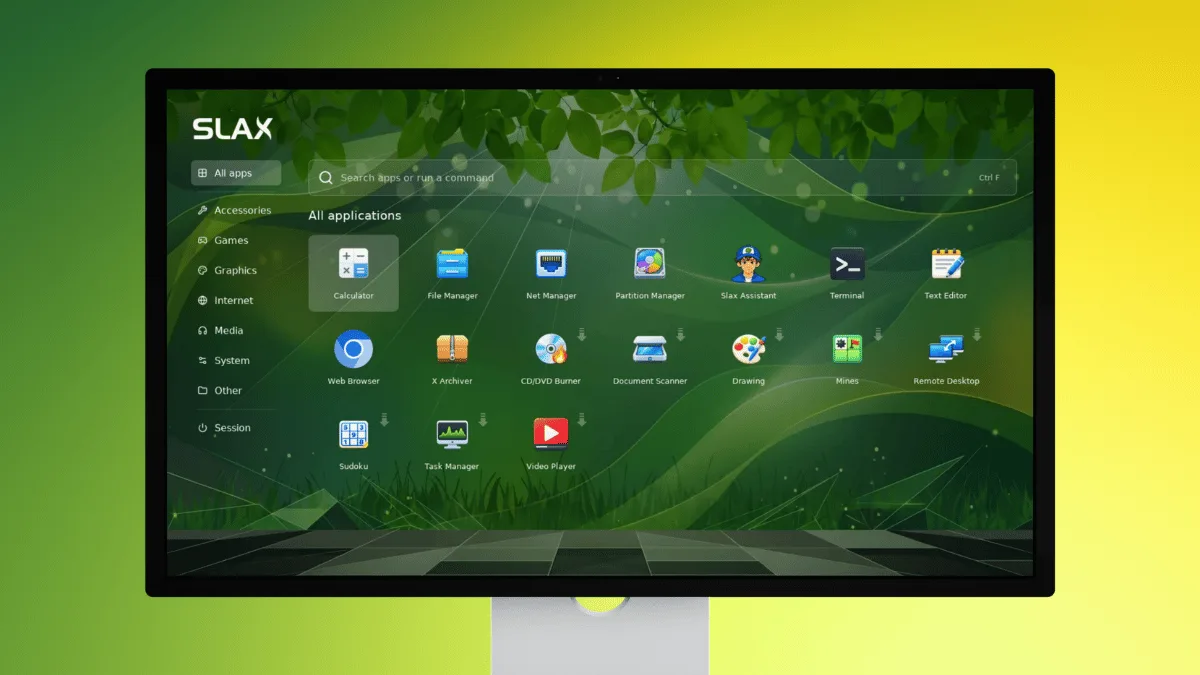
The landscape of Linux distributions has long been marked by projects that fade away due to insufficient maintainer resources, leadership changes, or insufficient adoption. In the current wave of AI-driven development, new distributions continue to emerge, though many simply replicate macOS design rather than offering genuine innovation. Against this backdrop, Slax's return from an extended dormancy represents a notable development for a distribution designed to run from portable media.
A comeback we didn't see coming
Slax 2026.11 draws its foundation from Debian "Trixie" and incorporates Linux 6.12, a kernel version designated as long-term support with maintenance extending through December 2028. The previous iteration arrived in October 2023, built on either Debian 12.1 or Slackware 15.0.2-current depending on the variant selected. The gap between releases spans more than three years, though the announcement accompanying the new version offers no explanation for this extended interval.
The distribution now features a graphical installation tool compatible with both Windows and Linux systems. Users can mount the downloaded ISO as a directory, launch the installer from that location, and designate a target drive. The tool then either generates a bootable USB drive or installs Slax alongside an existing operating system.
A single USB device can now accommodate multiple independent sessions with distinct names—such as one configured for professional work and another for testing—which users select during startup based on their immediate requirements.
The Fluxbox desktop environment has received several enhancements. Window previews now appear when users press Alt+Tab or hover over taskbar icons. Pressing Alt+F3 simultaneously displays all four available workspaces. The application launcher now supports on-demand downloading of missing applications when users click icons marked with a downward arrow.
Additional security improvements include a signed bootloader and kernel, enabling Slax to launch with UEFI Secure Boot active on compatible hardware.
The release introduces Slax Assistant, an AI-powered utility accessible from the launcher. Users can describe tasks in natural language, and the assistant can examine system state, diagnose problems such as insufficient disk space, and execute corrective commands. The feature requires an active internet connection and user authentication through email, Google, or GitHub accounts. The service operates through an online Slax infrastructure, though specifics regarding the underlying AI provider and data handling practices remain undisclosed. New users receive 100 complimentary credits for initial experimentation.
No backsies?
This represents not the first instance of Slax vanishing from active development. In 2022, the project resurfaced with a release candidate derived from Debian 11, following a period of minimal activity since 2018, interrupted only by a Debian 10.2 test build in 2019. A Slackware-based edition materialized later that year, succeeded by the October 2023 release. Communications published at that time provided little indication of future development plans.
The Slax 2026.11 ISO occupies 536.9 MB and demonstrates acceptable performance when executed on virtual infrastructure, making it suitable for evaluation before full deployment. The official Slax user guide serves as a useful reference for those implementing the distribution on their systems.