Liquid AI Positions Edge Devices as the Natural Home for Personal AI Systems
Liquid AI is designing AI models and agent software to run directly on consumer devices, leveraging local context while operating within strict hardware constraints. The startup's approach challenges cloud-centric architectures by bringing intelligence closer to users.
Building artificial intelligence systems that live on personal devices demands fundamentally different engineering approaches than cloud-based models. Developers must contend with fixed computational budgets on edge hardware while simultaneously ensuring these systems can learn and improve long after users deploy them.
Liquid AI Inc. is rethinking how AI architectures function when they cannot rely on the elastic resources of distant data centers. According to Jeffrey Li, the company's chief operating officer, the edge represents an ideal location for personal AI because devices offer both hardware constraints and intimate knowledge of individual users. "The vision we have is that we should bring AI … closer to the user," he said. "So we focus on building these AIs to run on the devices all around us."
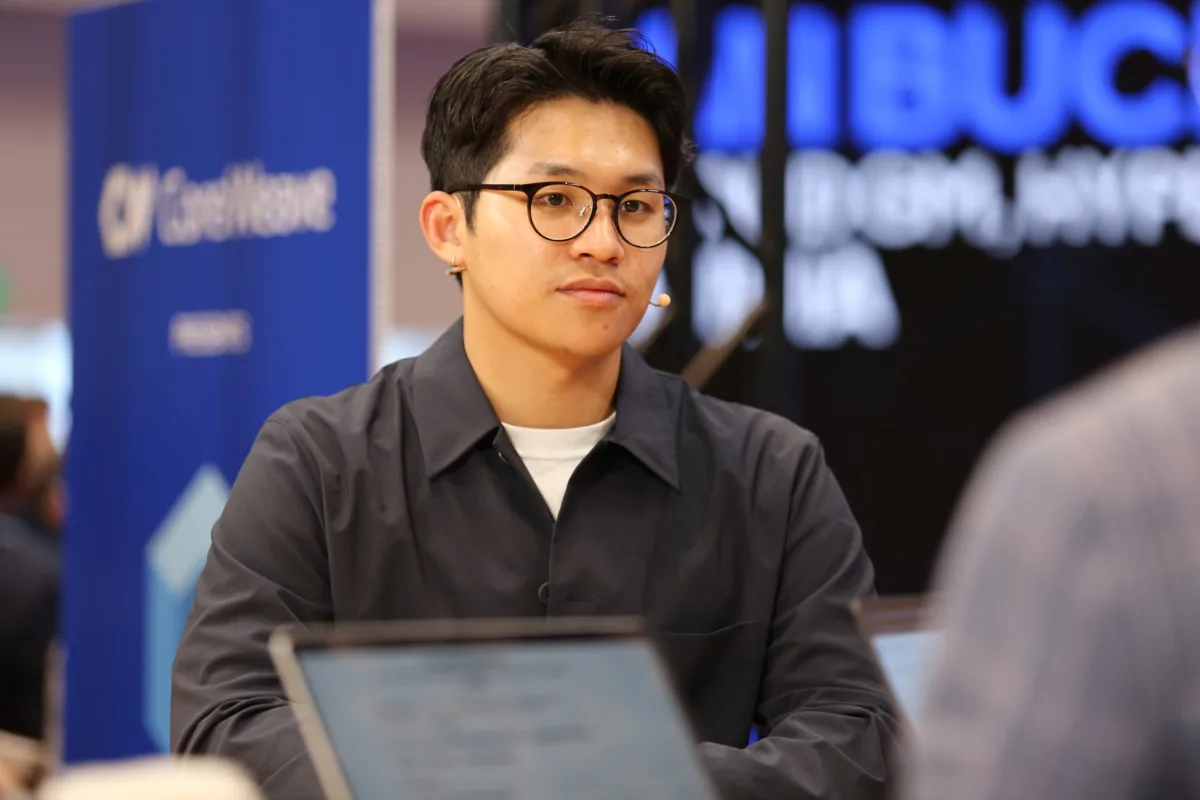
Li shared these insights during an exclusive interview at the Fully Connected event, speaking with theCUBE Research's Dave Vellante and John Furrier on theCUBE, SiliconANGLE Media's livestreaming studio. The conversation centered on how on-device AI agents, fixed edge compute resources and observability mechanisms can work together.
Capturing User Context Within Hardware Boundaries
Liquid AI has developed Liquid Context, a system optimized for Snapdragon processors that sits between AI models, agent software and the underlying hardware. The technology extracts signals from devices to construct a profile of who the user is and what they aim to accomplish, Li explained.
"What is the best form factor to capture that signal? It's the devices in our pockets," Li said. "It's our phones, it's our wearables, it's our watches, it's our PCs, it's our cars."
Agent harnesses—the software layer that transforms models into working agents—also bear responsibility for managing user context. On resource-constrained devices, storing growing amounts of contextual information in simple text files becomes impractical, Li noted. Liquid AI addresses this by deploying its own models to determine what information deserves retention and how to compress it efficiently.
"The problem with devices is that you have fixed compute," he said. "You have to fit within the zero-sum compute. That means a lot of the assumptions around how harnesses today are built no longer hold at the edge."
The company is collaborating with Mercedes-Benz Group AG to integrate on-device AI capabilities into vehicles. Ensuring these agents remain aligned with user expectations well into the future represents the next frontier, Li indicated.
https://www.youtube.com/embed/IXAuMA5X0a8?start=1&feature=oembed
"From here, we want to build these systems and these agents to be able to self-heal and improve and personalize on their own over time," he said. "We're building observability loops and continuous improvement loops that will improve both the model and the harness over time through natural usage."