Linus Torvalds Embraces AI for Kernel Development, Credits Claude in New Branch
The Linux creator has shifted his stance on artificial intelligence, now using it actively in kernel work and crediting Claude Code for patches that dramatically improve file-reading performance.
A fresh branch in Linus Torvalds' kernel repository, labeled noref-filemap-read-with-llm, contains an eight-patch series constructed atop Linux 7.3-rc6 with additional fixes. The commit message accompanying the branch does not specify a target kernel release for integration.
The technical change
When multiple threads access the same file simultaneously, the kernel retrieves data from the page cache, which stores frequently accessed information in memory. In the current approach, each read operation acquires a lock on the cached data and then releases it. This causes all threads to contend for the same counter, creating bottlenecks as they interfere with one another. Matthew Wilcox identified this problem in 2024 after observing it in a customer's workload.
Torvalds' patch series eliminates this locking requirement. To ensure safety, memory leaving the cache remains unavailable for reuse for a brief interval, allowing readers to extract data without acquiring any lock. The tradeoff involves temporarily idle memory.
Testing on Torvalds' own machine with certain security features disabled showed dramatic improvements: eight threads reading a single file increased from approximately 10 million reads per second to between 30 and 33 million reads per second.
While Torvalds performed the measurements himself, the commit message attributes the remainder of the work to Claude Code, operating under his guidance. This includes the code itself, test utilities, the commit message draft, and the analysis of known limitations. This represents his second major use of AI for kernel development; in August, he employed AI to resolve a bug in the Intel Xe graphics driver.
Torvalds on AI at Open Source Summit Europe
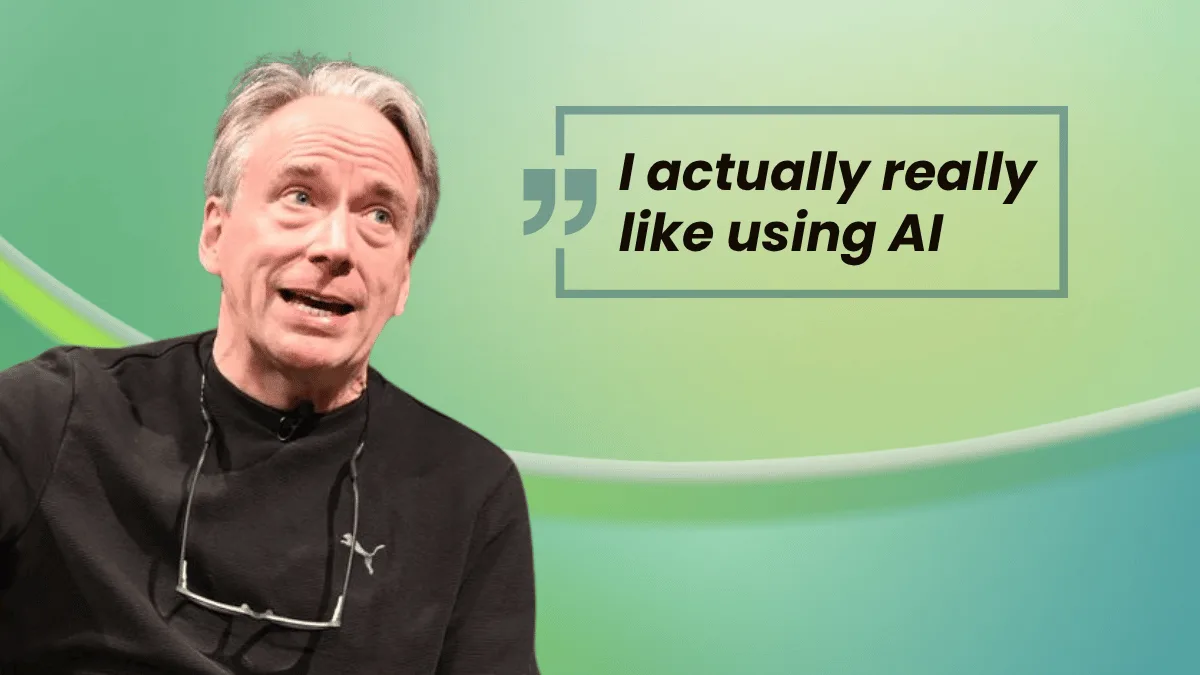
At Open Source Summit Europe in Prague on Friday, Torvalds discussed his evolving perspective on artificial intelligence during a conversation with longtime associate Dirk Hohndel, head of Ericsson Software Technology. According to ZDNet's Steven Vaughan-Nichols, who attended the event, Torvalds stated: "I actually really like using AI."
Torvalds explained that his earlier skepticism about AI has given way to a more favorable view. He emphasized that AI functions effectively when treated as a practical instrument rather than a replacement for human judgment, and that it has enhanced his enjoyment of programming work.
He illustrated his point with a personal project: a guitar pedal featuring a user interface he had originally coded in C. Seeking a more contemporary aesthetic, he turned to AI, explaining: "I use AI to do the things that I'm bad at."
Torvalds also characterized exploratory programming as "a wonderful way to find joy in programming," particularly for those new to the field. However, he acknowledged that while AI is strengthening the overall codebase, the increased workload it creates for maintainers has emerged as a genuine concern.
This represents a significant reversal from his 2024 assessment, when he dismissed the AI industry as "90 percent marketing and 10 percent reality." His current active deployment of AI in kernel development demonstrates how substantially his position has shifted.