Groundcover Positions AI Agents as the Primary Users of Observability Data
Groundcover's CEO argues that AI coding agents represent a new class of observability power users, requiring access to production telemetry to validate and improve their own code changes.
When an AI coding agent generates a patch in minutes, the next logical question becomes whether that change degrades performance on the API endpoints serving your users. Answering that question demands visibility into how software behaves in production—data that traditionally belonged to operations teams troubleshooting incidents.
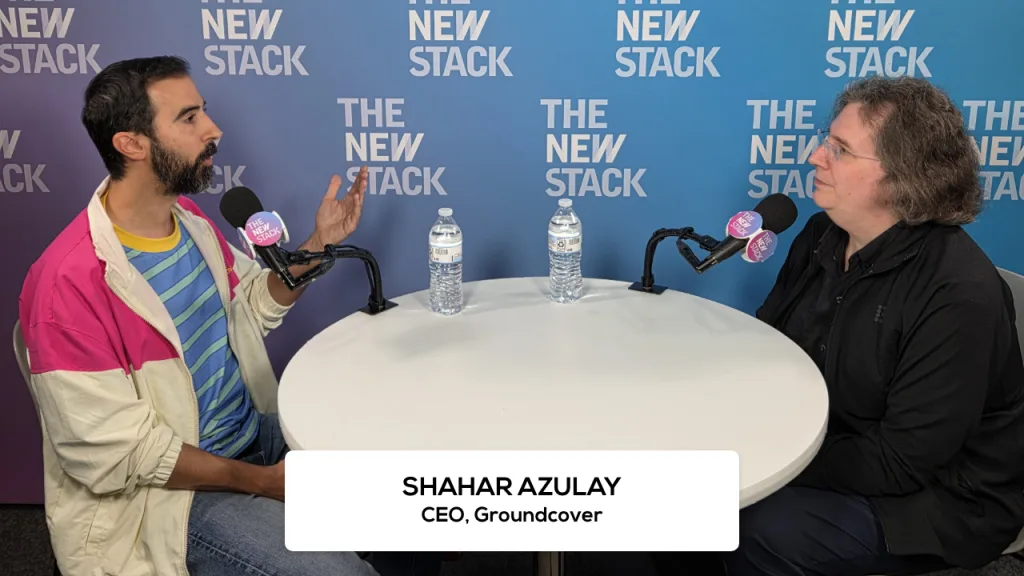
Groundcover, an observability platform designed to democratize production telemetry access among developers and their AI agents, is betting on this shift. During a conversation with The New Stack's Frederic Lardinois at KubeCon + CloudNativeCon in Salt Lake City this month, Groundcover CEO and co-founder Shahar Azulay outlined his vision for how the same signals engineers deploy to diagnose problems can empower agents to write and validate superior code changes from the start.
Agents as the New Observability Power Users
Now agents are the power users of observability
Shahar Azulay, Groundcover CEO
Groundcover surfaces telemetry through the Model Context Protocol (MCP), enabling coding agents to access and analyze it during their work. An agent tasked with investigating a sluggish API endpoint might leverage traces to pinpoint which service introduces the most latency. A developer constructing a test scenario could draw on observed application behavior to recreate situations that real customers experience.
The company applies this approach to its own operations. Groundcover's internal coding agents retrieve context from the organization's telemetry systems, while agents participating in code review processes examine metrics collected from staging environments. This strategy provides reviewers with concrete data to validate when a proposed patch appears sound in isolation but requires verification against actual system behavior.
Agents simultaneously introduce new observability challenges. Azulay distinguishes between conventional application traces—which track a request's path through multiple microservices—and agent execution runs that can extend over hours and encompass thousands of individual tool invocations. Such extended traces dwarf typical Kubernetes incident investigations in complexity and volume.
Engineers may need to examine prompts and tool calls or employ evaluation frameworks to determine whether a run executed as designed. While a completed run confirms the agent finished, the underlying trace reveals what actually transpired during execution.
Reducing Instrumentation Overhead While Preserving Observability Depth
Groundcover deploys an eBPF sensor to gather application and infrastructure telemetry without requiring developers to integrate an SDK into each service. The platform also accommodates OpenTelemetry, permitting teams to continue forwarding existing signals while introducing custom instrumentation where additional granularity proves necessary. This dual approach establishes a foundation for new services while enabling targeted enhancement when specific workflows or business operations demand deeper visibility.
The location where telemetry resides forms a central component of Groundcover's value proposition. Through its bring-your-own-cloud architecture, telemetry and Groundcover's agent operations remain within the customer's own cloud infrastructure, according to Azulay. Customers bear the cost of underlying compute resources while Groundcover handles platform deployment and management.
This model carries implications for teams making retention decisions about telemetry volume. Placing infrastructure expenses in customer accounts creates direct visibility into the cost-benefit tradeoff. The approach also addresses security concerns: when prompts or tool calls might include sensitive customer information, organizations can maintain that data within their own controlled environment.
The question of what happens when the platform begins acting on observed data also surfaces. Azulay highlights Groundcover's expansion into Kubernetes optimization, with current efforts concentrating on cost reduction and system resilience. He envisions a trajectory toward agents capable of addressing incidents across both the application and infrastructure layers—proposing code modifications while simultaneously reconfiguring infrastructure settings. The discussion also touches on the practical challenges of migrating between observability platforms, particularly the fate of dashboards and alert rules that engineering teams have invested years constructing.