Developer repurposes MacBook trackpad haptic motor as audio output device
A GitHub developer has created software that transforms the Force Touch trackpad's haptic engine into a functioning speaker, producing audible sound by vibrating the glass surface thousands of times per second.
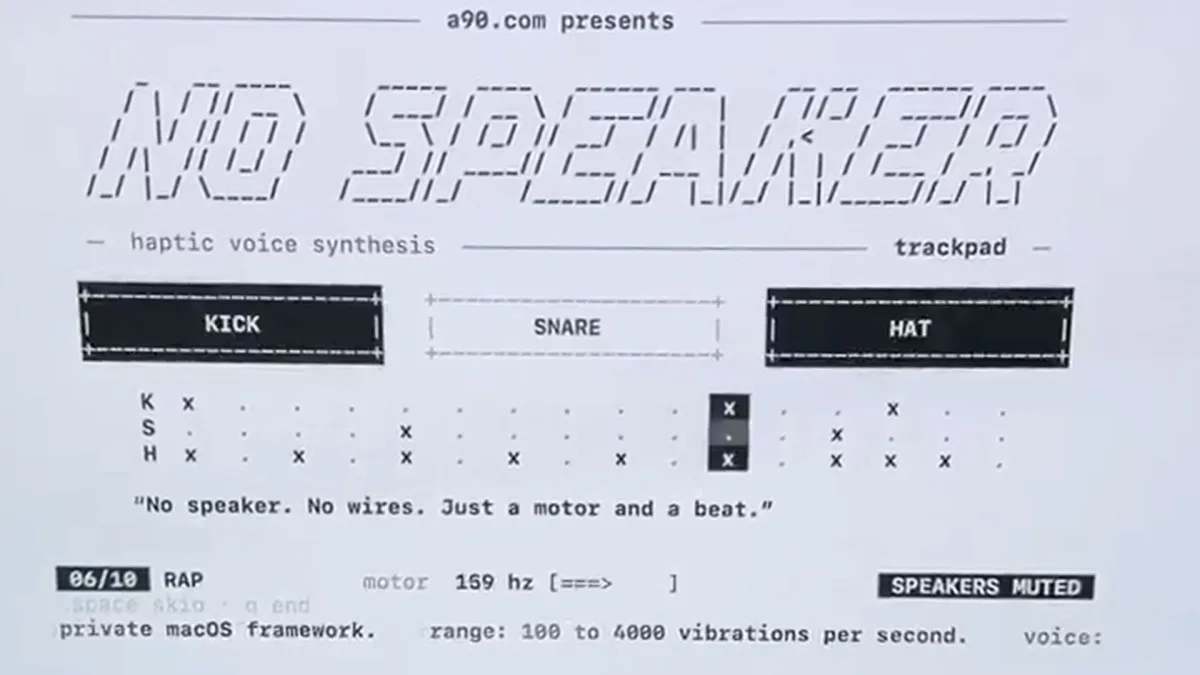
Apple's Force Touch trackpad stands among the company's most celebrated laptop innovations, prized for its responsive glass surface and precise haptic feedback. Developer Cody Collier, known as os6 on GitHub, has discovered an unconventional application for this technology: turning the trackpad into an audio speaker through custom software called No Speaker. The project demonstrates how the trackpad's haptic motor can be repurposed to generate audible sound, though the resulting audio quality remains decidedly experimental.
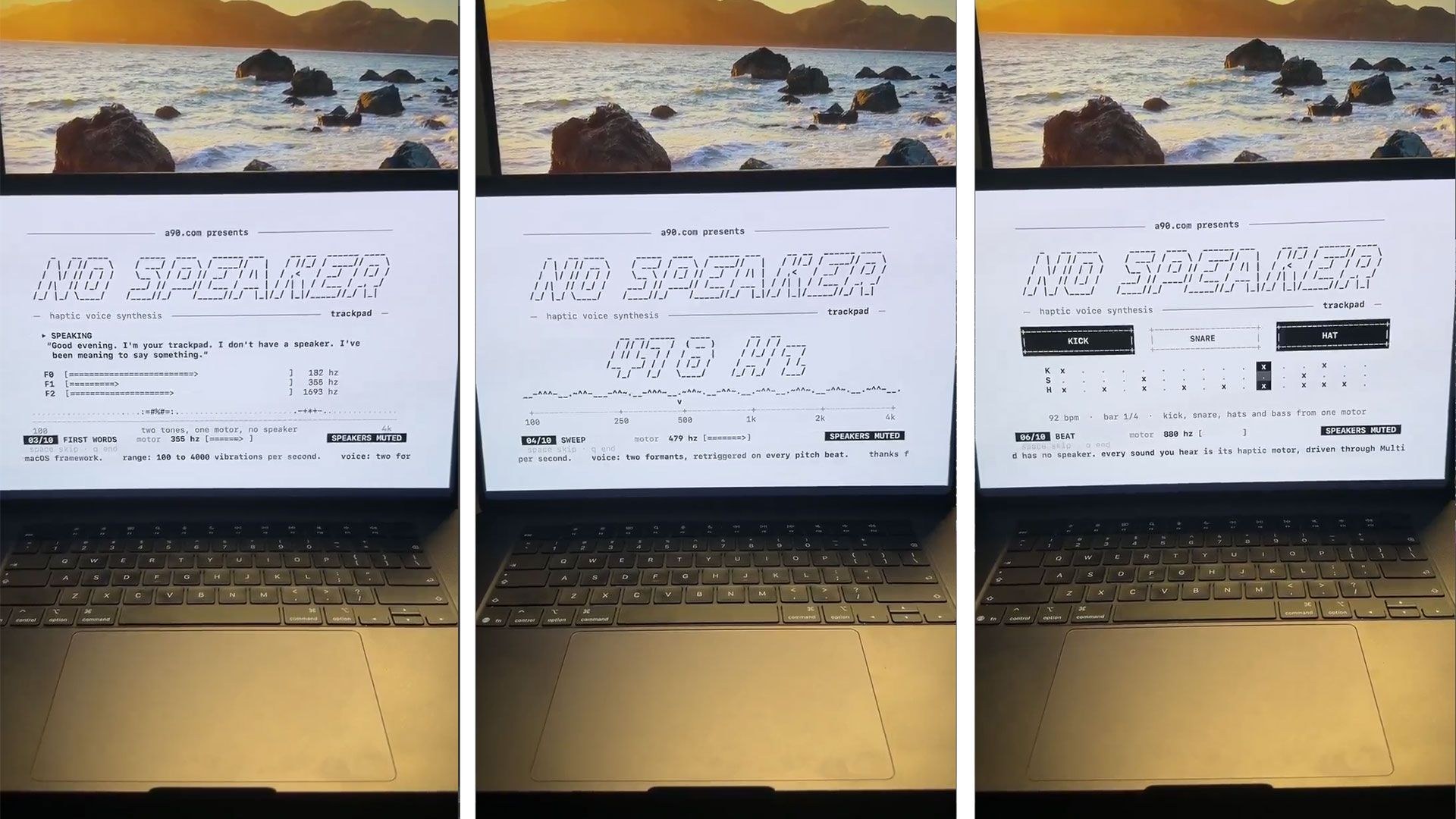
Collier shared a demonstration on social media showing the capability in action: "i made my macbook trackpad talk using only the vibrations from its haptic motor my speakers are muted, every sound you hear is coming from the trackpad itselfopen source, try it here: https://t.co/MPEKltkFxO https://t.co/5rTtqdErDPNovember 22, 2026"
The Force Touch trackpad's appeal derives from its smooth glass construction and consistent tactile response, a significant improvement over traditional mechanical trackpads. The haptic technology that produces this tactile sensation can also generate sound when its vibration frequencies are shifted into the audible range, Collier discovered.
According to Collier's documentation on the project page: "There's no speaker in a MacBook trackpad, just a small haptic motor that taps the glass so you feel a click. No Speaker drives that motor up to 4,000 times a second, fast enough to make sound you can hear, and turns it into a voice. It talks, sings, raps, and becomes an instrument under your finger."
In demonstrations, the software produces melody playback and functions as a basic drum machine with programmable kick, snare, and high-hat sounds on a 16-step sequencer. The audio fidelity is notably poor—comparable to a severely degraded Speak & Spell toy from decades past.
Installation and compatibility
The No Speaker software and command-line utilities are available on GitHub. Users can pass parameters to the nospeaker command to input text for speech synthesis, modify voice characteristics, generate test tones, and select different interface modes.
Testing has confirmed functionality on a MacBook Pro (Mac17,10) with M5 Max running macOS 27.2.1. The Force Touch trackpad debuted in MacBooks in 2015, suggesting compatibility with machines from that year forward. The software requires macOS 12 or later on Apple Silicon systems, or macOS 13 or later on Intel machines. The application includes safeguards to notify users if their machine lacks a Force Touch trackpad.
Part of a broader tradition of hardware repurposing
This project joins a lineage of creative hardware hacks where components are redirected toward unintended purposes. Enthusiasts have previously extracted audio from floppy drive motors and hard drive actuators. Another MacBook-specific example involved exploiting the hidden LidAngleSensor API to produce creaky door sounds when opening and closing the display.