Alibaba's Lightweight Qwen Image 2.1 Model Challenges Closed-Source Competitors at 7B Parameters
Alibaba Cloud has unveiled Qwen Image 2.1, a compact image generation model with 7 billion parameters that runs on consumer graphics cards and claims to outperform Google's Nano Banana 2.0 on internal benchmarks.
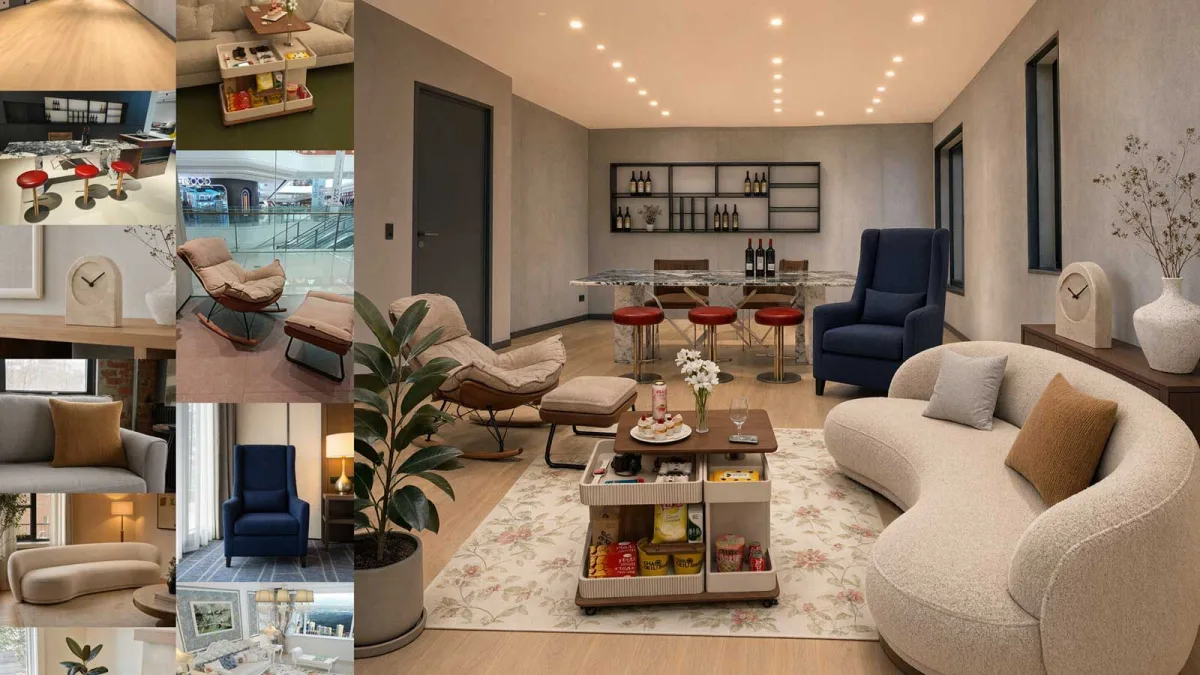
Alibaba Cloud has introduced Qwen Image 2.1, a stripped-down image generation model featuring only 7 billion parameters. The open-weight design enables execution on consumer-grade hardware such as the RTX 3090, and the developers assert it surpasses several proprietary alternatives, including Google's Nano Banana 2.0, based on their own testing metrics.
The performance claims rest on internal benchmarking, warranting independent verification before drawing definitive conclusions. Preliminary assessments indicate the model delivers strong capabilities, including built-in transparency functionality and the capacity to synthesize images using multiple reference inputs.
A notable shift in Qwen Image 2.1 involves its licensing framework. Unlike its predecessor, the current iteration explicitly prohibits commercial resale without obtaining a distinct license from the developer.
Feature Set and Competitive Positioning
Qwen Image 2.1 incorporates several enhancements designed to expand its applicability and strengthen its standing against established competitors. Native transparency support allows generation of images with transparent backgrounds, benefiting artists integrating AI into broader creative projects and producers of print-on-demand merchandise like stickers.
The model advances image editing capabilities by accepting up to 10 reference images simultaneously. Practical applications include uploading an image of a person alongside photographs of clothing items, enabling the model to render a composite showing the individual wearing those garments. The development team highlights consistency preservation, maintaining accurate representation of individuals and products across generated outputs.
The defining characteristic of Qwen Image 2.1 remains its diminutive footprint. Its visual generation component operates with merely 7 billion parameters, positioning it among the most efficient models available. According to first-party comparative analysis, only LongCat-Image from Meituan operates with fewer parameters at 6 billion. The majority of competing systems require substantially larger parameter counts or remain proprietary.
Qwen Image 2.1's creators maintain that their model rivals closed-source alternatives in performance. On their proprietary benchmark, the model achieved 60.2 points. By contrast, OpenAI's GPT Image 2.5 Sunburst scored 67, Muse Image registered 62.34, and Google's Nano Banana 2.0 achieved 59.82.
Testing conducted through AI Arena reveals somewhat different outcomes under less favorable conditions, though margins remain narrow. The model attained 1228 points, while Nano Banana 2 reached 1260. Muse Image positioned itself higher at 1276, with GPT 65 Sunburst leading at 1423.
Regarding image editing performance, AI Arena identified Qwen Image 2.1 as the strongest open-source option available:
Qwen-Image-2.1 by @Alibaba_Qwen just landed as the #1 open source model in the Image Edit Arena and Text-to-Image Arena!With 1367 pts in the Image Edit Arena, Qwen-Image-2.1 took the #1 spot among open. It landed #16 overall, just 3 pts from GPT-Image-1.5-high-fidelity at #15.… https://t.co/J5MqBP22eM pic.twitter.com/MV5USBrMa9September 22, 2026
AI Arena
These findings remain preliminary, requiring additional evaluation to substantiate or challenge the Qwen team's assertions. Initial results appear reasonably consistent with stated capabilities. While the parameter requirements of proprietary competitors remain undisclosed, Qwen Image 2.1 demonstrates competitive performance despite its constrained architecture.
Local Hardware Compatibility
Early adopters report successful execution of Qwen Image 2.1 on standard consumer graphics cards. Vunderba, a Hacker News participant and creator of the GenAI Showdown platform, documented converting a 1MP image in approximately five seconds using an RTX 4090.
On the Stable Diffusion subreddit, user cgs019283 highlighted its performance capabilities, noting generation of 1MP images in roughly 25 seconds on contemporary Nvidia 50-series cards including the RTX 5070 and 5080. The user noted that processing time increases substantially when employing numerous reference images, and that image editing represented the slowest operation during their evaluation.
Additional users have successfully deployed the model on less powerful systems. One report describes generating 2K resolution imagery in approximately 50 seconds on an Nvidia RTX 3060 paired with 64GB of memory.
A user with access to an RTX 6000 Pro demonstrated the capability to produce 1024 x 1024 images in mere seconds using that professional-grade hardware.
While local AI deployment remains less straightforward than cloud-based services like Google's Nano Banana and OpenAI's GPT Image offerings, preliminary results appear encouraging. Should the feature set demonstrate durability under more demanding evaluation, users seeking rapid, high-quality image generation with local execution, complete operational control, and no requirement for cloud infrastructure or subscription services may find a formidable alternative.
Licensing Framework and Community Concerns
Early adopters have repeatedly raised questions regarding the licensing approach implemented by Qwen Image 2.1's developers. The licensing language presents some ambiguity:
You are granted a non-exclusive, worldwide, non-transferable, and royalty-free limited license under our intellectual property or other rights owned by us embodied in the Materials to use, reproduce, distribute, copy, create derivative works of, and make modifications to the Materials FOR NON-COMMERCIAL PURPOSES ONLY.
The agreement stipulates that commercial deployment of the "Materials" requires obtaining a separate license directly from the Qwen team. This language generated sufficient uncertainty within the community that the Qwen team issued a clarification on Twitter/X:
We've received so much love for Qwen-Image-2.1 over the past 24 hours, thank you!! Also gotten a lot of questions about the license, especially around model outputs. So here's the answer:Outputs are not part of the licensed Materials. Users retain the rights to images and other… https://t.co/5kLG46bvN9September 21, 2026
Qwen team
The statement largely resolves the ambiguity. Content generated through the model should not qualify as licensed material and therefore should not fall under the commercial restriction clause.
However, the restriction does prohibit resale of the model itself without authorization from Alibaba. This represents a departure from the Apache licensing framework that governed the original Qwen Image, and arguably narrows the definition of open-weight. The licensing terms are less permissive than they might otherwise be.
For the majority of users, this constraint presents minimal practical impact. Qwen Image 2.1 can operate on local systems to generate effective imagery available for any intended use. Given its compact architecture delivering substantial capabilities, the response from proprietary model developers will merit close observation.