Trump Jr. Steps Down From Kalshi Advisory Role Amid Competing Investment
Donald Trump Jr. has ended his advisory position at prediction market Kalshi following his venture capital firm's substantial investment in rival Polymarket, raising fresh questions about conflicts of interest in the Trump administration's approach to the emerging industry.
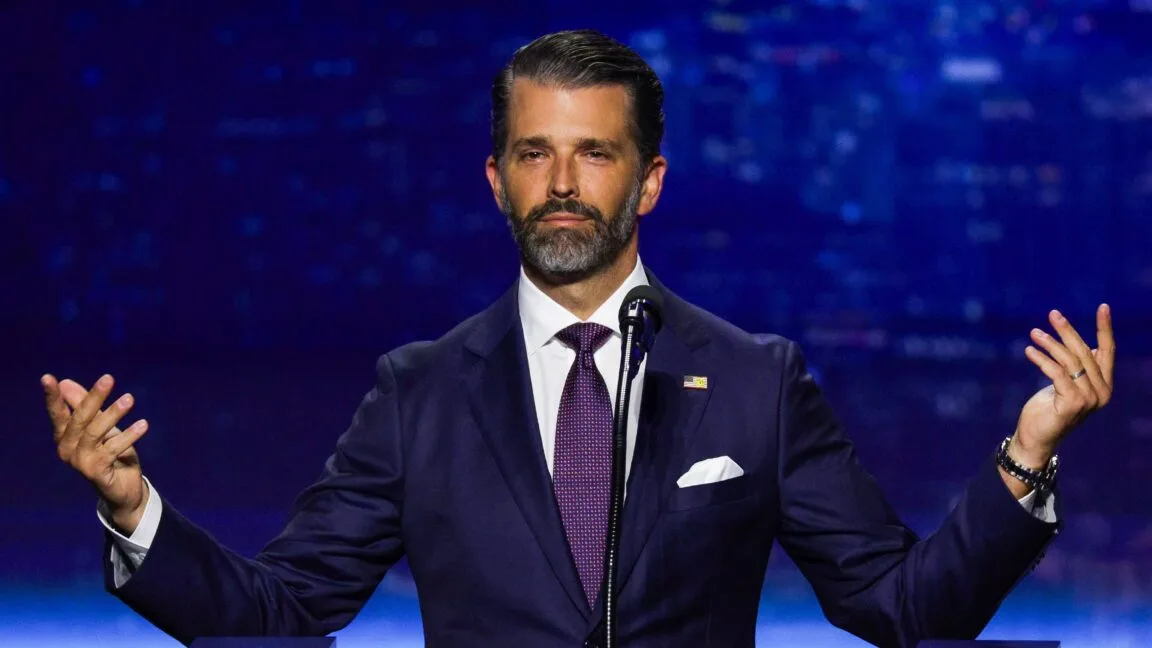
The prediction market platform Kalshi announced this week that Donald Trump Jr. has departed from his strategic advisory role, a move that came after his venture capital firm deployed significant capital into Polymarket, Kalshi's primary competitor in the space.
In a statement shared with news organizations, Kalshi said: "We have mutually agreed to end Don's advisory role after his firm's significant investment in a competitor this past summer. We are grateful for his contributions in helping us market Kalshi to more customers."
Trump Jr. may retain financial stakes in both platforms. The Financial Times reported in June that he received approximately $300,000 in equity from Kalshi when he joined as a strategic adviser in early 2025, at a time when the company was valued below $2 billion. That valuation has since climbed to $22 billion following a recent funding round, with Kalshi reportedly pursuing additional capital that could push its value to $65 billion.
Through his role as a partner at 1789 Capital, Trump Jr. also maintains an interest in Polymarket, where he serves as an advisor. The venture firm invested $300 million in Polymarket in August 2026, expanding on an earlier $300 million investment made in August 2025.
A Kalshi representative explained the timeline of the separation: "We have been discussing this internally since August when news of 1789's investment in Polymarket became public. Kalshi reached out to Don Jr. this fall to discuss his firm's increased investment in our top competitor and his role on its advisory board… both parties understood that advising two competitors in a growing sector was complicating things for both of us."
Kalshi CEO acknowledged "optics" concerns
The Trump administration has fostered expansion of prediction markets through a lenient regulatory stance adopted by the Commodity Futures Exchange Commission (CFTC). The agency has pursued lawsuits against 11 states seeking to block state-level regulation of prediction markets and has filed supporting briefs for Kalshi in its own state-level disputes. State attorneys general have characterized Kalshi's operations as illegal gambling.
Kalshi co-founder and CEO Tarek Mansour acknowledged the perception problem during a recent television interview, telling MS Now: "I get asked a lot about Don. I mean, I think that is a fair question… We are facing sort of an optics issue, I think."
Mansour characterized the relationship as non-political and rooted in marketing necessity during Kalshi's earlier stages when public awareness of prediction markets remained limited. "The key thing is we did it before the election. It is not a political decision, and it still isn't. That's the key thing," Mansour said.
The timeline, however, contradicts this framing. Mansour announced Trump Jr.'s appointment as strategic advisor on January 13, 2025—more than two months after the November 2024 presidential election and just a week before Donald Trump's second inauguration. Trump Jr. made the announcement simultaneously on X, describing how he had used Kalshi on election night at Mar-a-Lago to gauge the race outcome ahead of media projections.
"On Election night at Mar-a-Lago, while biased outlets called the race a coin toss, my family and close friends used the prediction market Kalshi to know we won hours ahead of the fake news media," Trump Jr. wrote. "I immediately knew I had to contribute to their mission. Today, I am proud to announce that I am joining Kalshi as a strategic advisor."
CEO denies regulatory involvement
When pressed by MS Now host Stephanie Ruhle about whether Kalshi should have recognized a conflict of interest after the election, Mansour pushed back, stating: "We never had any policy regulatory involvement. It was always about getting the word out about prediction markets, how they work, looking at the forecasts, making sure people understand that it's not a poll; it's actually probabilities. That was always our focus… we have advisors from both sides of the aisle. We have Democratic advisors; we have Republican advisors."
Mansour emphasized that Kalshi sought partners capable of amplifying its message, noting Trump Jr.'s substantial social media reach. "anyone who likes prediction markets, and Don does like prediction markets, we wanted to work with, because we wanted to get the word out about what prediction markets are. Don has 10 million followers on Twitter… he has a huge following, and he likes the idea of going direct, tweeting."
A Kalshi spokesperson reiterated this characterization this week: "Don Jr. has been a great marketing consultant for us—he helped us 'go direct' early on, which was a big part of our growth online."
Beyond Trump Jr., Kalshi has retained former US Senator Blanche Lincoln (D-Ark.) as a paid lobbyist since 2024. As a Democratic senator in 2010, Lincoln co-authored legislation governing prediction markets and argued against allowing event contracts for sports gambling. In her current role as a Kalshi lobbyist, she advocates for event contracts tied to sporting outcomes and opposes state regulation of prediction markets.
Trump Media and Technology Group disclosed plans last year for a prediction market called "Truth Predict" on Truth Social, though the company appears to have reduced its commitment to the initiative.
Congressional concerns over family entanglement
US Senators Elizabeth Warren (D-Mass.) and Jeff Merkley (D-Ore.) raised alarm about Trump Jr.'s dual stakes in Kalshi and Polymarket in a November 9 letter to White House Counsel Will Scharf. The senators pointed to a recent insider trading case as evidence of systemic risk: a Trump teleprompter aide earned over $100,000 by wagering on Kalshi's markets based on advance knowledge of the president's prepared remarks.
The CFTC settled charges against the teleprompter operator, Gabriel Perez, requiring him to return profits of $107,539.02 and pay a civil monetary penalty of $65,000. Warren and Merkley contended that despite this incident, "the White House continues to take no meaningful action to address these problems, all while the President and his family stand to personally profit from their participation in prediction markets."
For example, the President's family has become even more entangled with the success of this industry. Earlier this year, Donald Trump Jr. became an advisor to Polymarket shortly before his venture capital firm made a $300 million investment in the company. Trump Jr. likewise received an equity stake in Kalshi worth $300,000 in January 2025 and also joined the company as an advisor. Just last year, Trump Media announced it was developing its own prediction market called "Truth Predict" in partnership with Crypto.com.
Senators Elizabeth Warren and Jeff Merkley
The CFTC is reportedly preparing charges against Kalshi for failing to properly disclose dozens of new event contracts to the agency, yet simultaneously continues its campaign against states seeking stricter prediction market regulation. The federal agency filed a lawsuit yesterday against Arkansas to prevent the state from regulating Kalshi, following similar suits against 10 other states.
Kalshi has suffered defeats in multiple cases where US appeals courts and district courts declined to block state gambling statutes. Louisiana Attorney General Liz Murrill announced a state court victory yesterday in which a judge issued a "temporary restraining order prohibiting Kalshi, Polymarket, Coinbase, Robinhood, and other 'prediction market' operators from continuing their unlicensed and unregulated illegal gambling in Louisiana."
Murrill stated: "It's not complicated: if you aren't a licensed gaming operator, you aren't legal. Illegal gambling is a crime and is subject to jail time and significant penalties. Judges all over the country have overwhelmingly called this activity what it is: gambling. Kalshi's and the other operators' attempts to make up new words to evade state gambling laws, regulators, and taxes are not fooling anyone."
Kalshi maintains that all its wagers, including those functionally equivalent to sports bets, qualify as event contracts—a category of swap it argues falls exclusively under federal jurisdiction. The company achieved its most significant legal victory against New Jersey in the US Court of Appeals for the Third Circuit, though New Jersey is petitioning the Supreme Court to overturn that decision. Should the Supreme Court accept the case, the Trump administration is expected to file a brief supporting Kalshi.