The 14-day patch is obsolete: How machine-speed vulnerability discovery is forcing enterprise architecture to evolve
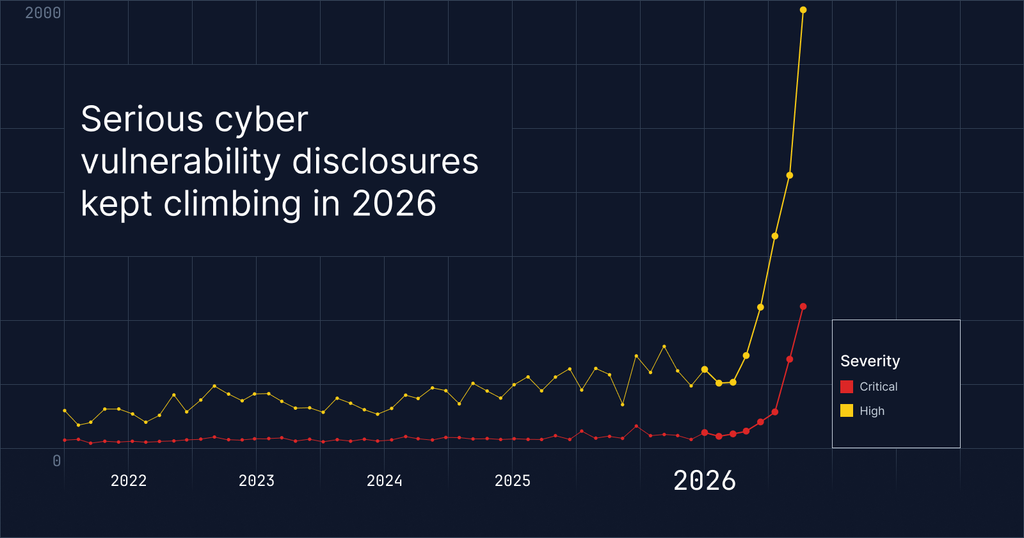
Autonomous security systems discovered 75,242 CVEs in the first nine months of 2026 alone—nearly 20% of all vulnerabilities ever recorded. The traditional two-week patch cycle can no longer survive machine-speed threat discovery.

For generations, vulnerability management operated at human pace. Security researchers would manually examine binaries, map execution flows, construct proofs of concept, and submit coordinated disclosures. Engineering leadership would assess CVSS scores, slot the work into sprint planning, and eventually release patches. This methodical rhythm has evaporated.
Through the first three quarters of 2026, the vulnerability disclosure ecosystem recorded 75,242 CVEs—roughly one-fifth of every vulnerability ever catalogued since the CVE program launched in 1999. The rate of acceleration is itself accelerating: the Cyber Strategy Institute documented nearly 38,000 flaws surfacing in Q3 alone.
The pace of vulnerability discovery has outpaced the human capacity to remediate it. Engineering organizations face a stark operational reality: the traditional two-week patch cycle is dead.
Why vulnerabilities exploded in 2026
This explosion does not reflect declining code quality among developers. Rather, it marks the transformation of vulnerability hunting from specialized manual work into an automated, distributed computational process.
- Autonomous codebase traversal: Earlier SAST platforms generated noisy dashboards filled with pattern-matching false positives. Contemporary agentic security platforms execute full-context semantic analysis: pulling down repositories, following asynchronous data movement through distributed systems, generating working exploit code in isolated test environments, and validating actual exploitability before surfacing alerts.
- Exhaustive compute at scale: Machines do not fatigue. Fleets of automated agents perpetually scan open-source package repositories and public code hosting, reverse-engineering transitive dependencies, examining aging C/C++ codebases, and probing modern Go, Rust, and Node.js implementations for concurrency vulnerabilities, deserialization weaknesses, and memory corruption.
- Focus on foundational infrastructure: Automated discovery prioritizes high-impact software layers—authentication systems, API entry points, protocol parsers, and container orchestration platforms.
When computational systems exhaustively examine the entire landscape of publicly available software, they will identify every exploitable vulnerability.
The operational cascade
The torrent of machine-identified CVEs generates cascading friction across compliance, development productivity, and risk governance:
- The exposure gap becomes unmanageable: The critical danger lies in the window between public exploit disclosure and actual deployment in production systems. When agentic frameworks produce functional exploits within hours of code publication, a multi-day remediation window represents a critical vulnerability.
- Alert paralysis and triage debt: Teams confront a mismatch between CVSS scores (measuring theoretical danger) and EPSS metrics (forecasting actual exploitation probability). Distinguishing between alerts affecting unreachable utility code and those targeting weaponizable zero-click vulnerabilities has transformed triage from routine work into perpetual crisis response.
- Compliance and audit deadlock: Standards including NIST SP 800-53 (Control SI-2), PCI-DSS 4.0, and DORA mandate specific response timelines for critical and high-severity flaws. When batches of 9.0+ CVSS ratings arrive weekly, security and infrastructure leaders dedicate more effort to risk acceptance documentation than to actual production hardening.
Can internal IT teams keep up with patching and push innovation?
The answer is no.
Enterprise engineering teams exist to deliver competitive advantage: releasing new capabilities, strengthening system reliability, and capturing market opportunity. Yet contemporary software stacks depend on thousands of external packages. When a critical vulnerability emerges in foundational layers—authentication services, API gateways, database connectors—development roadmaps halt. Teams face emergency response cycles:
- Suspend ongoing sprint activities.
- Map internal dependency chains to establish genuine risk.
- Resolve dependency incompatibilities, code conflicts, and integration failures.
- Deploy emergency updates across distributed production infrastructure.
Countering automated, machine-velocity threat discovery through manual human effort represents an economically unsustainable strategy.
The architectural shift: Decoupling architecture from maintenance
Open-source software underpins enterprise infrastructure, yet self-hosting foundational layers imposes an unsustainable operational burden: your organization becomes the effective maintainer of every component you operate.
To endure the era of automated vulnerability discovery, forward-thinking engineering organizations are restructuring their approach: maintain open standards and architectural principles, but transfer the patching responsibility elsewhere.
1. Managed platform tiers for critical edge and identity
Foundational perimeter systems—identity and authorization infrastructure (such as Ory Kratos/Hydra) or ingress controllers (such as Envoy)—form an organization's security boundary. When implementation defects or protocol weaknesses surface in these layers, maintaining self-hosted community versions demands continuous emergency patching. Transitioning these layers to managed vendor platforms transfers zero-day response, regression validation, and upstream patch integration to specialized teams focused exclusively on those systems.
2. Commercial subscriptions with contractual backporting SLAs
Organizations operating under strict data residency mandates, disconnected infrastructure, or zero-trust network isolation cannot always adopt public cloud services. Yet depending solely on community repositories exposes internal teams to unpredictable release schedules and incompatible updates.
A practical middle path involves commercial open-source enterprise support backed by formal CVE remediation service-level agreements (including Red Hat Enterprise Linux, enterprise Kubernetes distributions, or commercial licenses such as the Ory Enterprise License). Organizations retain complete authority over their data infrastructure while delegating patch engineering:
- Predictable remediation SLAs: Contractual response windows for High and Critical vulnerabilities replace community best-effort cycles.
- Non-breaking LTS backports: Vendors apply security patches directly to long-term support versions, avoiding the breaking schema modifications and API changes that accompany major upstream releases.
- Verified distribution streams: Signed software bill-of-materials documents and hardened enterprise container images reduce internal verification overhead in deployment pipelines.
3. Continuous delivery automation and runtime shielding
For services maintained internally, organizations must automate the journey from patch availability to production deployment. This demands combining automated GitOps systems (such as ArgoCD, Renovate) with gradual rollout management (like Flagger or Argo Rollouts) and kernel-level network enforcement (such as Cilium Tetragon). Automated canary testing and kernel-enforced network policies contain vulnerabilities during deployment, providing engineers breathing room to validate and release updates without emergency procedures.
Fighting automation with automation
Vulnerability disclosure volumes will never return to human-manageable levels. As autonomous systems and agentic fuzzing mature, exploit generation and weaponization will accelerate further.
The volume of vulnerability disclosures will not return to human scale. The sustainable path forward requires matching automation with automation: modernize the stack so upstream infrastructure partners absorb the patching burden.
Attempting to manage this deluge through manual ticketing systems and emergency weekend deployments guarantees developer exhaustion and security failures. Sustainability demands matching computational speed with computational speed: evolve infrastructure so upstream partners handle patching responsibilities, freeing internal teams to concentrate on their actual mission—delivering products.