Trump administration tightens AI chip controls as China vows retaliation ahead of Xi meeting
New export restrictions on Nvidia's Blackwell GPUs and rental licensing requirements have drawn sharp pushback from Beijing, which threatens countermeasures as the two nations prepare for high-stakes talks.
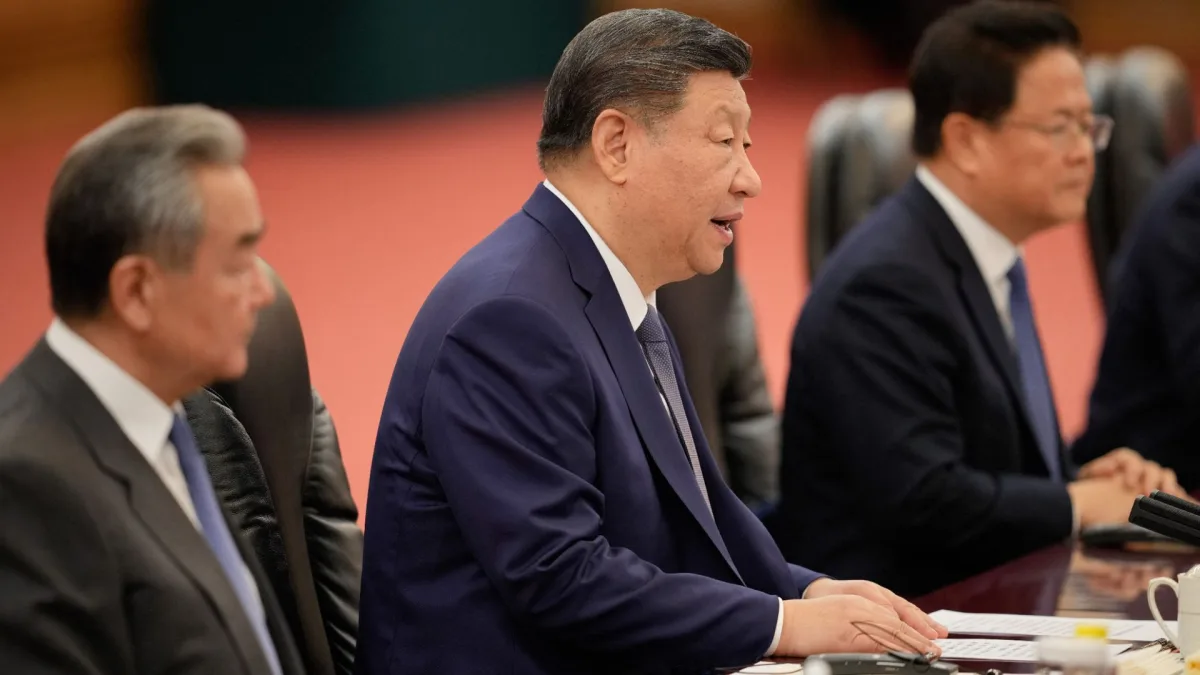
The Trump administration has broadened export controls on advanced artificial intelligence accelerators, extending licensing requirements to chip rentals across the D:5 nations list—countries subject to U.S. arms embargoes. The move specifically targets Nvidia's Blackwell lineup and has prompted an immediate response from Beijing's Ministry of Commerce, which stated that China "will take countermeasures to firmly safeguard national sovereignty, security, and development interests."
The timing of the announcement is particularly sensitive, arriving as President Trump attends the APEC summit in Shenzhen. A scheduled meeting between Trump and President Xi Jinping on Thursday, November 19, now looms against a backdrop of escalating trade tensions. The two nations had engaged in an intense trade war marked by mounting tariffs and restrictions before reaching a temporary truce in October 2025, though that agreement only partially rolled back restrictions—Chinese semiconductors still face a 50% tariff upon entry to the United States.
A renewal of tit-for-tat tariff increases would likely trigger significant volatility in U.S. equity markets. Market uncertainty has already been heightened by questions surrounding former Nvidia CEO Jensen Huang's relationship with Alice Huang, described as a purported Chinese spy, and allegations that the pair may have coordinated the diversion of billions of dollars' worth of Blackwell chips from her Singapore-based company Megaspeed to Chinese artificial intelligence research facilities.
Nvidia previously severed relationships with roughly half of its Asian customers in July, consistent with export control enforcement, and instructed data center operators that more than 50% of their revenue must originate from non-Chinese entities. Both Malaysia and Singapore have simultaneously increased oversight of artificial intelligence hardware transfers.
China's specific retaliatory measures remain undisclosed. The country had previously restricted shipments of gallium, germanium, and antimony to the United States, a restriction that was frozen under the truce agreement until November 2027. Beijing could decline to extend that agreement when the deadline arrives. Industry observers anticipate that despite expectations of diplomatic civility during the summit, Trump's latest action may prompt China to consider its most potent option: restricting rare earth element exports.
The rare earth materials agreement expires on January 10, 2027, with only weeks remaining. Restrictions on super-hard materials and high-density lithium batteries—essential for next-generation electric vehicles, renewable energy storage, and battery systems—are similarly set to lapse in early 2027. Analysts also project that Chinese corporations and government agencies will accelerate domestic semiconductor manufacturing investments, particularly through Huawei and related enterprises.
The revised chip control framework eliminates a significant loophole by preventing Chinese companies from circumventing sales restrictions through equipment rentals. The licensing requirement now extends to chip sales destined for Indonesia, Malaysia, Singapore, Thailand, and Brazil, as the U.S. Department of Commerce suspects these nations serve as transshipment points for Blackwell processors bound for China.