Smart Glasses and Always-On Recorders Are Redefining Privacy as a Collective Problem
Meta, Google, Apple, and Amazon are rolling out devices that capture audio and video throughout the day, shifting privacy from an individual choice into a social burden that affects everyone nearby—whether they consent or not.
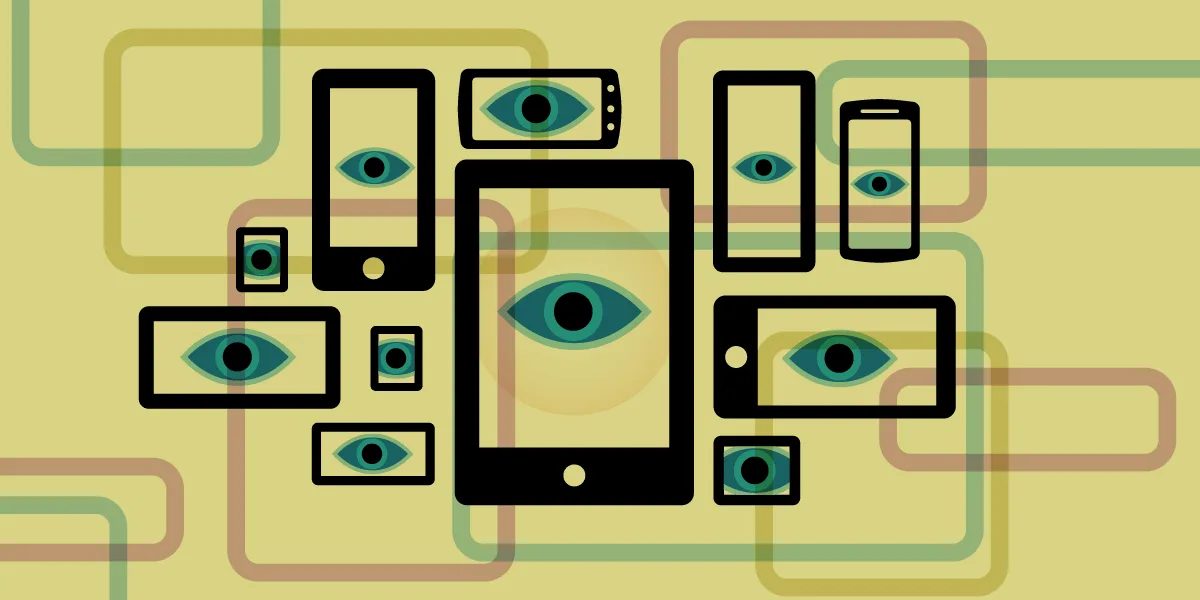
The framing of privacy as a personal decision has given way to a new reality where technology companies are embedding surveillance capabilities into everyday objects. Wearable devices from major manufacturers now routinely record, transcribe, or analyze everything in their vicinity, transforming privacy into something that extends far beyond the person wearing the device.
Meta and Google have integrated cameras and artificial intelligence into smart glasses that can document what the wearer sees or generate descriptions of their surroundings. Apple's Audio Intelligence feature converts the Apple Watch into a continuous transcription device that processes daily conversations. Amazon's Bee devices take this further, capturing and converting audio into text throughout the day. Dozens of other manufacturers are launching similar products—pendants, rings, and accessories designed to record, transcribe, or summarize human activity on an ongoing basis.
Privacy has long functioned as a collective endeavor. Choices made through messaging platforms, shared software, or cloud storage systems have always rippled outward to affect others. What distinguishes the current wave of wearable recording devices is that they extend this dynamic into physical space, where strangers, coworkers, family members, and acquaintances become unwitting participants in someone else's privacy decisions.
The technology industry is asking the public to embrace a world in which understanding the capabilities of multiple devices, their recording mechanisms, notification systems, and data connections becomes a prerequisite for functioning in shared spaces. These ambient surveillance tools operate quietly and are engineered to blend seamlessly into ordinary life. Yet manufacturers simultaneously expect device owners to use them responsibly and to inform those around them of their capabilities in accordance with local laws. This expectation is neither reasonable nor consistent with how consent actually operates.
Technical Safeguards Miss the Fundamental Problem
When questioned about privacy, Apple directs attention to technical documentation outlining the barriers between the company and data generated by its devices. Meta emphasizes customizable privacy controls and selective blurring of faces during AI interactions (though not during standard recording). Google and Amazon similarly highlight user control and data retention policies. Some of these approaches provide stronger protections than others against unauthorized access by law enforcement or corporate entities.
The critical flaw in these technical assurances is their narrow scope. They address only the device owner and the company manufacturing the device. They offer no protection whatsoever to bystanders who are captured by these systems and have no meaningful ability to refuse participation. For anyone not holding the device, technical privacy measures are irrelevant.
Legal Frameworks Lag Behind the Technology
Devices like Apple's Audio Intelligence and Amazon's Bee should perhaps be treated as perpetually active microphones, regardless of manufacturer claims about the absence of "actual" audio recording. These systems still capture raw sound, convert it into summaries or transcripts, and then discard the original. Google's terms of service require users to agree not to record others without consent or in sensitive locations, acknowledging the legal complexities at play.
Beyond individual user liability lies a more pressing concern: law enforcement will inevitably seek access to data generated by these devices. History demonstrates that governments pursue every available avenue to obtain data once it exists. While some products like Apple's Audio Intelligence are architecturally designed to resist such compulsion, others are not. There is no reason to expect this pattern to change.
The Social Damage Cannot Be Engineered Away
An underlying problem exists that neither technical solutions nor legal restrictions can resolve. If covert documentation of conversations becomes commonplace, it fundamentally alters the character of private exchange. It erodes a deeply established social understanding that conversations with friends, family, colleagues, and strangers will not be systematically recorded and preserved.
Manufacturers argue these devices are no different from tools already available. Smartphones and cameras can record continuously. Camcorders and tape recorders have existed for decades. Pen and paper enable transcription. But those comparisons ignore a crucial distinction: existing recording methods require deliberate action, demand effort from the user, and remain visible to others. The new generation of passive surveillance devices is engineered to encourage constant monitoring while concealing its operation.
These products also lack the capacity to navigate the nuanced social contexts that humans navigate instinctively. Society operates according to unspoken agreements that differ depending on location and circumstance—a street corner differs from a protest, which differs from a bathroom, a medical office, a gym, or a restaurant. Recording notes during a work meeting is socially acceptable. Generating a summary of a friend's private conversation about a personal crisis is not. Perpetual monitoring of speech imposes an unreasonable strain on conversational privacy.
Google essentially acknowledged this problem during a conversation with CNN about its experiments with notification systems designed to alert nearby people when recording was occurring. Juston Payne, senior director of product management at Google, stated: "And just alerting bystanders doesn't do much to help. It can actually be weirdly disempowering to you in that you're like, 'What am I meant to do now?'"
And just alerting bystanders doesn't do much to help. It can actually be weirdly disempowering to you in that you're like, 'What am I meant to do now?'
Juston Payne, senior director of product management at Google
Resistance Remains Possible
The technology industry promotes an inevitability narrative around these products, but history shows that numerous categories have vanished within years after failing to gain public acceptance. If consumers reject this technology, manufacturers will abandon it.
Waiting passively is not the only option. Apple is testing Audio Intelligence features in beta specifically to gather user feedback. Submitting responses through their feedback forms or the Feedback Assistant application provides a direct channel to communicate concerns. For products from Meta, Google, Amazon, and competitors, respectful but clear conversations with people using them in ways that feel intrusive can be effective. Reporting abusive videos on social platforms that feature these devices matters. And for those who find these tools valuable, being transparent with others about when they are in use, obtaining genuine consent, and limiting their use to appropriate social contexts represents responsible deployment.