Democrats vow investigations into FCC Chair Carr as Republicans push through Republican nominee
Senate Democrats opposed Trump's pick for an open FCC seat and signaled plans to launch probes of Chairman Brendan Carr once they control Congress in January 2027, while Republicans moved to confirm the nominee during the lame-duck period.
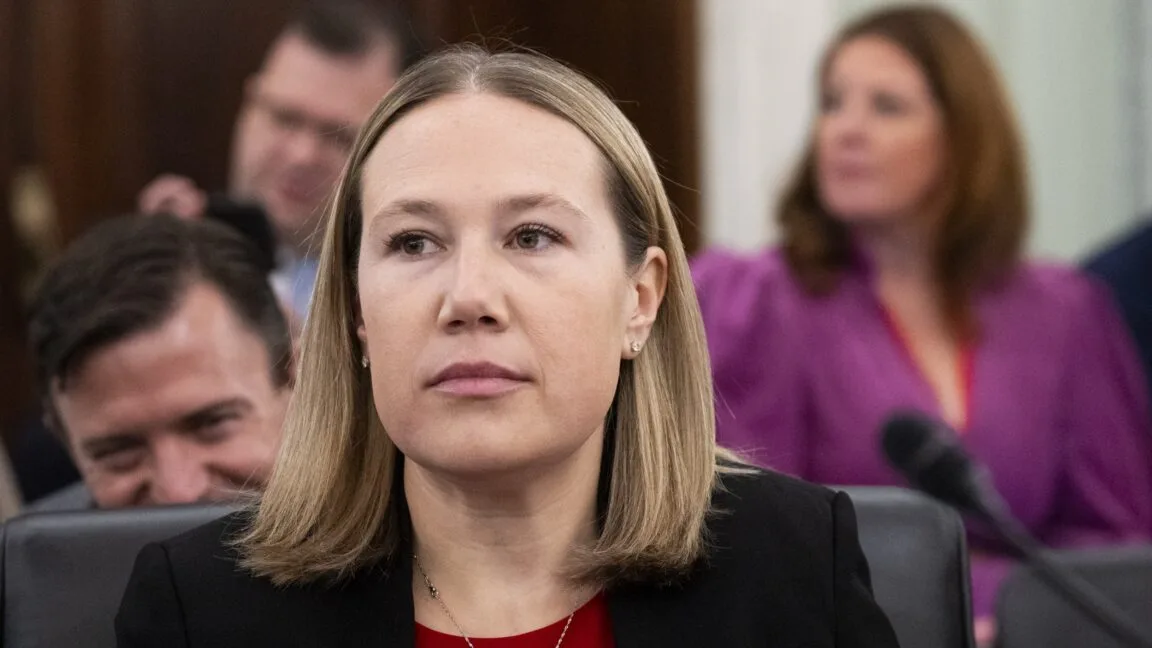
The Senate Commerce Committee held a confirmation hearing today for Danielle Thumann Severs, Trump's nominee to fill a vacant Federal Communications Commission seat, as Democrats objected to the Republican-controlled chamber advancing the nomination before the party loses its majority. Lawmakers from the Democratic caucus announced intentions to investigate FCC Chairman Brendan Carr once they gain control of both chambers in January 2027.
At the hearing, Sen. Ed Markey (D-Mass.) stated, "After the American people last week overwhelmingly rejected the MAGA agenda, there is no justification for this committee to advance partisan nominees during the lame-duck period." Thumann Severs, an attorney and senior counsel to Carr, faced questioning from Democrats about her alignment with Carr's positions, particularly his actions against television broadcasters.
Sen. Ben Ray Luján (D-N.M.) pressed the nominee on whether she backs Carr's efforts targeting late-night host Jimmy Kimmel, asking, "Do you support Chairman Carr's illegal campaign to remove Jimmy Kimmel from the nation's airwaves?" Thumann Severs declined to specify policy disagreements with Carr and said she had not advised him on media-related matters.
Democrats predict Carr's departure under scrutiny
Luján suggested that Carr's tenure would be short-lived once Democrats held the gavel. "I don't think Chairman Carr is going to be around more than another three or four months because when we have the gavels in here, he will be here once a month," Luján said. He added that Carr would face monthly congressional appearances and lose the protection of Republican leadership, stating, "And Mr. Carr, if you're listening now, know you're going to be in this body once a month, if not more, and in the House of Representatives as well, answering questions, and you don't have the protection of the gavel any longer."
Luján indicated Democrats would employ investigative tools to examine Carr's conduct. "Luján said Democrats will use 'subpoena authorities that you have to respond to so we can get to the bottom of the nonsense and the cover-ups that have been taking place.'" Markey characterized Thumann Severs as unwilling to defend the First Amendment against Carr's pressure on broadcasters, saying, "Anyone seeking a seat on the Federal Communications Commission must be willing to stand up to such threats and to defend the First Amendment, and you're not willing to do so here in your confirmation hearing."
E-Rate program becomes point of contention
Democrats also challenged Thumann Severs over the E-Rate program, a $2 billion-a-year initiative established by Congress to provide internet access to students and library patrons. Carr has proposed eliminating or reducing the program, and Thumann Severs acknowledged working with him on a Notice of Proposed Rulemaking seeking public input on the FCC's authority to modify or eliminate it.
When pressed on whether the FCC possesses the legal authority to eliminate E-Rate, Thumann Severs stated, "I can't prejudge the open proceeding [on E-Rate] at the FCC right now." Sen. Tammy Duckworth (D-Ill.) criticized this response, telling the nominee, "If you're confirmed, you're going to be one of the votes that decides whether the FCC stays an independent regulator, or becomes an arm of the White House press office. We deserve to know where you stand, and I am not comfortable with your answers today."
Duckworth emphasized that Congress never authorized the FCC to eliminate E-Rate, saying, "We never directed the FCC to eliminate the program and frankly, at a time when the price of gas, groceries, and utilities is skyrocketing, the last thing the FCC should be doing is making it harder for schools to stay connected."
Carr's threats to ABC broadcasters under scrutiny
The hearing also examined Carr's pressure on ABC over remarks by Kimmel. Last year, Carr threatened to revoke ABC's broadcast television licenses, telling Disney, "We can do this the easy way or the hard way," and demanding the company "take action" on Kimmel "or there's going to be additional work for the FCC ahead." When asked about these statements, Thumann Severs responded, "Those were his words. They were not my words, and I have not advised him or worked with the chairman on these particular issues. I can say that if I were to be confirmed as commissioner, I would make all of my decisions [based on] the facts and the law and the record."
Duckworth questioned whether the FCC should revoke broadcaster licenses based on presidential displeasure with coverage. Thumann Severs answered that the agency "has a responsibility to fully investigate any complaint… and to evaluate that complaint on the merits. I don't think a decision should be made purely based on someone's discontent with the content being aired."
Carr's decision to order an early review of ABC station licenses is widely interpreted as retaliation for the network's news coverage and programming, though the proceeding is officially framed around allegations that Disney's diversity, equity, and inclusion practices violate FCC rules. Thumann Severs stated, "Based on publicly available material, which is all I have seen on that particular matter, the licenses were called for early renewal as part of an investigation into potential rule violations."
Republicans defend nominee; Democrats oppose unpaired confirmation
Committee Chairman Ted Cruz (R-Texas) appeared satisfied with Thumann Severs' responses. He asked whether she would commit to basing licensing decisions on law and the record without using FCC authority to pressure broadcasters for protected speech. She answered affirmatively. Cruz also asked if she supports the JAWBONE Act, a bill he introduced with Sen. Ron Wyden (D-Ore.) to enable lawsuits against federal officials attempting to coerce broadcasters or tech platforms into restricting speech. Thumann Severs said, "I think it's incredibly important that federal officials not use their position… to coerce against protected speech."
Democrats objected to advancing Thumann Severs' nomination without pairing it with a Democratic nominee. The FCC typically operates with a 3-2 party split, but confirming Thumann Severs would give Republicans an unusual 3-1 advantage. The commission currently has only one Democrat, Anna Gomez, whose term expires at the end of 2027 unless she receives another term.
Sen. John Hickenlooper (D-Colo.) noted the historical practice of pairing nominees, saying, "For many decades, the Senate has paired commission nominees: A Republican and a Democrat moving together. Congress established the FCC as an independent, bipartisan agency… a bipartisan FCC is essential to avoid things like large-scale media consolidation, and I think also more fundamentally to protect a free and diverse press."
Hickenlooper warned that Trump could fire Gomez after Thumann Severs' confirmation, creating an all-Republican commission. "If today's nominee is confirmed, President Trump could then fire Commissioner Gomez and have an FCC with no Democratic voice at all," he said. He also questioned Thumann Severs' independence from Carr, noting her career has centered on serving him as both legal advisor and current senior counsel, with duties including frequent meetings and advancing his agenda.
Markey concluded by opposing the nomination without a paired Democratic confirmation, stating, "We should not be confirming a Republican nominee without also renominating and confirming Anna Gomez, the Democrat, and filling the other vacant Democratic seat. There is a potential next year where there will be three Republicans and no Democrats on the Federal Communications Commission… that is wrong, and that is why I do not believe we should proceed with this nomination at this time."
The Commerce, Science & Transportation Committee hearing also covered three other federal nominees. Senators have until Thursday to submit additional questions for the record, with nominees required to respond by November 16. Thumann Severs requires committee approval and full Senate confirmation to join the FCC. Cruz is working to secure her confirmation before Republicans lose their Senate majority.