California and New York Age-Gating Laws Set to Reshape Social Media Access in 2027
Starting in January 2027, two major states will enforce sweeping age-verification requirements on social media platforms, forcing users to submit personal data and potentially locking younger users out of standard features.
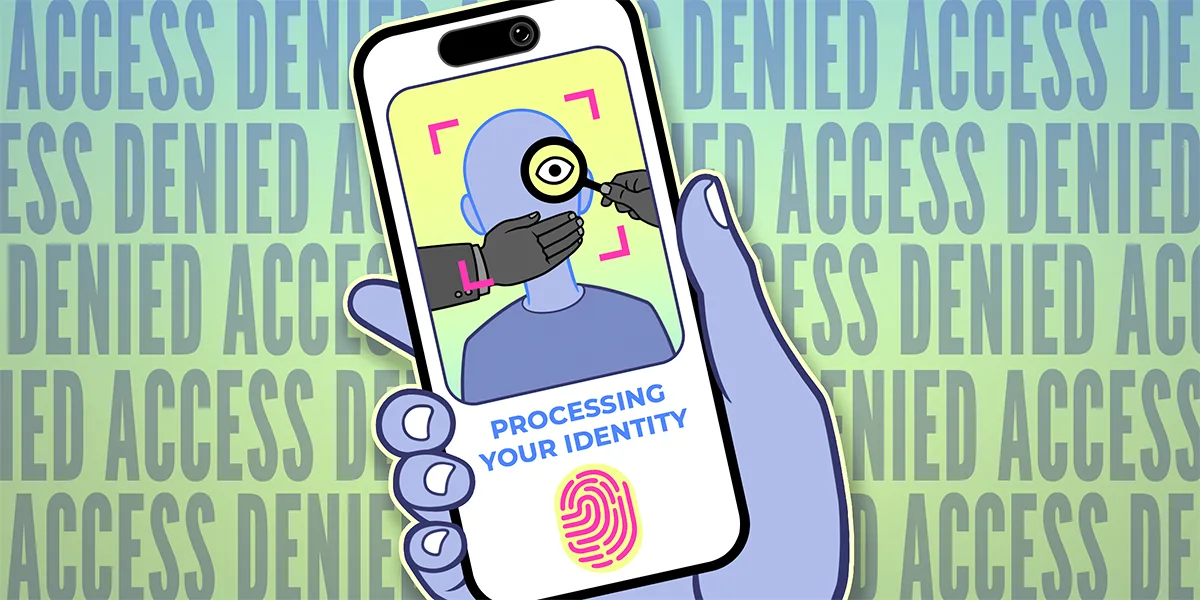
Beginning next January, social media experiences will shift dramatically across two of America's most populous states. California will activate three interconnected statutes on January 1, 2027: AB 1709 (2026), AB 1043 (2025), and SB 976 (2024). New York's Stop Addictive Feeds Exploitation (SAFE) for Kids Act regulations, issued by the state attorney general, take effect on January 25, 2027. The Electronic Frontier Foundation has fought these measures throughout the legislative and regulatory process, arguing that age-gating mandates sacrifice user privacy and free expression in the name of child safety while encouraging platforms to amass additional personal data.
California's Three-Part Framework
California's approach combines three separate laws into an interlocking system. SB 976 (2024) mandates verifiable parental consent before platforms can deploy algorithmic feeds or send nighttime notifications to anyone under 18. AB 1709 (2026) goes further by prohibiting "addictive features"—including personalized recommendation algorithms, autoplay, and infinite scroll—for users under 16, regardless of parental permission. AB 1043 (2025), known as the Digital Age Assurance Act, establishes device and app-level age checks that serve as the enforcement mechanism for the other restrictions. The California Attorney General's proposed rules for SB 976 detail age-gating methods, accuracy standards, circumvention prevention, and parental consent procedures. Together, these measures create a two-tier system that isolates young users from content-discovery tools while expanding privacy risks for everyone attempting to verify their age.
The regulations encourage platforms to evaluate behavioral patterns, collected user data, digital interactions, metadata, and location information to estimate age, according to Section 561(a)(2) and Section 565. This approach contradicts sound privacy policy, which should discourage data collection rather than reward expanded tracking.
The age-assurance rules acknowledge significant error rates and limited protections. Age-verification tools can misclassify young people as adults at rates up to 8 percent for 16-year-olds and 15 percent for 17-year-olds (Sec. 561(c)(4)(iv)), yet the rules establish no benchmarks for false negatives, meaning adults—particularly those aged 18 to 20—face likely misclassification as minors. While the rules recognize demographic bias in facial recognition, they offer only vague guidance to companies, suggesting they take mitigating measures such as correcting dataset imbalances (Sec. 563(a)(6)). Users can appeal incorrect age estimates, but the rules impose no firm deadlines, allowing errors to persist and block access indefinitely (Sec. 564). Additionally, requiring platforms to accept reports from users who suspect others are under 18 (Sec. 567) creates opportunities for targeted harassment, while rules requiring companies to account for users attempting to "conceal or misrepresent" their California location (Sec. 565) threaten everyday VPN users.
New York's SAFE for Kids Approach
New York's SAFE for Kids Act follows a similar path, restricting personalized recommendations and nighttime notifications (midnight to 6 a.m.) without required consent while mandating age assurance and location determination. Users who fail to verify their age or are estimated to be under 18 either receive accounts stripped of personalized recommendations and notifications, or face outright platform exclusion.
The New York regulations employ expansive definitions of "age estimation," "age inference," and "age verification" (700.1(h)–(j)) that push companies toward collecting and retaining additional personal information. Enforcement authority rests solely with the Attorney General (700.8), preventing users from suing to protect their own rights. The deletion definition permits companies to "de-identify" age-assurance data and continue using it in that form, creating potential re-identification risks if the information is leaked or stolen. Platforms must retain records including user age status and compliance data for five years, multiplying the risk of misuse or breach (700.7(b)).
Location and accuracy provisions introduce additional privacy and security concerns. Operators must evaluate all reliable location information and take reasonable steps to detect users attempting to "conceal or misrepresent" being in New York (700.2(d)(2)), expanding location tracking and endangering VPN use. The rules permit false-positive rates up to 15 percent for 17-year-olds (700.1(b)), but like California's rules, establish no false-negative standards, meaning adults aged 18 to 20 will likely be wrongly flagged as minors. Appeals can exceed 10 days, leaving misclassified adults locked out of standard features or entire platforms for more than a week.
Consequences for Users in Both States
Both state regimes compel users to surrender personal information to access ordinary features like personalized feeds or notifications, while simultaneously incentivizing social media companies to intensify behavioral monitoring and monetization. Because both laws define "addictive feeds" so expansively that the term encompasses virtually every basic recommendation system—including feeds derived from followed accounts, liked posts, or stated interests—platforms face a binary choice: deploy stripped-down versions lacking algorithmic feeds, likes, or notifications, or remove any account suspected of belonging to someone under 18. Either outcome isolates all users, particularly young people across both states, from major online communities as they currently exist.
When young people lose accounts or receive degraded experiences, they lose connections to friends, support networks, community organizing, local news sources, creative audiences, and platforms for civic speech. U.S. law has long recognized that people under 18 possess constitutional rights to speak and receive information, and comprehensive age gates directly undermine those rights.
Lawmakers frequently market age-verification mandates as tools to constrain Big Tech, yet the practical effect proves opposite. Corporations such as Meta and Google possess resources to construct expensive age-estimation systems and absorb substantial fines—California imposes $50,000 per violation—while achieving compliance. Smaller platforms and independent communities including Bluesky or Dreamwidth cannot absorb these legal and engineering costs. As demonstrated in states like Mississippi, compliance burdens eliminate smaller competitors from the market and consolidate users around the largest corporate platforms. Rather than holding Big Tech accountable, these rules strengthen its market position, leaving users with diminished community options, reduced innovation, and a more concentrated surveillance infrastructure.
Documenting Your Experience
Legislative and regulatory setbacks do not conclude the conversation. If these rules affect you in California, New York, or elsewhere, document your experience and contact the Electronic Frontier Foundation at agegates@eff.org.
Capture screenshots with dates, times, services, and what you attempted to do. Record what you lost—whether an account, club membership, volunteer group, friend contact, local news access, or favorite creator—or note if you abandoned a service rather than submit identification or personal data. You need not disclose sensitive information to demonstrate burden. When encountering age checks or parental-consent requirements, preserve what the platform requested, whether it succeeded or failed, any privacy assurances or legal citations provided, and any appeal efforts.
Send documentation to agegates@eff.org describing what occurred. Cataloging real-world account lockouts, age-check failures, and free-speech violations strengthens legal challenges to these restrictions in legislatures and courts. The Foundation will continue advocating for laws that genuinely protect people online by restricting corporate surveillance and granting parents, youth, and all internet users genuine choice and control.