Bluetooth flaw in Elecbrakes trailer braking system could allow remote hijacking, researcher finds
A critical security vulnerability in Elecbrakes remote brake controllers allows attackers to connect via Bluetooth without authentication and apply braking force to trailers on public roads, according to research disclosed after a chance discovery on the highway.
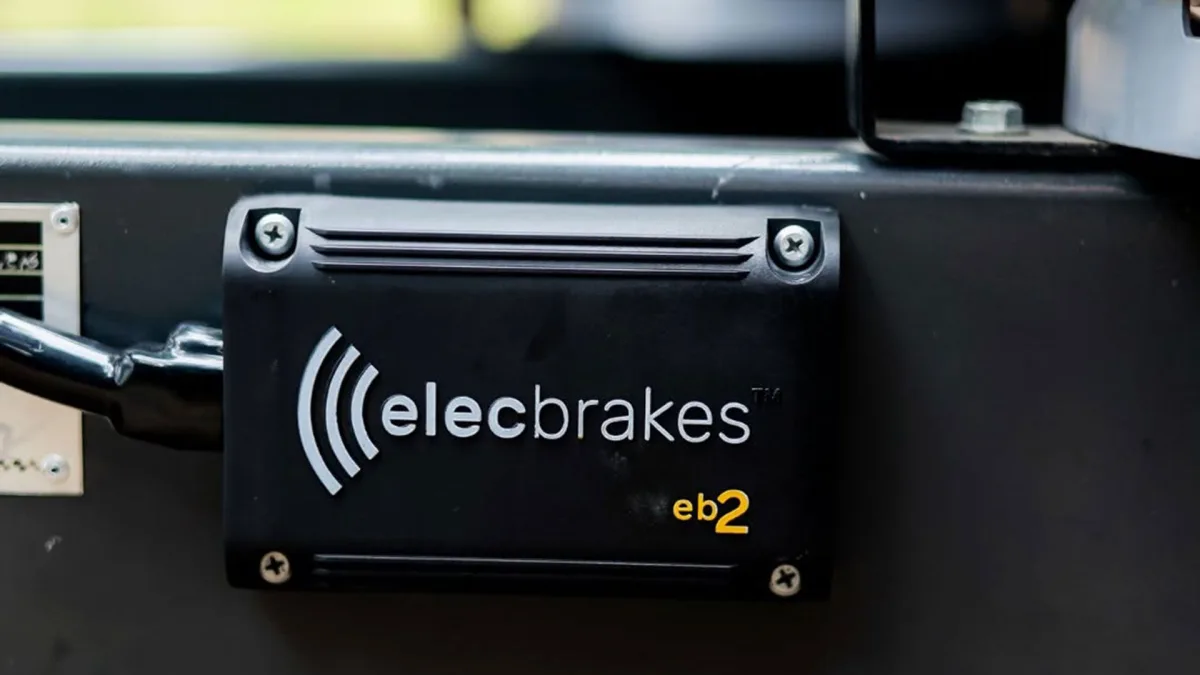
Patrick Forck, a user of Elecbrakes trailer braking systems, experienced an unsettling moment while driving when his in-car remote unexpectedly connected to a stranger's trailer. The incident prompted deeper investigation into the security of the system, revealing a serious vulnerability: attackers could establish Bluetooth connections to Elecbrakes controllers without requiring pairing, authentication, a PIN, or any user approval. Over the next decade, Forck and Jeremy McCarthy of Element Digital would thoroughly document the flaws, notify the manufacturer through responsible disclosure channels, and verify the resulting fixes.
Elecbrakes markets its products as straightforward, plug-and-play brake controllers designed for trailer towing operations, particularly valuable when hauling larger or heavier loads. Forck had been satisfied with the system's functionality until the highway incident. "It had connected mid-drive, without pairing or a prompt, to a brake controller that wasn't mine, on a trailer I'd never seen, belonging to a driver who had no idea," Forck recounted. The ease of connection that made the system user-friendly had inadvertently created a security gap. Forck immediately recognized the implications: if his remote could connect to unknown trailers without friction, what would prevent other Bluetooth devices from establishing similar unauthorized connections?
The research process began with reverse engineering the Elecbrakes Android application, with Forck and McCarthy leveraging Claude to handle the technical heavy lifting. McCarthy subsequently developed a Web Bluetooth research tool operating within Chrome, also using Claude. Testing on gravel roads at Forck's family property confirmed the vulnerability: any nearby attacker could establish Bluetooth connections without pairing or authentication, send commands to the trailer, apply braking at any desired force level, and receive confirmation of brake engagement.
The implications of this vulnerability proved difficult to minimize. As documented in their findings, a security flaw that "outputs torque to a wheel on a public road" poses significant danger, particularly given that the attack surface remains open to "anyone within Bluetooth range."
Forck and McCarthy notified Elecbrakes of their findings in May 2026. The researchers praised the company's responsiveness and willingness to engage with the disclosure. By July, Elecbrakes released firmware updates addressing the vulnerability in the EB2 and VM1 models currently sold.
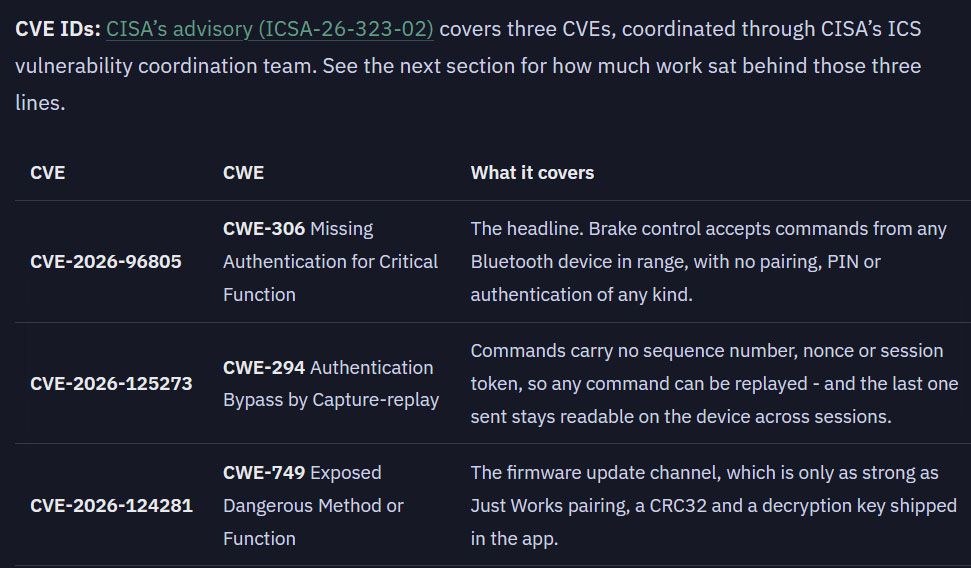
Investigation also uncovered the same Bluetooth security flaws in the ELBC 2000, an older Elecbrakes controller no longer in production. Elecbrakes confirmed the vulnerability affects this model as well. Despite its age, some operators continue using the ELBC 2000 on public roads. The manufacturer has advised users to monitor for upcoming firmware update announcements to address the issue.