Amazon's New Ring Robots Bring Autonomous Surveillance Indoors, Raising Fresh Privacy Questions
Amazon is launching AI-powered security devices that patrol homes and offices, but the Ring Rover Cam and Ring Drone Cam are poised to reignite concerns about surveillance and data protection that have dogged the company's security business.
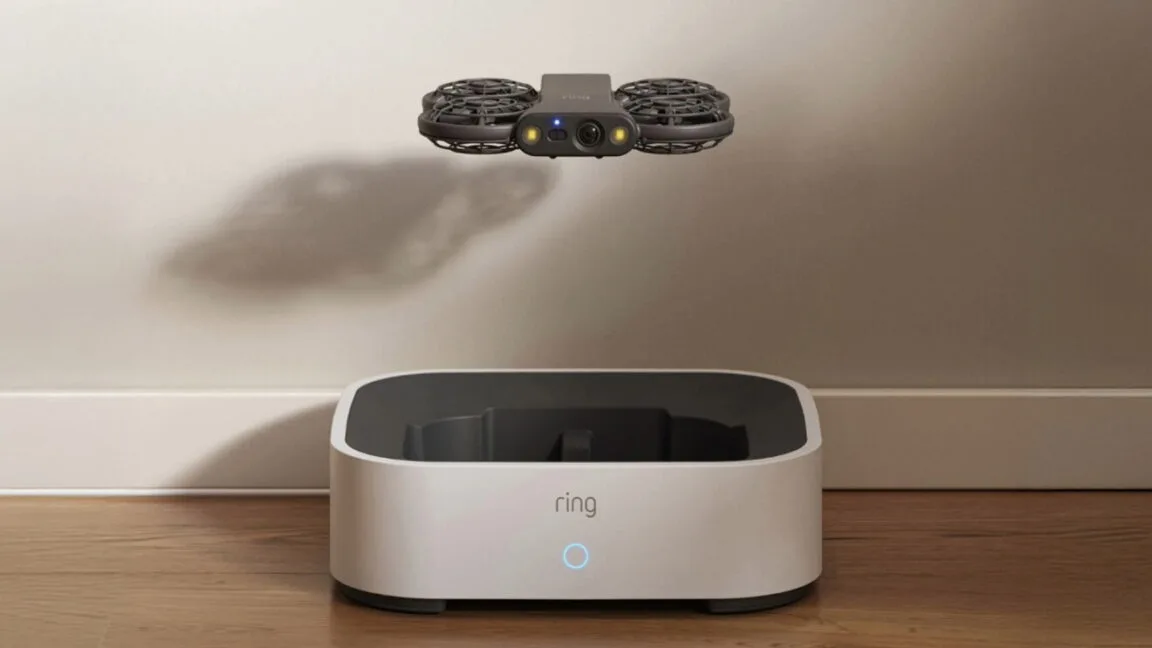
Amazon is positioning its upcoming Ring Robotic products as the next evolution for customers seeking autonomous security monitoring in residential and commercial spaces. Yet these AI-enabled devices are likely to amplify longstanding privacy worries that have shadowed Ring's track record, particularly following earlier controversies involving employee access to customer footage and inadequate account protections.
According to an Amazon announcement made on November 10, the Ring Rover Cam and Ring Drone Cam will begin shipping to customers in late 2026 and early 2027, respectively. Both devices leverage an AI Pilot system that combines onboard cameras, specialized vision models, sensors, and cloud-based processing to navigate autonomously, avoid obstacles, and create digital floor plans of indoor spaces. The system identifies rooms and recommends patrol points near entry points, windows, and other strategic locations—including cash registers in business settings.
The Drone Returns
Amazon's Ring Drone appears positioned as a successor to the Ring Always Home Cam, which the company offered only briefly as an invitation-only "Day 1 Edition" product in September 2021. The new drone carries the same $250 starting price as its predecessor and awaits Federal Communications Commission approval before becoming available.
Pending regulatory clearance, Amazon intends to launch the Ring Drone Cam on January 27, 2027, with a registration option for email notifications through the product page. Subscribers to the Amazon Ring Protect plan can set patrol schedules and routes; the device will also automatically launch when triggered by alerts from Ring cameras, sensors, or alarms.
The drone features a 148-degree field of view with 360-degree rotation capability and captures video at 2K resolution. Two LED lights activate in dim lighting to illuminate the recording area. However, the device operates for only 8 minutes per charge under ideal conditions and relies on a docking station for power. Performance may degrade in spaces with reflective surfaces such as polished marble or wet tile, featureless matte walls, or transparent barriers like frameless glass and mirrors.
Amazon describes the Ring Drone as delivering "an autonomous way to check on your home that has never existed before," accessible through the Alexa Home Map interface that displays all connected Amazon devices.
https://www.youtube.com/embed/slgQfogak7k?start=0&wmode=transparent
The Ground-Based Option
The Ring Rover Cam, priced at $1,000 and marketed as "an autonomous security robot designed for business," is already available for preorder with shipments beginning December 16, 2026. Amazon developed the wheeled device based on feedback from users of the Amazon Astro, an earlier invite-only home monitoring robot.
The Rover records in up to 4K video resolution during patrols and 360-degree scans. Footage triggered by doorbell activity, motion detection, and live-view requests is stored in the cloud for up to 180 days. Like the drone, the Rover responds automatically to alerts by following preset patrol routes, though it operates only on single floors due to its inability to climb stairs.
The robot's ground-level perspective is supplemented by an adjustable mast that extends to view over counters and shelves. It can cover up to 5,000 square feet and includes a siren, light tower, and two-way microphone for deterrence and communication. Amazon notes the Rover is incompatible with curved edges, sunken areas, floor transitions exceeding 1.375 inches, and black glossy flooring.
Privacy Concerns Intensify
https://www.youtube.com/embed/FO2_JrcIy1Q?start=0&wmode=transparent
Amazon markets the Ring Robotics line with assurances of "privacy and security without compromise," citing LED indicators and on-screen notifications when recording. Yet Ring's history complicates these claims. In 2023, the Federal Trade Commission investigated Ring for permitting employees and contractors to access customer video recordings of private spaces and for maintaining weak security that exposed 55,000 U.S. accounts to hackers.
Videos from the new devices will use Ring's Throw Away the Key Encryption, introduced in September 2026. The Electronic Frontier Foundation has characterized this as a step forward from Ring's previous defaults but insufficient compared to end-to-end encryption. The EFF has also criticized Ring founder Jamie Siminoff's approach as "surveillance-first-privacy-last," pointing to Ring's reintroduction of features enabling law enforcement to request footage or live-stream access from Ring devices.
Amazon's earlier Ring Always Home Cam drone sparked similar privacy debates. Ryan Calo, a law and technology researcher at the University of Washington, previously warned that indoor flying cameras create novel surveillance pathways and grant companies deeper access to potentially sensitive or identifying information about homes and businesses.
The new Ring Robotics products contain no announced facial recognition or similar identification technologies. However, beginning in December 2025, Ring doorbell camera owners gained access to a "Familiar Faces" feature using facial recognition on visitors—a capability already facing a class action lawsuit.