Tiny Vinyl Records: A Hands-On Test of the Pocket-Sized Format
A new 4-inch vinyl single format has emerged from a collaboration between a toy industry figure and the world's largest vinyl manufacturer, but our testing reveals significant compatibility and audio limitations.
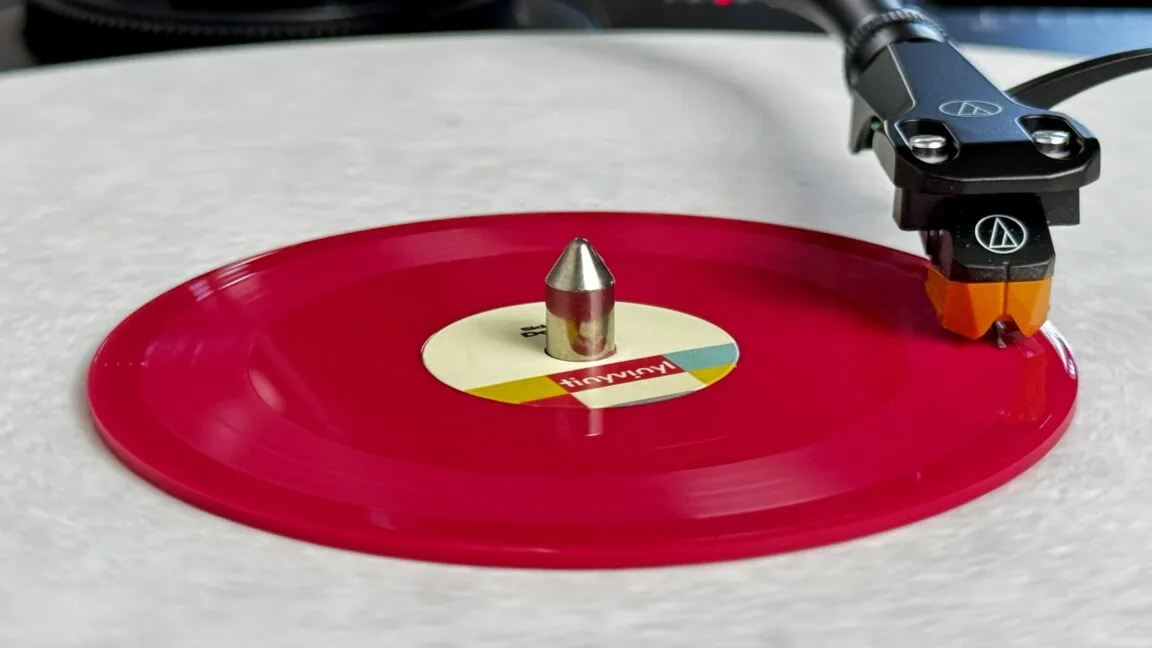
A miniature vinyl single format called Tiny Vinyl has arrived on the market, created through a partnership between a toy industry veteran and the globe's leading vinyl record producer. These 4-inch records use manufacturing techniques virtually identical to conventional 12-inch and 7-inch vinyl, with all dimensions proportionally reduced. Featuring a standard spindle hole and rotating at 33⅓ RPM, each side accommodates approximately four minutes of audio.
The format has already attracted interest from emerging acts such as The Band Loula and Rainbow Kitten Surprise, alongside established names including Blake Shelton and Melissa Etheridge. This autumn marks a significant expansion, with Tiny Vinyl announcing a partnership with Target to distribute 44 exclusive titles through the year's end.
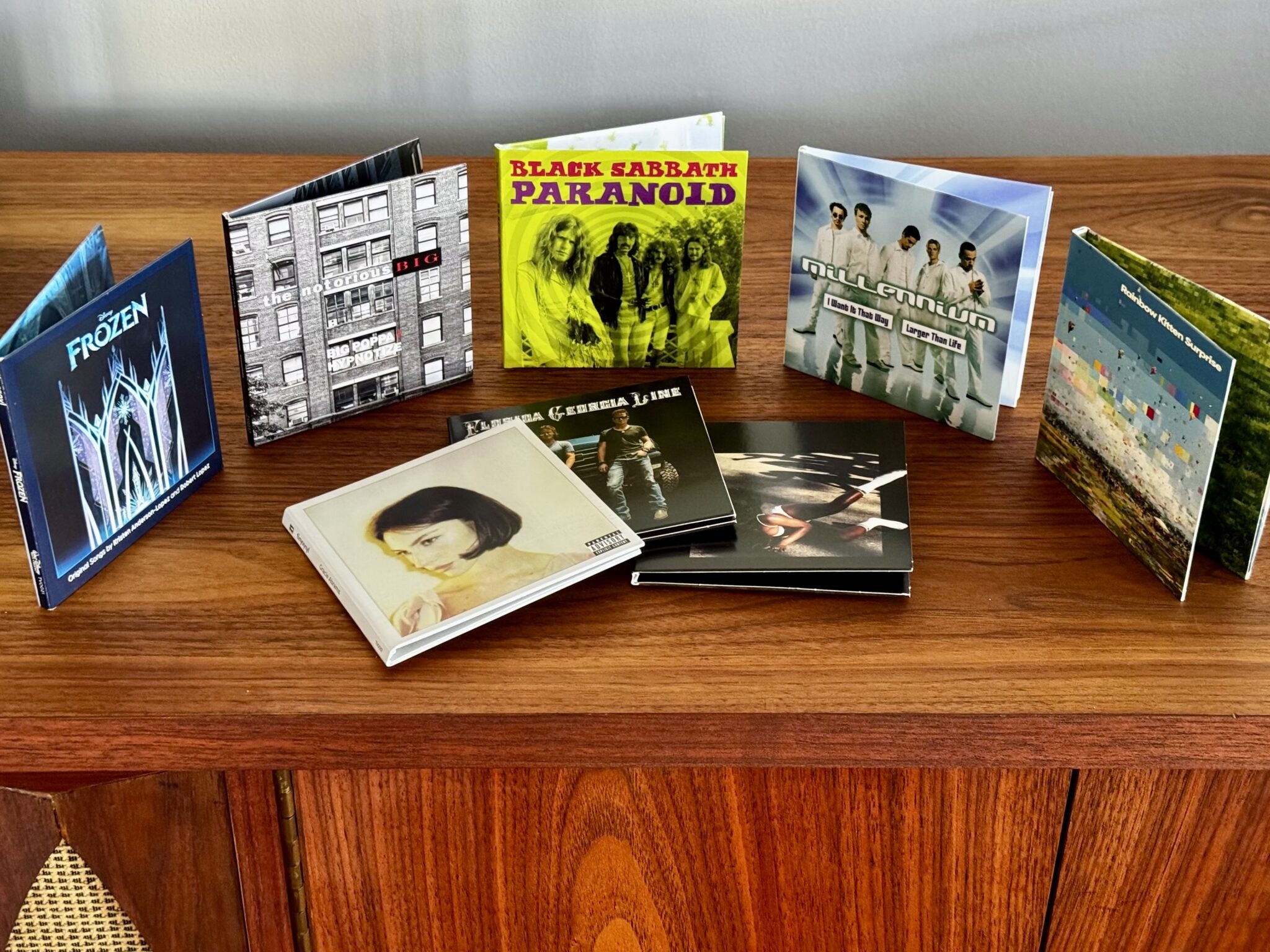
To evaluate the format's practical performance, promotional copies from Grace VanderWaal, The Band Loula, Florida Georgia Line, and the Vince Guaraldi Trio were tested alongside retail purchases. Testing equipment included an Audio Technica LP-120 direct drive turntable paired with a Yamaha S-301 integrated amplifier and vintage Klipsch kg4 speakers. Additional assessments involved a Crosley portable suitcase turntable and a miniature RSD3 turntable designed for 3-inch singles.
Automatic turntables need not apply
The 4-inch diameter presents a critical compatibility issue: it matches the label size of standard 12-inch records. Automatic turntables cannot accommodate this format, as most are calibrated exclusively for 12-inch or 7-inch records. Even models with manual mode switching cannot function properly, since automatic return mechanisms engage before the stylus reaches the grooves containing audio. Manual tonearm turntables—whether DJ-oriented direct drive models or audiophile belt-drive options from manufacturers like Fluance, U-turn, or Pro-ject—work successfully with Tiny Vinyl.

Positioning the stylus on these diminutive records demands precision, yet once aligned, tracking performs adequately. Testing with the LP120's nude elliptical stylus yielded solid results. A standard conical stylus, more prevalent on budget and mid-range equipment, tracked slightly worse. Higher-end styli might navigate the fine grooves more effectively, though the format's inherent physical constraints introduce distortion that would likely overshadow such improvements.
Playback across multiple genres—rock, country, dance pop, hip-hop, jazz, and theatrical music—revealed a consistent characteristic: Tiny Vinyl versions played noticeably quieter than their 12-inch counterparts at identical amplifier settings. This reflects mastering choices that reduce groove modulation to accommodate tighter spacing, a necessity for maintaining the four-minute runtime. The phenomenon mirrors practices on lengthy LP sides, where final tracks often feature quieter or slower material to optimize center-groove performance.
Most recordings exhibited slight but noticeable distortion as grooves approached the stylus alignment limits, typically audible during the final seconds of tracks. Discerning listeners would likely find this objectionable. Nevertheless, overall sound quality remains comparable to standard vinyl. While falling short of exacting pressings from operations like Mobile Fidelity Labs, the format targets casual audiences rather than audiophiles willing to invest in premium playback equipment.
Testing on a Crosley suitcase turntable with a manual tonearm and Audio Technica AT3600L cartridge presented unexpected obstacles. Despite manual controls and platter auto-stop options, the turntable's design accommodates only 7-inch and 12-inch records. Tiny Vinyl would not rotate without a slipmat, and when forced to spin, the tonearm's gimbal physically prevented tracking beyond the initial grooves. This limitation likely extends across most suitcase models from Crosley, Victrola, and comparable retailers. A Tiny Vinyl representative later indicated successful compatibility with the Crosley Voyager and Victrola Brighton models, though independent verification was unavailable.
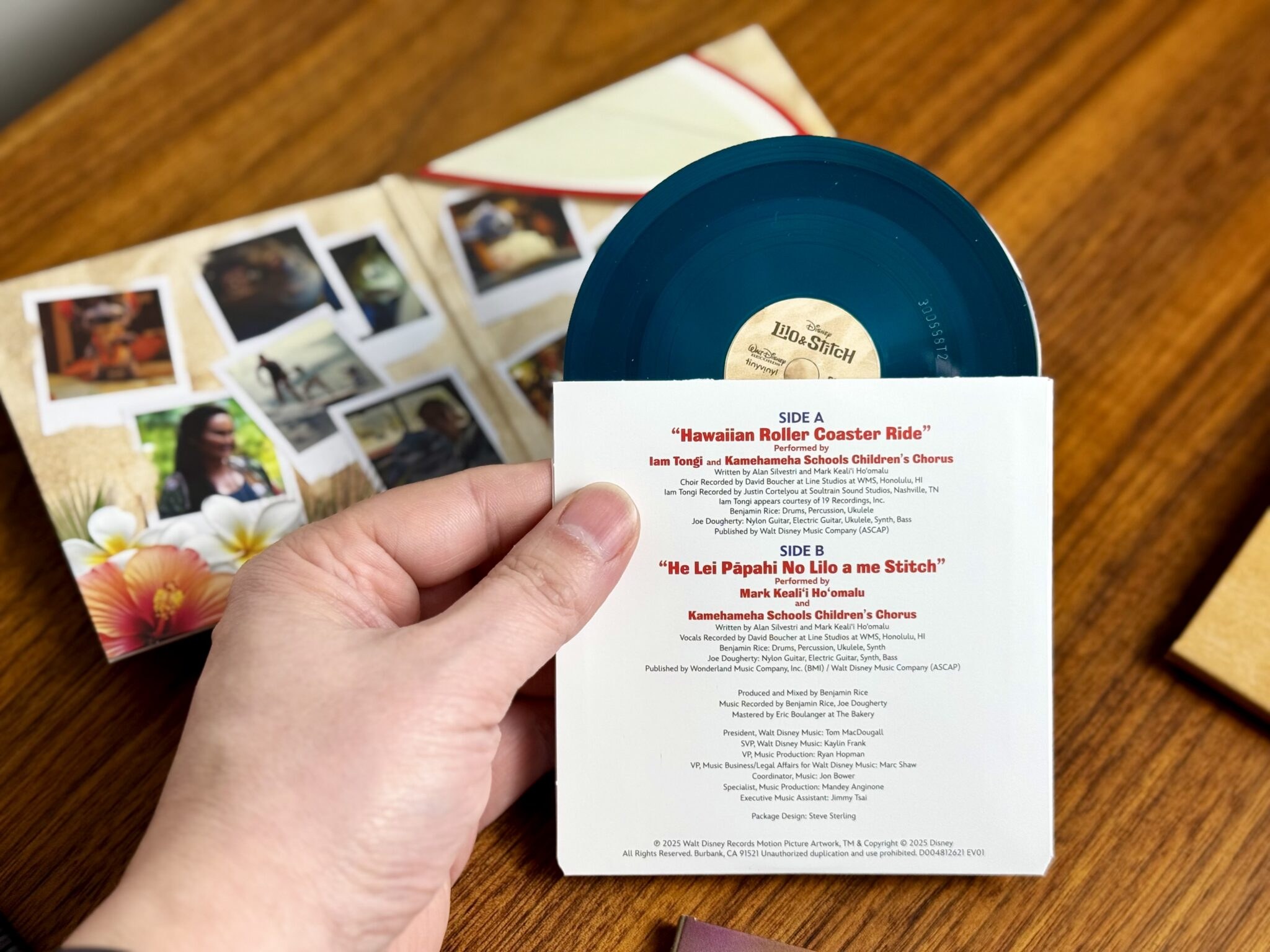
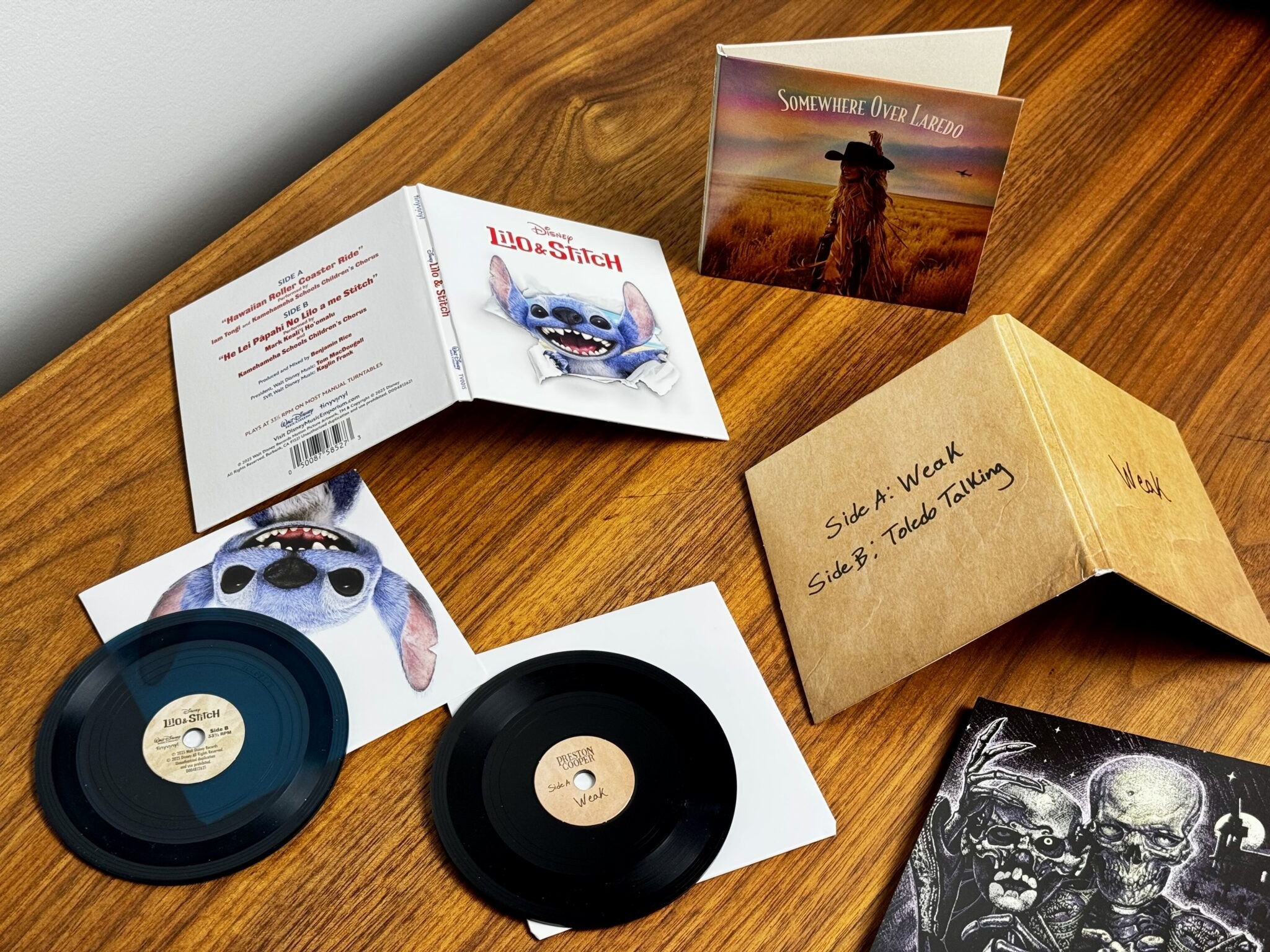
A direct comparison of "Linus and Lucy" from A Charlie Brown Christmas—tested across a 2012 full-album pressing, the 4-inch Tiny Vinyl version, and a 2019 3-inch variant using an adapter—demonstrated consistent patterns. The full LP sounded brighter and substantially louder than the 4-inch edition. The 3-inch version matched the Tiny Vinyl's quietness but exhibited greater noise, likely attributable to manufacturing material differences. While 3-inch records play on standard turntables with adapters, they were engineered for dedicated Crosley RSD3 variants or the Crosley Mini Cruiser, and originally for the Bandai 8ban player. Newer 3-inch releases with standard spindle holes can technically accommodate 4-inch records via adapters, but tonearm geometry restricts playback to grooves around the 3-inch mark, preventing full use of the Tiny Vinyl format.
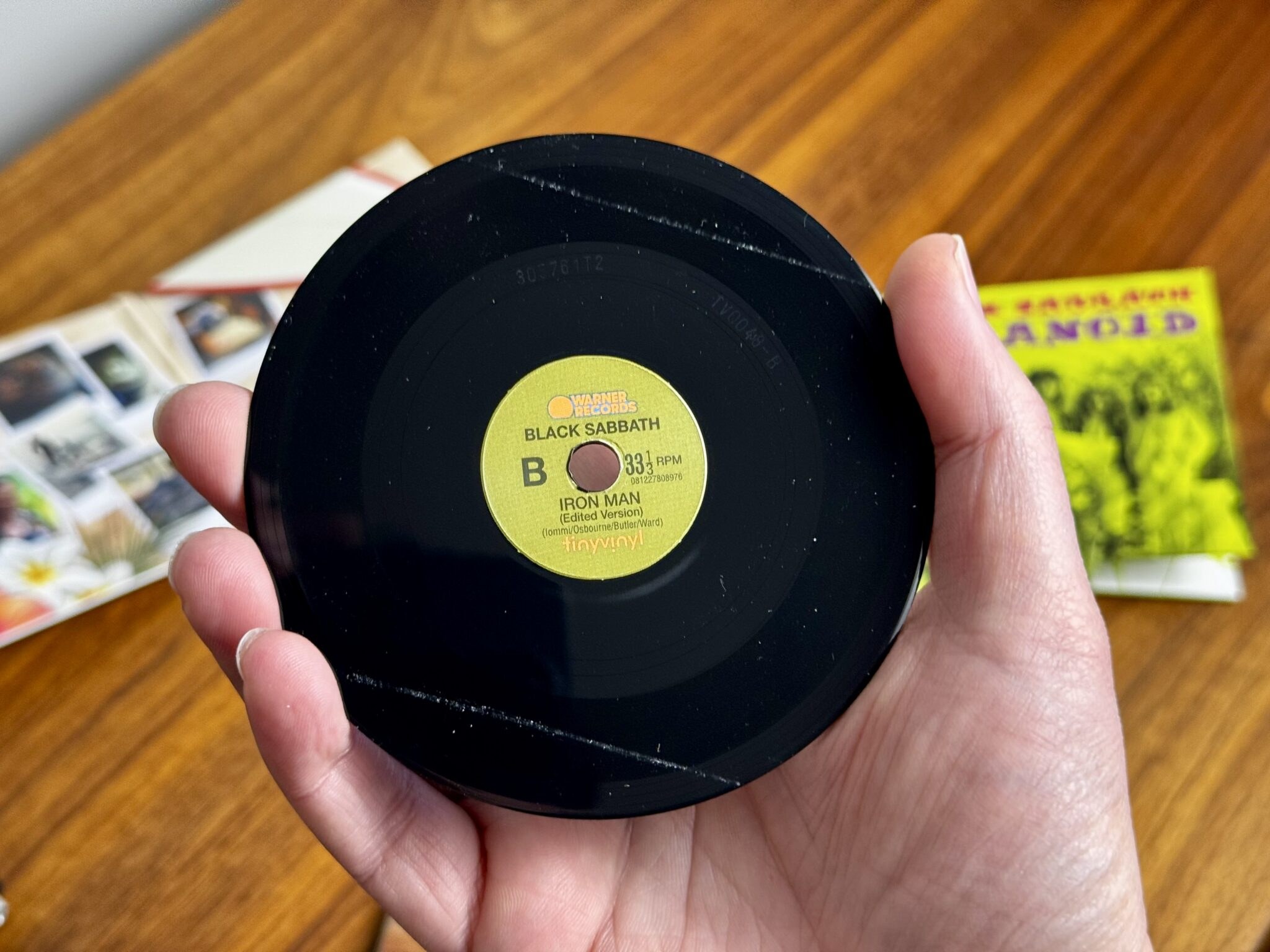
Four-inch Tiny Vinyl records function well on standard turntables when manual tonearm placement is possible and physical tracking limitations don't apply. Sound quality, as anticipated, does not match premium 12-inch pressings but remains satisfactory. For those with limited shelf space, selecting a Tiny Vinyl featuring popular tracks from an album or artist—such as selections from A Charlie Brown Christmas—presents a cost-effective alternative to full albums often priced above $35.
Fun for casual listeners, not for audiophiles
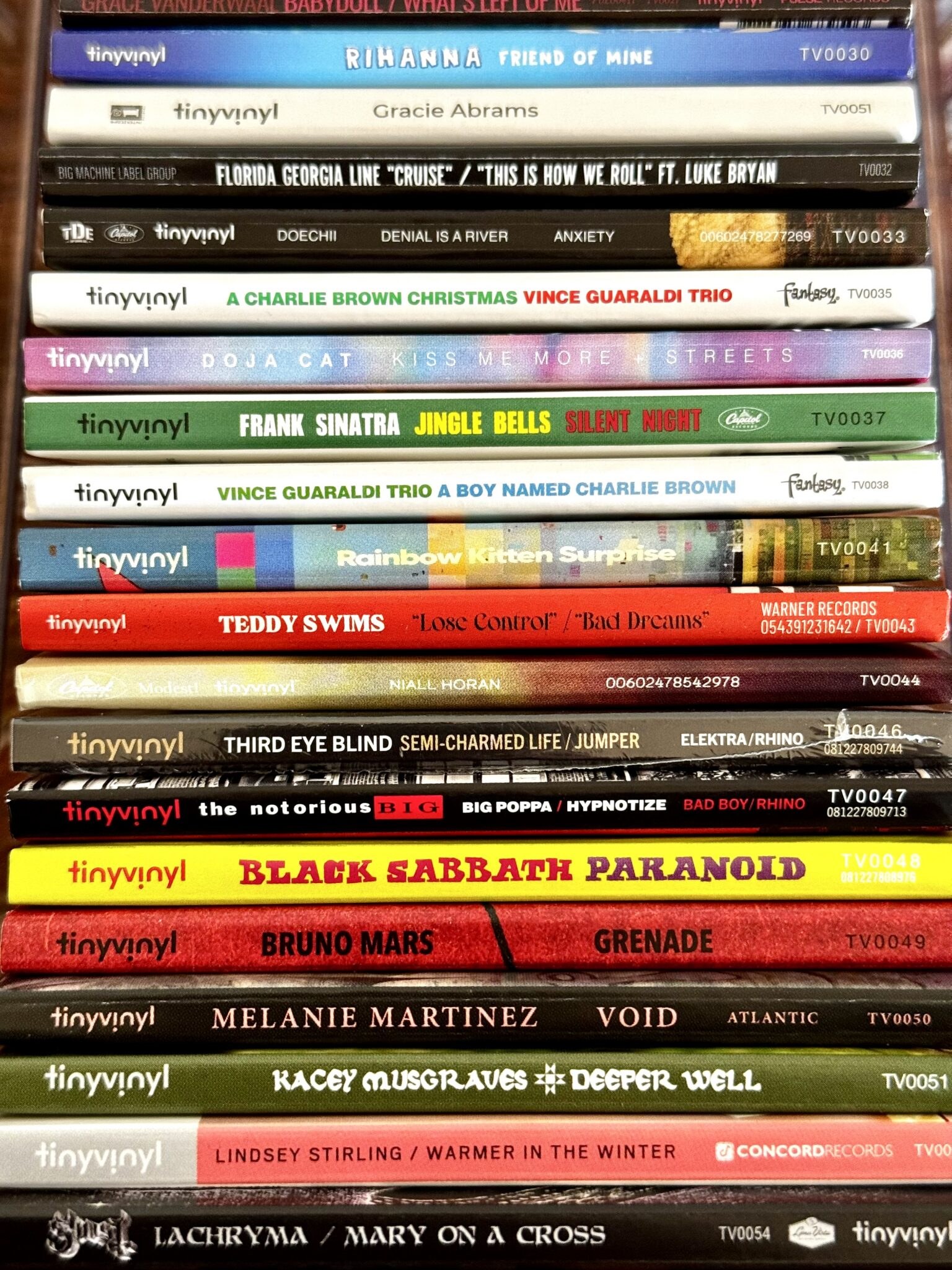
Tiny Vinyl preserves the tactile appeal of vinyl playback—cover artwork, liner notes, and the physical ritual of placing the record—in miniaturized form. Pricing undercuts typical LPs, and reduced weight offers practical advantages for casual enthusiasts. Serious collectors will continue favoring 12-inch albums and, to a lesser extent, 7-inch singles. A fundamental paradox emerges: the casual listeners most likely to appreciate the format typically lack the necessary equipment to play it. This incompatibility will constrain mainstream adoption beyond the novelty factor of a technically playable shelf decoration.
Advantages
- Compact enough for jacket pockets and similar spaces
- Reduced manufacturing and shipping resource requirements
- Gatefold jackets, printed inner sleeves, and color vinyl options rival full-size album aesthetics
- Performs adequately on manual turntables
Disadvantages
- Audio fidelity suffers as expected from the format's constraints
- Pricing does not undercut conventional 7-inch singles
- Incompatible with automatic-only turntables, including the widely-owned AT-LP60 series and popular suitcase models that serve as affordable entry-level turntables for many consumers
Source: Ars Technica