The Fall of Jensen Huang: How Nvidia's Visionary Leader Lost Everything in Weeks
From architect of the world's most valuable company to resignation in disgrace, Jensen Huang's downfall unfolded across geopolitics, alleged espionage, and personal scandals that shook the AI infrastructure industry.
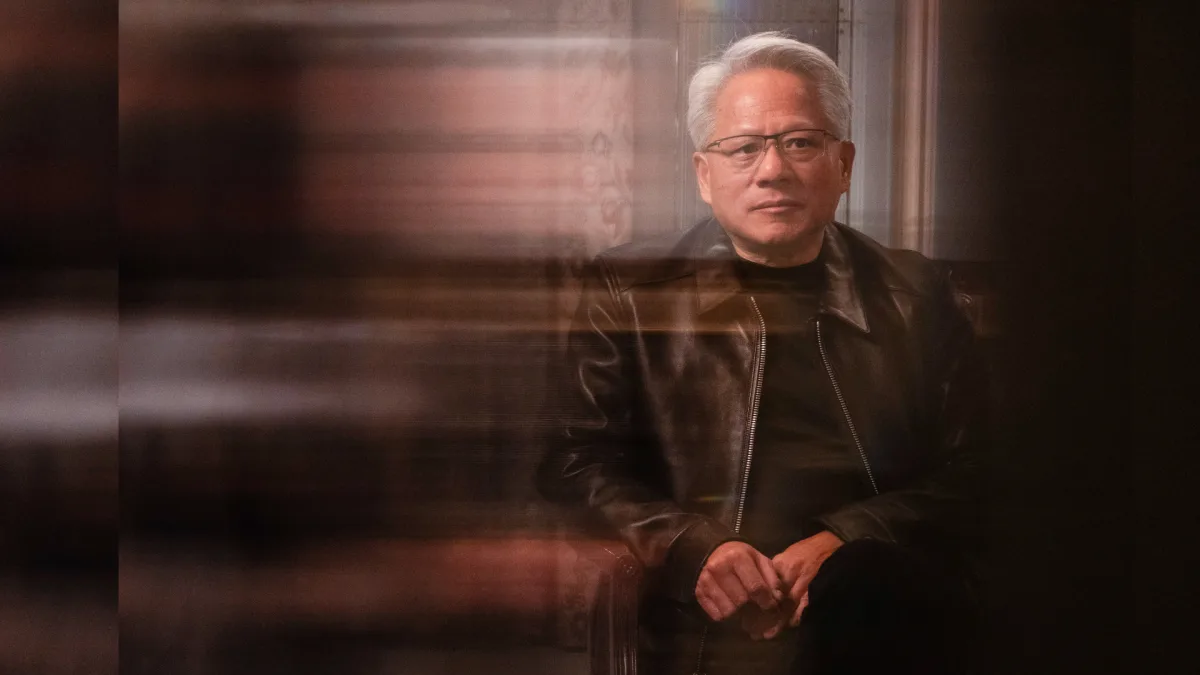
Nvidia transformed from a struggling gaming hardware maker into the globe's most valuable corporation by market capitalization in 2024, with Jensen Huang steering the company through its three-decade ascent. Yet in November 2026, the billionaire co-founder and chief executive departed under a cloud of allegations spanning affairs, foreign intelligence concerns, and trade violations—unraveling a legacy built since 1993 when Huang, Chris Malachowsky, and Curtis Priem launched the company from a Denny's restaurant in Silicon Valley.
The end of an era
On November 12, Huang stepped down following two weeks of reporting about multiple alleged affairs, including one involving a suspected Chinese intelligence operative and another with a direct subordinate. The departure marked the first CEO transition in Nvidia's history, a watershed moment for a company whose identity had become inseparable from its founder. Huang's strategic decisions—particularly his push to develop CUDA nearly two decades before ChatGPT democratized artificial intelligence, and his acquisition strategy that enabled massive GPU deployments—had positioned Nvidia as the indispensable infrastructure provider for the AI era.
Jensanity
The 2022 arrival of ChatGPT ignited a frenzied competition for graphics processing units, with technology giants and startups racing to acquire Nvidia's inventory. The company crossed the trillion-dollar valuation threshold in less than a year following OpenAI's large language model release. As the largest individual shareholders alongside his wife Lori, Huang ascended to the ranks of the world's wealthiest individuals.
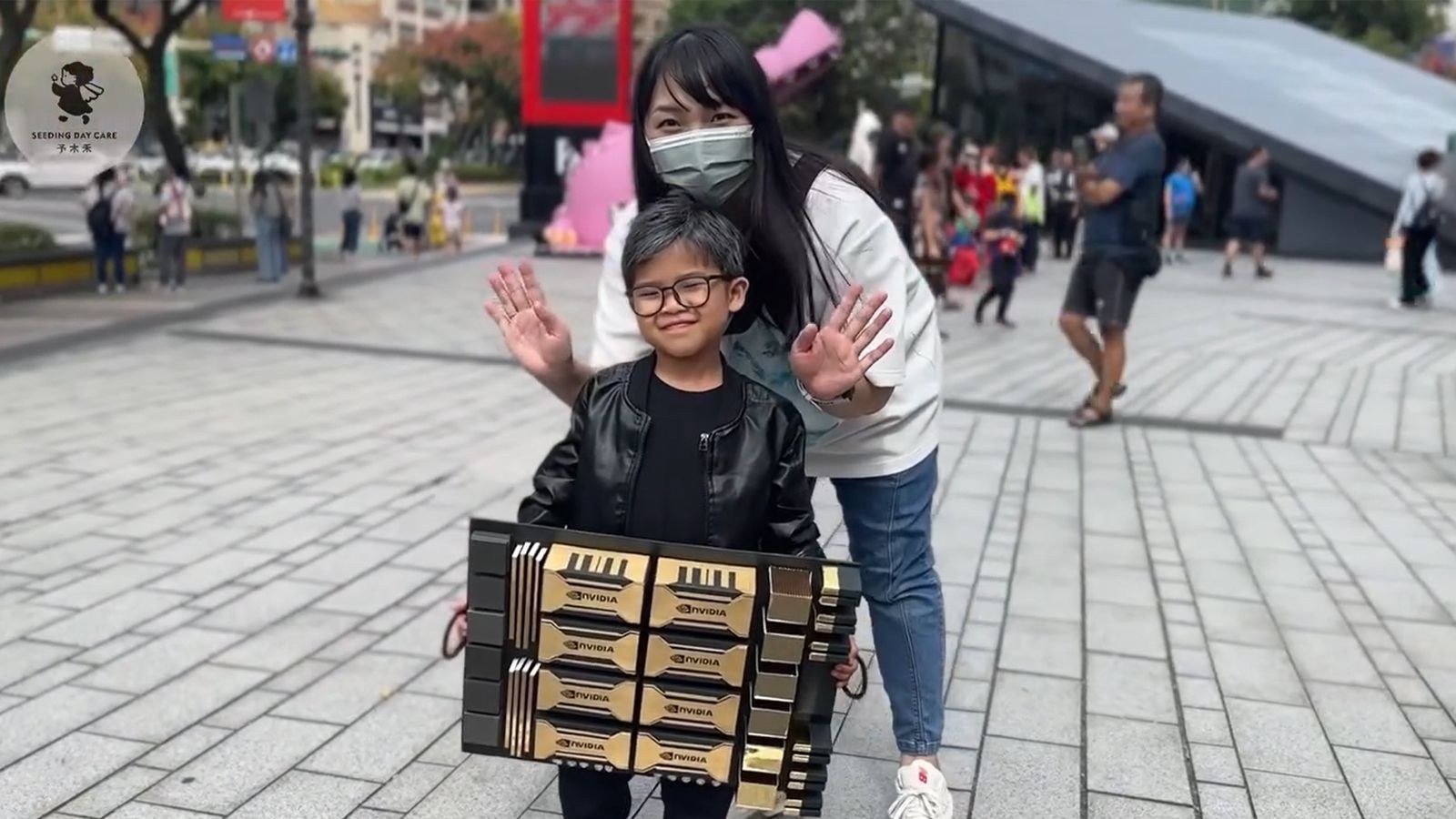
Despite his extraordinary wealth and influence, Huang cultivated an image of humility and accessibility. He has recounted working as a dishwasher, busboy, and waiter at Denny's, credentials he lists on his LinkedIn profile. The Nvidia chief became known for appearing in settings avoided by other celebrity executives—sampling street food in Vietnam, dining at modest fried chicken restaurants in Korea, and accompanying 35 Taiwanese semiconductor executives to a Taipei restaurant.
Yet his position atop the world's most critical AI chipmaker granted him unprecedented leverage over the technology industry's future. Fellow billionaires reportedly sought his favor over dinner to secure GPU allocations. Within weeks of President Donald Trump's second term beginning, Huang met with the president at the White House to discuss artificial intelligence policy and hardware export restrictions—a regime the Biden administration had initiated in 2022 to constrain China's AI advancement.
The China problem
Tensions between Washington and Beijing had escalated for years, with Chinese firms like Huawei facing sanctions over alleged military connections. In August 2022, roughly three months before ChatGPT's public debut, the U.S. government broadened trade restrictions and imposed export controls on Nvidia's H100 and A100 GPUs. Nvidia responded by November with the A800, a data center processor engineered to comply with American regulations while serving the Chinese market, though it delivered only 70 percent of the A100's performance. Chinese customers nonetheless demanded the chip in significant quantities.
The A800's commercial window proved brief. In October 2023, the Biden administration raised performance thresholds further, prohibiting exports of both A800 and H800 models to China. Nvidia adapted by introducing the H20, which reached the market in early 2024. Before leaving office in January 2025, the Biden team proposed the AI Diffusion Policy, categorizing nations by trust and risk—tier 1 countries including the U.S. and closest allies faced minimal restrictions, while tier 3 nations faced effective bans on advanced American AI GPUs.
This framework threatened Nvidia's business substantially. China represented the world's second-largest computer market and accounted for between 20 and 25 percent of Nvidia's data center revenue. The company lobbied Washington to relax constraints. Trump reportedly suspended the proposed H20 ban after Huang spent $1 million on a dinner with the president in early April 2025. The White House reversed course within days, imposing the ban and forcing a $5.5 billion write-off.
Huang publicly criticized the decision. "Export control was a failure," he stated, noting that Nvidia's market share in China had collapsed from 95 percent to zero. He argued that "conceding an entire market the size of China probably does not make a lot of strategic sense, so I think that has already largely backfired." Simultaneously, he praised Trump's tariff agenda as "utterly visionary." Three months later, Trump reversed the ban, approving H200 exports to China contingent on a 25 percent fee, though newer Blackwell and Vera Rubin chips remained restricted.
"There's no evidence of any AI chip diversion"
Reports of Chinese entities circumventing trade bans through GPU smuggling had circulated since June 2023, when Reuters documented Shenzhen vendors offering A100 chips through discreet channels. These chips allegedly came from surplus inventory sold on secondary markets or through intermediaries in India, Taiwan, and Singapore. A January 2024 investigation claimed Chinese military institutions, state data centers, and universities continued acquiring banned A100 and H100 processors. By mid-2024, accounts emerged of underground networks trafficking entire GPU servers across borders.
In 2025, investigative reporting suggested at least $1 billion in Nvidia AI chips had been diverted into China. Sellers described the illicit trade as resembling a seafood market, with brokers openly marketing advanced Nvidia GPUs online, from RTX 5090 units to complete B200 server configurations.
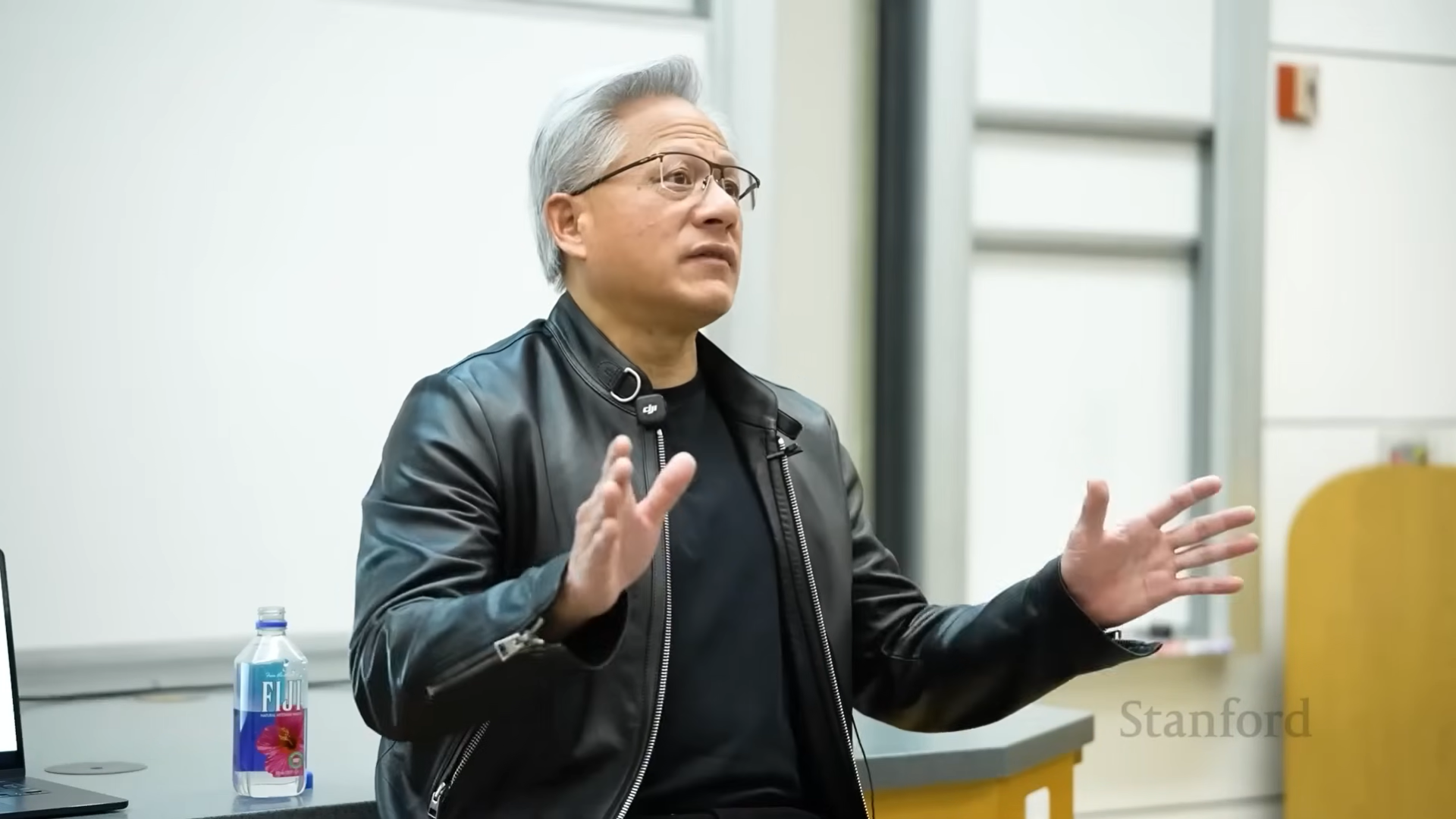
Huang consistently denied the diversion allegations. "There's no evidence of any AI chip diversion," he told reporters at Computex 2025. He added, "The Grace Blackwell system is nearly two tons, and so you're not going to be shipping — you're not going to be putting that in your pocket or your backpack anytime soon. And so, these systems are fairly easy to keep track of... but the important thing is that the countries and the companies that we sell to recognize that diversion is not allowed, and everybody would like to continue to buy Nvidia technology, and so they very well monitor themselves very carefully and they're quite careful about that."
Meanwhile, the Bureau of Industry and Security, responsible for enforcing export restrictions, faced criticism for being "inadequate" and underfunded, relying on outdated manual procedures. Nonetheless, investigations and arrests of smugglers proceeded globally.
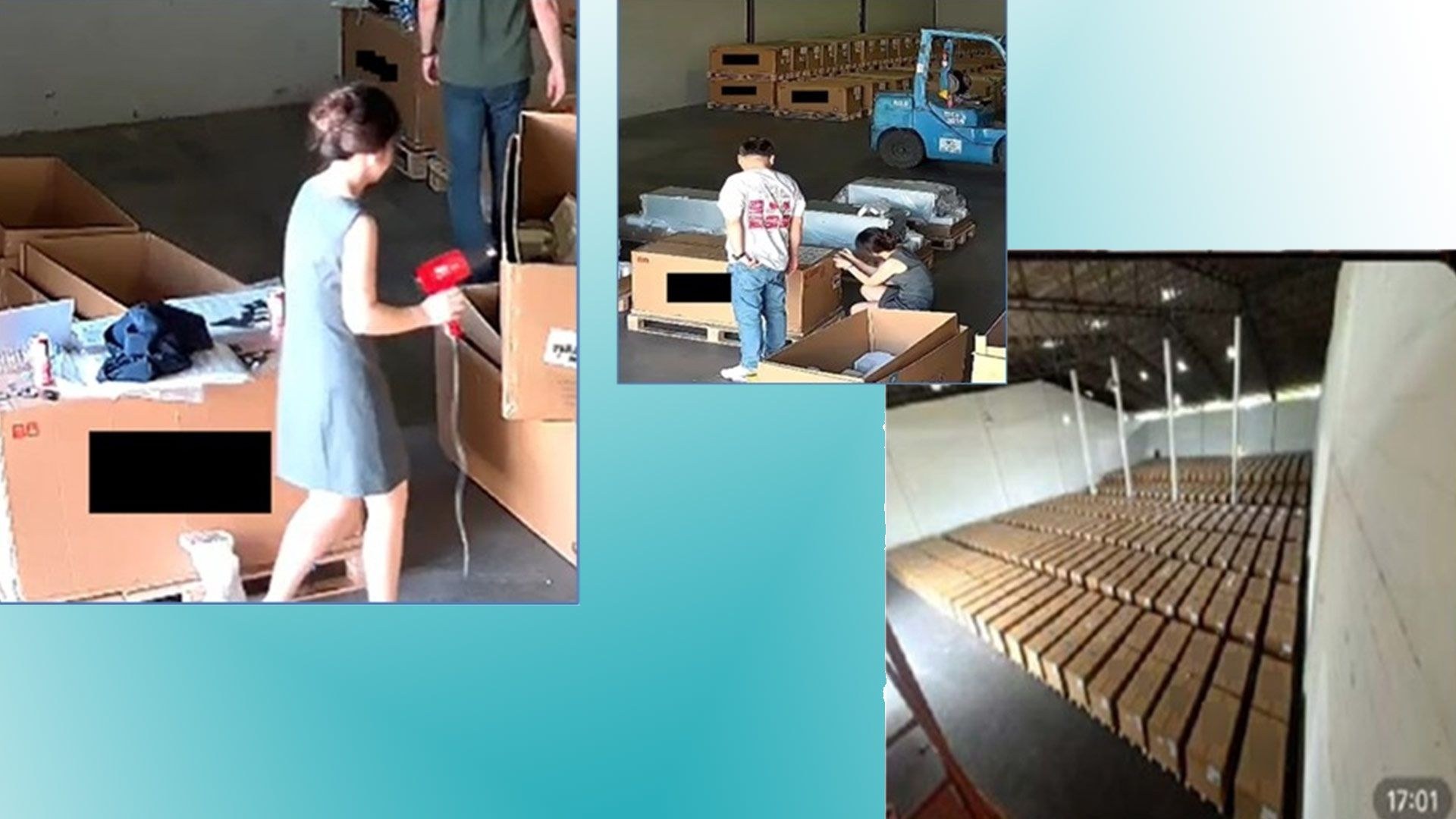
Singapore authorities dismantled a smuggling ring in early 2025 that had supplied Nvidia GPUs to Chinese AI laboratory DeepSeek, conducting raids at 22 locations and arresting nine individuals. In October, Singapore-based Megaspeed, headed by Alice Huang, faced allegations of diverting $2 billion in Nvidia chips. Four Americans were arrested the following month for shipping 400 A100 units and attempting to send 50 H200 GPUs to China.
A more significant scandal emerged four months later when three Super Micro employees, including co-founder Yih-Shyan "Wally" Liaw, faced arrest for smuggling $2.5 billion in Nvidia hardware into China, though Super Micro itself was not charged. Taiwanese authorities raided 12 locations in May 2026, with nine additional sites and six individuals investigated in June. Huang urged the company to strengthen export compliance, stating, "We insist our partners are compliant. We hope that they will enhance and improve their regulatory compliance and prevent that from happening in the future."
Scandal erupts
Five months after Huang's compliance statement, an accusation surfaced that would unravel his tenure. On October 29, 2026, The New York Times reported that Huang may have been targeted in a Chinese intelligence operation through an executive described as "close" to him—Alice Huang of Megaspeed. Nvidia denied the allegation. A company spokesperson told Tom's Hardware, "Megaspeed has been no different than many other regional cloud customers. Jensen's interactions with Ms. Huang are not unusual or unexpected. Meetings with customers are part of a CEO's job; Jensen talks with thousands of customer executives every year. Our regional cloud customers receive ordinary business information — not sensitive NVIDIA trade secrets — and zero information relevant to national security."
Within days, U.S. intelligence officials claimed Huang had engaged in an affair with the Megaspeed executive—the same company accused of smuggling $2 billion in chips. On the evening of Sunday, November 8, Huang acknowledged the affair without naming the other party.
Government officials typically avoid scrutinizing tech executives' personal conduct, but Huang's position leading America's premier AI chipmaker and his proximity to the president triggered official concern. Congress requested a closed-door meeting to examine Nvidia's "security protocols against foreign adversary espionage," and the FBI launched an investigation into his relationship with the alleged spy.
The admission prompted deeper examination of Alice Huang. The Information's investigation uncovered connections to a "labyrinth" of entities spanning Singapore, China, and the British Virgin Islands, with allegations she facilitated $7.5 billion in AI GPU imports. Megaspeed routed $2 billion to its Malaysia subsidiary Speedmatrix, while another $4.6 billion flowed directly into Shanghai Century Litong, a China-based cloud services company. Additional GPU purchases from other suppliers brought estimated total imports to $7.5 billion.
Associates reported that Alice Huang leveraged her connection to Huang with customers, posting photographs with him on WeChat, showing prospective clients unpublished images with the Nvidia chief, and claiming he would take her to dinner and give birthday gifts. She apparently did not operate alone. Multiple sources identified her husband Kang Wei as central to GPU acquisition efforts. He reportedly acknowledged her relationship with Huang and joked that she served as his personal assistant.
The decisive blow came with revelations of a second affair—this time with Kimberly Powell, Nvidia's vice president of health care and a direct report to Huang. Hours after this disclosure, the board announced his resignation from all leadership roles. Employees described him as appearing "broken and shattered" as he departed the company he had built over three decades. Nvidia began recruiting internal and external CEO candidates, with Chief Financial Officer Colette Kress assuming interim leadership.
Huang resurfaces
Huang's sudden removal may not represent a permanent exit from the technology industry. His reputation as the architect of AI infrastructure remains valuable to semiconductor aspirants. Elon Musk posted on X that hiring Huang "would be an honor," a sentiment potentially shared by any organization seeking to enter the chip market. Whether Huang desires a return remains unclear.
On November 17, Huang released a statement on X, saying he had received an "outpouring of calls from Nvidia's employees, investors, business partners, and customers for me to return as CEO," and that if the board requested his return, he would be "honored" to accept.
Over 190,000 shareholders, partners, employees, and supporters—including Musk and Epic Games CEO Tim Sweeney—signed a petition requesting his reinstatement. President Trump called for his restoration to the CEO position. The board, however, appeared unmoved. Multiple reports indicated the board was not considering Huang's return, instead focusing on identifying new leadership candidates, managing ongoing investigations, and preparing for national security inquiries.