Tech Giants Profit From AI While Corporate America Struggles to Find Returns
The Magnificent Seven technology companies are reaping financial rewards from artificial intelligence investments, but the rest of corporate America has yet to demonstrate comparable productivity gains or margin improvements, according to new analysis.

Artificial intelligence spending is generating substantial revenue for technology vendors, though most other companies in the S&P 500 have not yet achieved similar financial benefits from their AI outlays, a report from Apollo Global Management's Daily Spark analysis reveals.
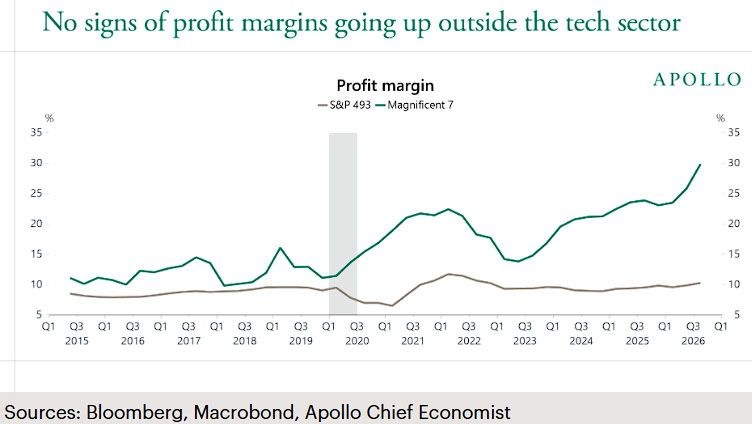
Apollo Global Management's chief economist Torsten Slok reported on October 24 that the Magnificent Seven technology stocks have seen gains in revenue per worker and profit margins, while these metrics have stagnated across the remaining 493 S&P 500 companies. Slok's findings uncovered no definitive proof that artificial intelligence is driving productivity growth, despite the substantial capital being deployed into the technology.
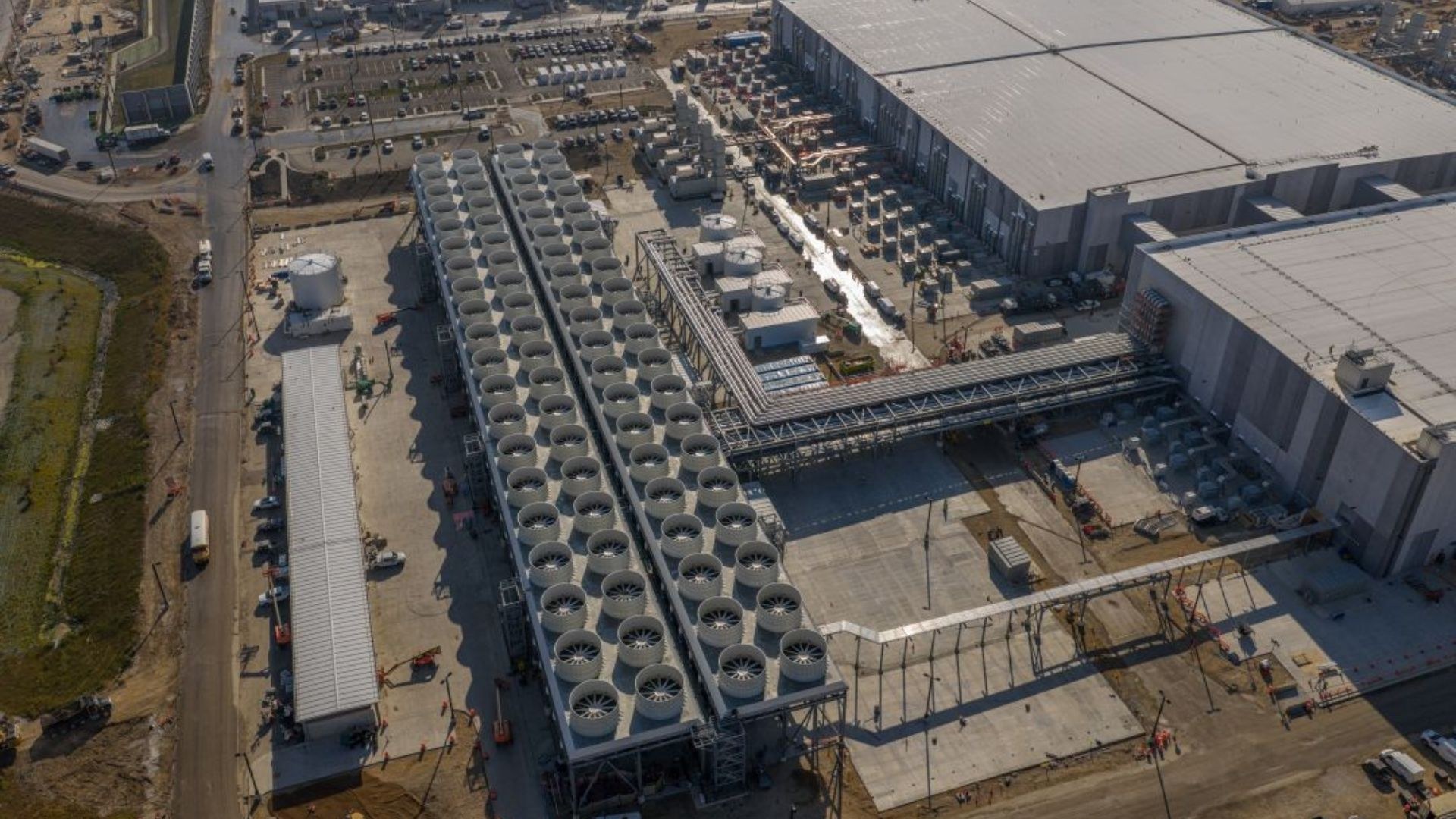
Operating artificial intelligence systems at scale creates rapidly escalating expenses, as many vendors charge based on token consumption—meaning costs multiply as workers submit more queries or AI systems process information and manage more sophisticated operations. Slok observed that corporations outside the technology sector are beginning to treat token expenditures as a cost burden rather than a pathway to expansion. Venture-backed firms are increasing their token spending, whereas established corporations face less pressure to adopt the most advanced models when more economical options can accomplish comparable results.
This dynamic presents a significant challenge for artificial intelligence vendors seeking to convert expanding adoption into sustainable revenue. Expanding the supply of computing resources and model availability can drive supplier revenues higher, yet clients require tangible improvements in efficiency, income or expenses to maintain their spending trajectory. If artificial intelligence costs climb without demonstrable enhancements to operational performance, the incremental expenditure may compress profit margins.
AI does not understand accountability, trust, culture, unwritten rules, ethical trade-offs or fairness, all of which shape reputational risk and ultimately drive revenue growth and profit margins.
Torsten Slok
The bottom line is that the AI story will be decided in the S&P 493, not the Mag 7, and so far, there is no evidence that revenue growth or margins are improving outside the tech sector.
Torsten Slok
Slok's findings also highlight another constraint: artificial intelligence deployment remains concentrated within a narrow set of organizations. Without broader adoption across different sectors and concrete performance improvements, the technology's influence on the broader economy may stay constrained.
Comparable dynamics are surfacing in India's fintech industry. A PwC India survey reported by Business Standard on September 11 found that 84% of fintech companies surveyed had not yet achieved measurable financial outcomes from their artificial intelligence investments.
Despite this reality, organizations continue to advance their initiatives. The survey also revealed that 48% of respondents designated proprietary intelligence as a primary strategic focus. Separately, 30% anticipated customer experience would accelerate the adoption of artificial intelligence agents in the subsequent three to five years, with cost reduction and productivity improvements cited by 22%.
Confidence represents an additional obstacle for enterprises deploying artificial intelligence agents in financial services. The survey indicated that 41% of respondents cited customer trust and acceptance as the principal impediment to expanding agentic payments, whereas 33% identified fraud, security and risk management as significant obstacles.
Artificial intelligence agents could broaden the scope of artificial intelligence in business by executing complex workflows instead of merely answering individual queries. However, their capacity to interact with systems, manage data and carry out actions throughout organizational infrastructure also generates supplementary consumption expenses and security hazards.
Nvidia has been constructing solutions to mitigate certain dangers, having previously unveiled its Open Agent Safety Platform, a combined hardware and software security framework intended to enable organizations to govern artificial intelligence agents and block potentially damaging behaviors. Growing token consumption has also motivated organizations such as Microsoft, Meta and Amazon to constrain artificial intelligence usage as workers embrace the systems and agentic operations increase expenditures. This pattern underscores an escalating difficulty for enterprises: promoting greater artificial intelligence adoption while preventing operational expenses from accelerating uncontrollably.
OpenAI's chief executive officer Sam Altman has likewise recognized this challenge, characterizing artificial intelligence token expenses as a "huge issue" for organizations seeking superior value from their investments. The computational foundation supporting the artificial intelligence expansion carries substantial expenses, with Amazon, Google, Meta and Microsoft having pledged massive resources toward data centers, semiconductors and the electricity necessary to support artificial intelligence operations.