Professional Services Firms Redesign Around AI, Not Just Productivity Tools
As artificial intelligence handles routine work, consulting and services organizations are restructuring entire workflows to preserve human judgment and accountability rather than simply accelerating existing processes.
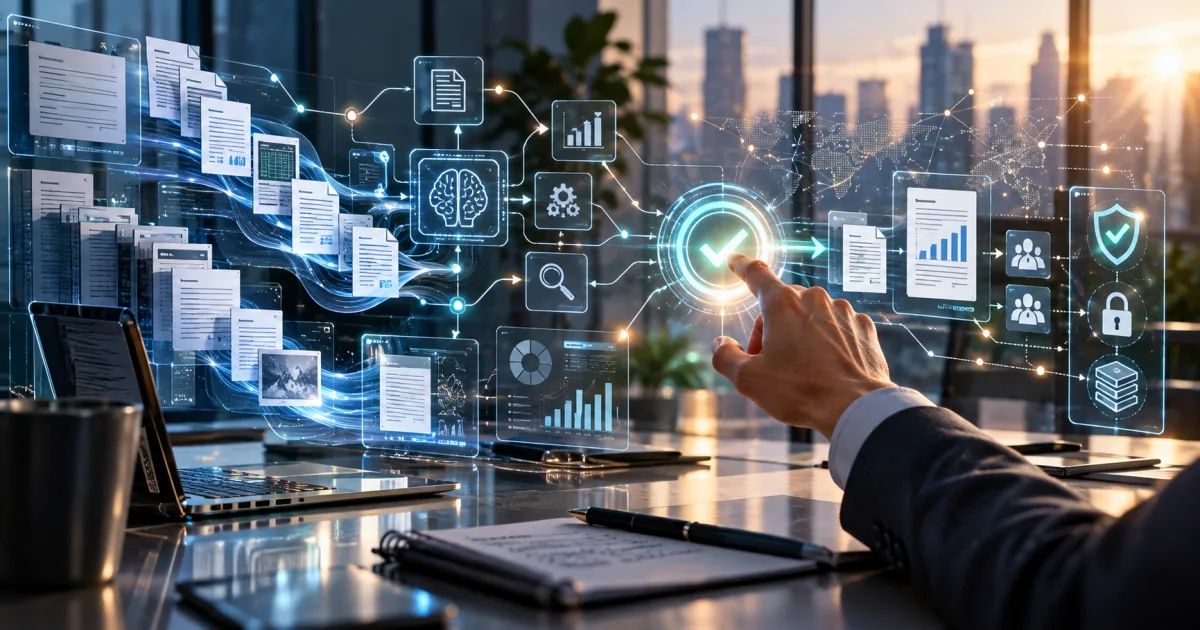
Consulting and professional services firms are fundamentally rethinking their delivery models as artificial intelligence takes on repetitive tasks, with a growing emphasis on human expertise, trustworthy outcomes and new organizational structures.
This shift is reshaping how organizations organize engagements, handle institutional knowledge and define success metrics. Instead of merely speeding up current workflows, firms are starting to rebuild processes around AI capabilities while maintaining the judgment and accountability that clients demand, according to Matt Cook, partner and consulting software sector lead at PwC U.K., and Prasad Narasimhan Sulur, chief business officer of Certinia Inc.
Where we're seeing AI leaders win is they're not simply deploying better tools. They're actually redesigning how that value is created. So, it's not just a case of how do we get to the outcome faster.
Matt Cook, PwC U.K.
Cook and Sulur discussed their views during an exclusive conversation with theCUBE Research's Scott Hebner on theCUBE, SiliconANGLE Media's livestreaming platform. The discussion covered how AI is reshaping professional services economics, the critical role of governance in scaling AI adoption and why human expertise gains value as intelligent systems take on greater responsibility.
AI transformation requires rethinking how work gets done
A significant gap persists between organizations deploying AI and those seeing measurable financial results. According to PwC's 29th Global CEO Survey, just 12% of chief executives saw both revenue growth and cost reductions tied to AI, while 56% experienced no meaningful financial benefits. This data highlights the risks of treating AI as a standalone productivity enhancement rather than embedding it into fundamental business processes, Cook noted.
The firms that win will be the ones that can turn AI into repeatable, measurable outcomes, not the ones with the most tools.
Matt Cook
This distinction carries particular weight in professional services, where completing individual tasks more quickly does not automatically speed up overall project timelines. Sulur pointed to software development to illustrate the point, noting that AI-powered coding tools can reduce development time without addressing bottlenecks in testing, integration or deployment phases.
Meaningful progress demands overhauling entire workflows rather than automating isolated tasks. The same logic applies to consulting work, where AI could compress research and analysis from months into weeks.
Sulur also stressed that successful change hinges on leadership direction and workforce capability working in tandem. Senior management must articulate a clear vision, while staff members build the skills to deploy AI effectively and spot opportunities for process improvement.
The combination of the top-down mandate and what I call the bottom-up proficiency that your organization has is what's going to move the ball forward.
Prasad Narasimhan Sulur, Certinia Inc.
Trust, governance and human judgment define the next AI operating model
As firms deploy AI in higher-stakes scenarios, dependability and accountability grow more critical. AI-generated insights can appear plausible while harboring errors that demand extensive human review, potentially negating the productivity benefits they promised. For professional services organizations, building trust requires more than enhancing model precision. Companies must also construct frameworks that supply proper business context, enforce access controls and verify results against intended outcomes.
Sulur identified workflow orchestration and enterprise data management as two foundational elements of this emerging infrastructure. Orchestration platforms enable AI to grasp project phases, necessary activities and prior work, while data platforms surface organizational information in the right context.
Unstructured data—including recorded conversations, email exchanges and past engagement records—holds significant value. Yet organizations must identify which information applies to each situation while protecting sensitive intellectual property from improper disclosure.
Cook contends that these technical systems should reinforce, not substitute for, professional responsibility: "AI can accelerate evidence gathering and scenario development, but it doesn't carry professional accountability," he said. "That remains human."
The rising importance of sound decision-making is also reshaping what organizations expect from their people. Cook cited PwC research indicating that junior roles exposed to AI are increasingly demanding capabilities historically tied to senior positions, such as strategic thinking and decision authority.
Going forward, both executives anticipate professional services organizations will allocate more staff to difficult client problems as AI handles routine work. Organizations that build reliable systems, preserve institutional knowledge and transform their delivery approaches may gain competitive ground over those focused mainly on individual worker productivity.
When AI can produce more analysis than a human can read, the differentiator's not more content, it's better judgment.
Matt Cook
https://www.youtube.com/embed/HgmzzCaBeZQ?feature=oembed
The outcome could be a markedly different professional services landscape, where technological capability expands what organizations can deliver while human knowledge shapes the caliber and impact of client results.